La Academia dei Desidorosi: A Pre-cursor to the Nineteenth-Century Academy
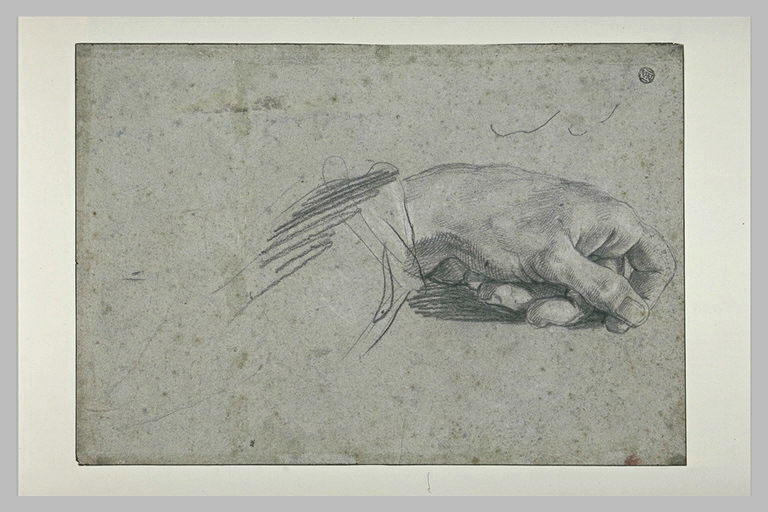
Annibale Carracci (1560-1609) Study of a Left Hand (c. 1575) White and black chalk on blue paper. 27.1 by 39.1 cm. Ecole des Beaux-Arts, Paris.
There is a growing phenomena of painting and sculpting studios working to resurrect models of art education from the past. Some of the schools I am thinking of include the Grand Central Academy of Art in New York, The Florence and Angel Academies of Art in Florence, and the Los Angeles Academy of Figurative Art in California. There are many more. As an enthusiastic supporter, I have come to know some of the artists who have founded and attended some of these schools. In almost every case, these artists refer to a handful of foundational books that have influenced their approach.
The bible of most seems to be the late Albert Boime’s book, The Academy and Painting in the Nineteenth Century. In it, Boime takes bird’s-eye and ground-level views of studio practice in the French Ecole des Beaux-Arts from its foundation in the seventeenth century to its height of influence in the nineteenth century. It is a foundational text and deserves a great deal of attention.
Those who have read Boime’s work may be surprised at how many different classical academic models there were in the nineteenth century and before. Knowing the plurality of approaches and their strengths and weaknesses may help anyone attempting to reinstate aspects of the classical tradition today.
Throughout the next year, I hope to explore various models of classical arts education. Today, I begin with the Academia dei Desidorosi, credited with being the first art academy to include life drawing a regular part of its curriculum.
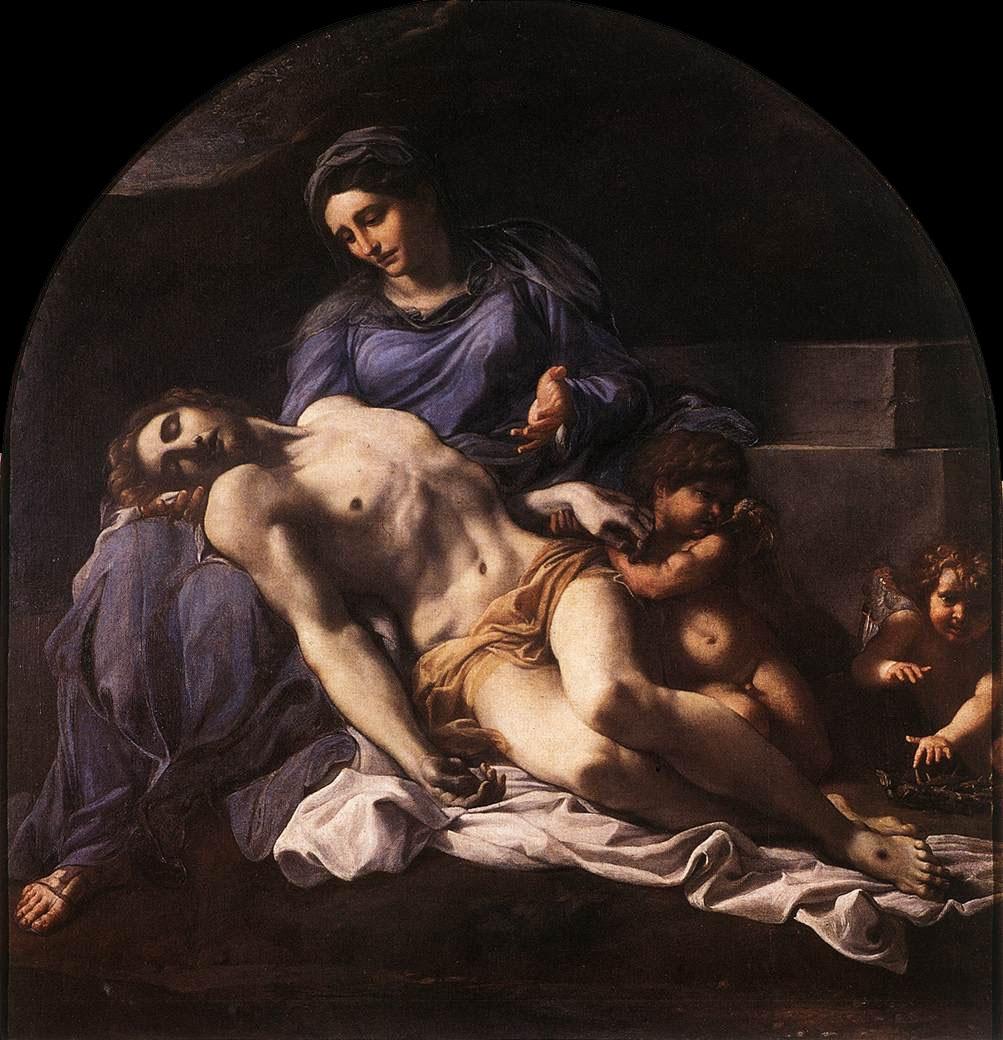
Annibale Carracci (1560-1609) Pieta (c. 1599) Oil on canvas. 155 by 148.2 cm. Museo Nazionale di Capodimonte, Naples.
The Academia dei Desiderosi (roughly translated as “those desiring perfection”) was founded in the Northern Italian city of Bologna by brothers Agostino (1557-1602) and Anibale Carracci (1560-1609) with their cousin Ludovico (1555-1619). From the late-sixteenth to the early seventeenth centuries, the Desiderosi was a training ground for some of the the period’s most influential painters, including Guido Reni (1575-1642) and Francesco Albani (1578-1660). Drawings produced by the Academia and its artists were highly sought after by other academies. In fact, many were collected and used for instruction by the Ecole des Beaux-Arts in Paris.
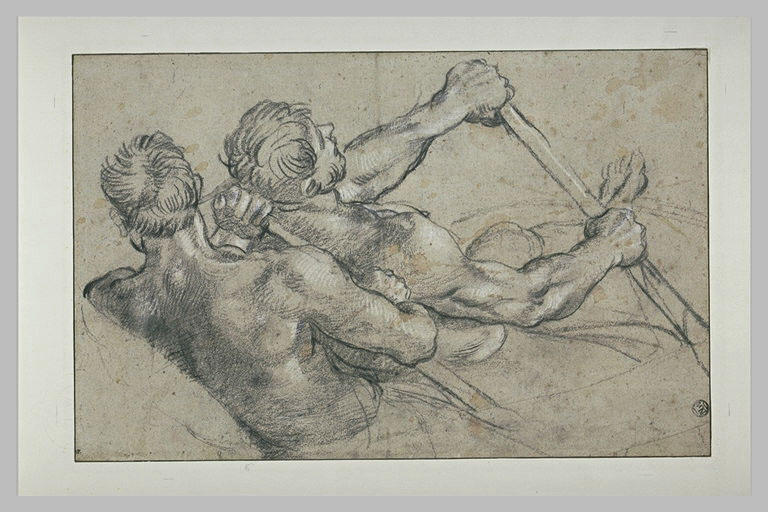
Annibale Carracci (1560-1609) Study of Two Rowers (c. 1600) White and black chalk on grey paper. 24.8 by 38.6 cm. Musée du Louvre, Paris.
At the time, Bologna was small, but influential. A rich agricultural center, it also had one of the oldest universities in Europe. The Carracci brothers were unusually well-educated at a time when most artists were illiterate and considered craftsmen. Both Agostino and Annibale had begun legal training before setting it aside for art. They could read and write and had a good working knowledge of Latin. Agostino, especially, was well regarded for his understanding of philosophy, poetry, mathematics, and, even, mechanics (e.g. clocks and machines).
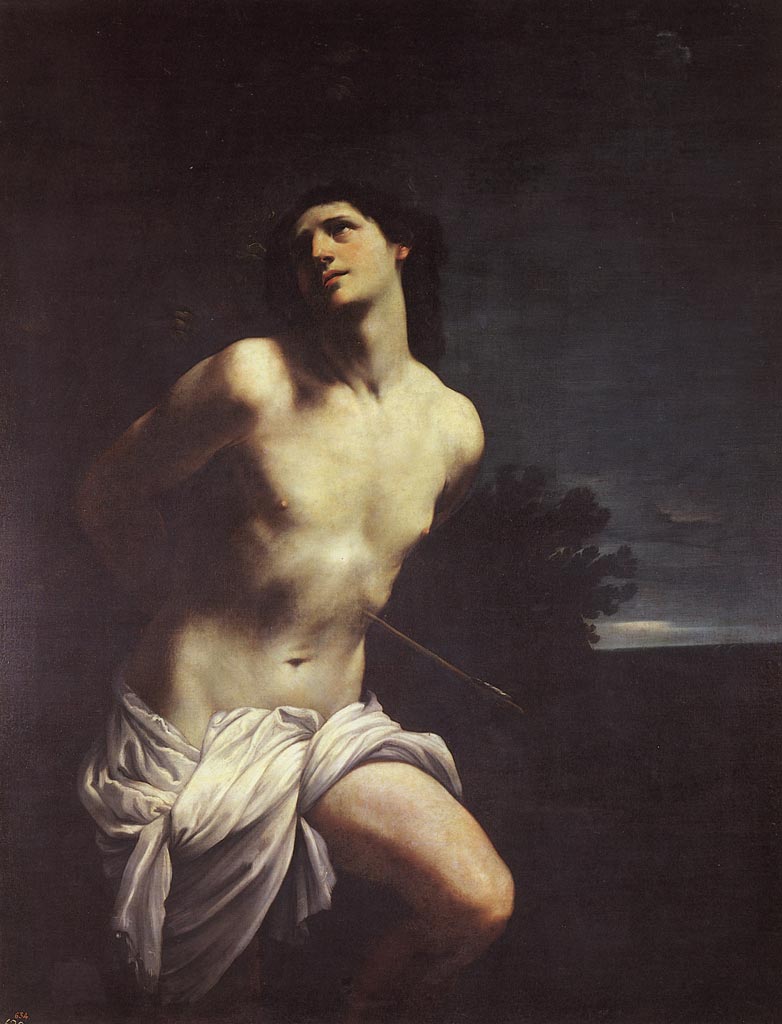
Guido Reni (1575-1542) St Sebastian (c. 1617-1619) Oil on canvas, 170x 133 cm. Museo del Prado, Spain.
The Academia dei Desidorosi claims among its members some of the most important painters of the time, including Guido Reni (1575-1642) and Francesco Albani (1578-1660). Unlike many nineteenth-century academies, the Desidorosi did not draw a distinction between teachers and pupils. Instead, the Carracci considered themselves first among equals and participated in all exercises. The Desidorosi only accepted experienced artists. Most members were in their mid-to-late twenties. This approach differed from most studios and academies of the time like the older, well-established Roman Academia di San Luca, which accepted students as young as eight years old.
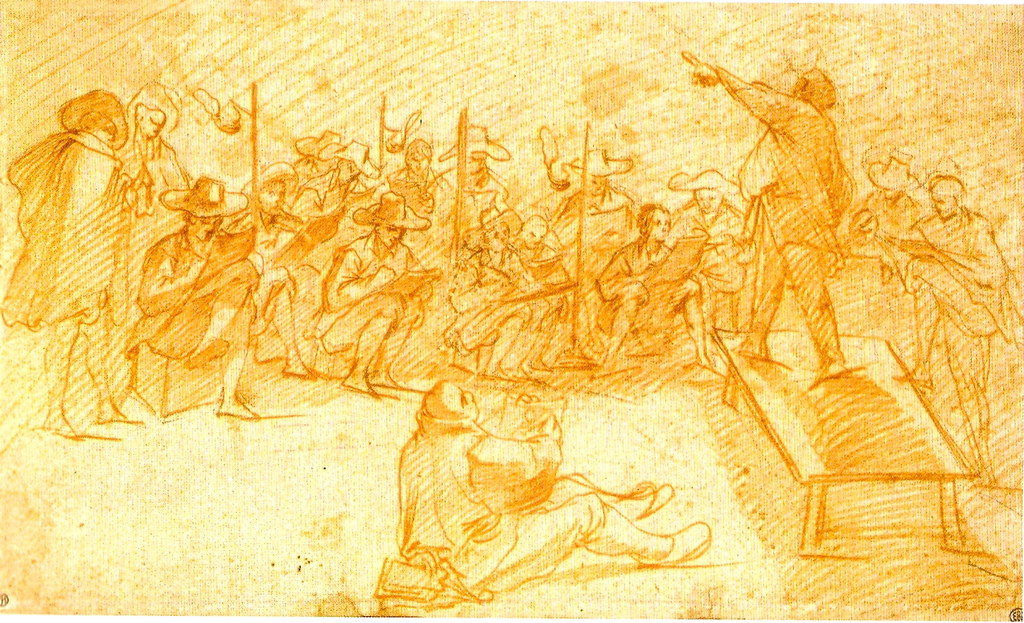
School of the Carracci (Attributed) Artists Drawing a Clothed Male Model. (c. 1590) Red chalk on paper. Ecole des Beaux-Arts, Paris. (Click for high-resolution image.)
The study of the human figure was central to studies at the Academia dei Desidoerosi. Until the nineteenth century, life drawing was almost exclusively done with male models. The use of female models was considered immoral, and in most of Italy, Germany, France, England, and Spain, was illegal. Instead, artists relied on classical statuary, contour drawings of the female figure or simple substitution of the male for the female. (Some attribute the masculinity of of Michelangelo’s women to the lack of female models, believing that he and others simply put breasts and long hair on the male form. Though, I believe this is an oversimplification, it may have some truth.)
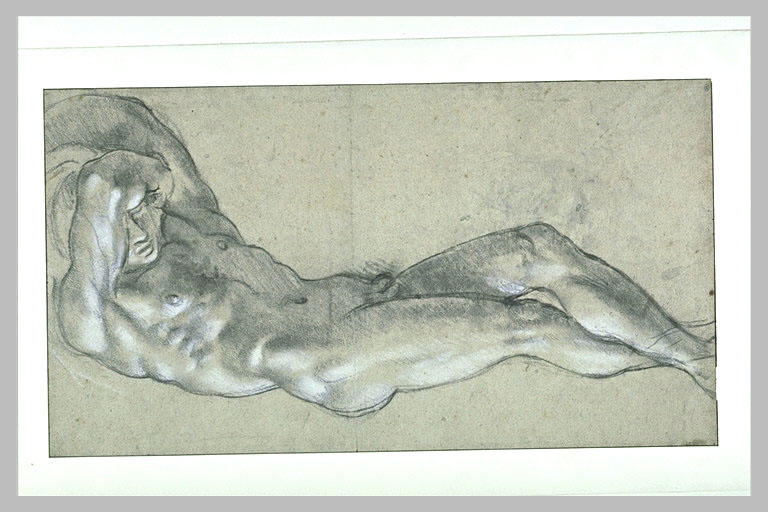
Annibale Carracci (1560-1609), Attrib. Study of Male Model. Black and white chalk on white paper. Ecole des Beaux-Arts, Paris.
Live models were hired. But, also, students posed for one another. In some instances, the Carracci brothers took the then unusual step of inviting a “Dr. Lanzoni”–little is known of his real name or role in the community–to dissect corpses for the benefit of students. (Autopsies of the rich and noble were then common as a way of assuring the cause of death was not foul play.)
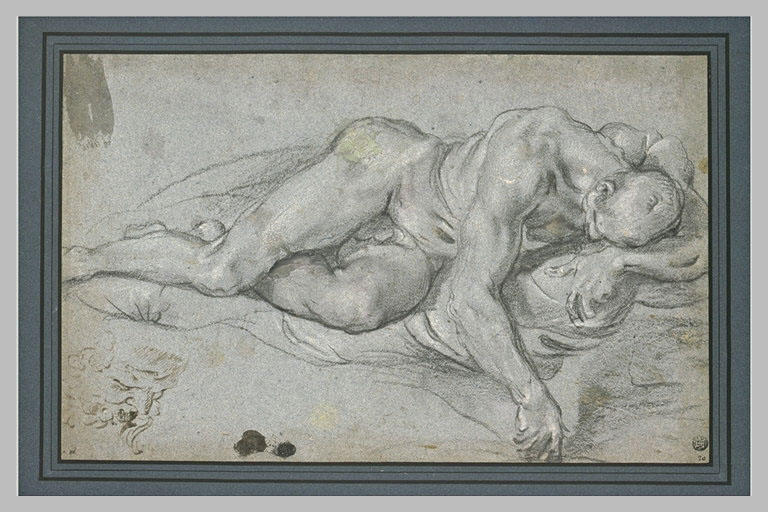
Agostino Carracci (1557-1602). Study of Male Model (c. 1575) Black and white chalk with pen on paper. Musée du Louvre, Paris.
In addition to live models, the Academia used drawing books and examples from the Antique (Greco-Roman statues, reliefs, coins, and architectural drawings). According to Gert-Rudolf Flick:
The Carrracci also relied on the use of drawing-books for instruction, a format that subsequently became fashionable in its own right. Most of these drawing-books were produced by professional artists, and reflected current studio practice and art theory. A drawing-book can be defined as a pedagogical work in which the visual instruction dominated the verbal, and is thus quite different from treatises such as Alberti’s De Pictura or (more obviously) Vasari’s Vite, or even from anatomical texts and books on perspective. The drawing-books in question contain numerous sheets filled with parts of the human body such as ears, noses, legs, and feet, depicted from different points of view: front, three-quarter and rear. (Gert Rudolf-Flick. Masters & Pupils: The Artistic Succession from Perugino to Manet, 1480-1880. London: Hogarth Arts, 2008. p. 106-107)
Agostino Carracci had a large collection of busts, statuettes, Old Master drawings, engravings and contemporary medals that students were allowed to copy and study.
Studies were not focused exclusively on the human figure. The Desidorosi believed that the overall goal was a closeness to nature, which was defined more widely as humans, animals, plants, and the rules of architecture.
Certain hours were set aside for theoretical questions, perspective and architecture, all of which Agostino was especially adept at demonstrating in condensed form in a small number of maxims as can be seen in some of the writings by him that I have in my possession. (Gert Rudolf-Flick. Masters & Pupils: The Artistic Succession from Perugino to Manet, 1480-1880. London: Hogarth Arts, 2008. p. 111)
Regular visits to the countryside where paintings and drawings were made directly from nature. For studies in perspective and architecture, the Carracci relied on Sebastiano Serglio’s Libri di Architectura (a pdf of books three and four can be found online here) and trips to local churches and notable homes, guided by Agostino and local professors.

Annibale Carracci (1560-1609) Figures entourant des médallions de la galerie Farnese. (c. 1597) Pen and chalk on paper. 36.1 by 49.9 cm. Musée du Louvre, Paris.
When in 1595 Annibale and Agostino were commissioned to paint the palace of Cardinal Odoardo Farnese, they left the Academia to the management of their cousin Ludovico. Some information is available on the Academia during this period, and it is evident that the brothers were the main force of Desidorosi and, without them, it did not have the same energy or longevity. The academy, while carried on by Ludovico and, then other students, never again attracted the same attention or produced the same quality of artists.
Picasso in London: “Not a Slave to the Canon”
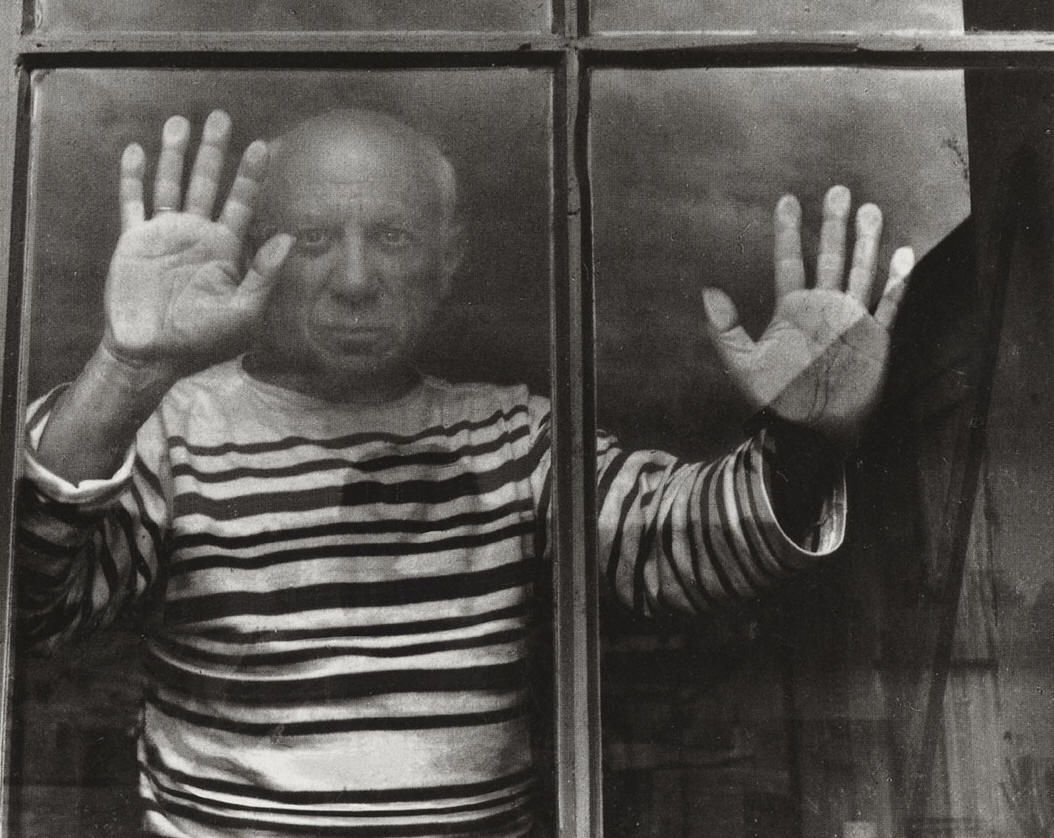
Photograph of Pablo Picasso (c. 1955)
After seeing The Raft of the Medusa by Eugène Delacroix (French, 1798-1863) Théodore Géricault (French, 1791-1824), a friend recorded Picasso saying: “That bastard! He was good.”
The exhibition, Picasso: Challenging the Past, currently on show at the National Gallery in London, is a well-documented testament to the artist’s admiration for artists that he made posthumous collaborators in his work, among them Goya, Velázquez, Poussin, Ingres, and El Greco.
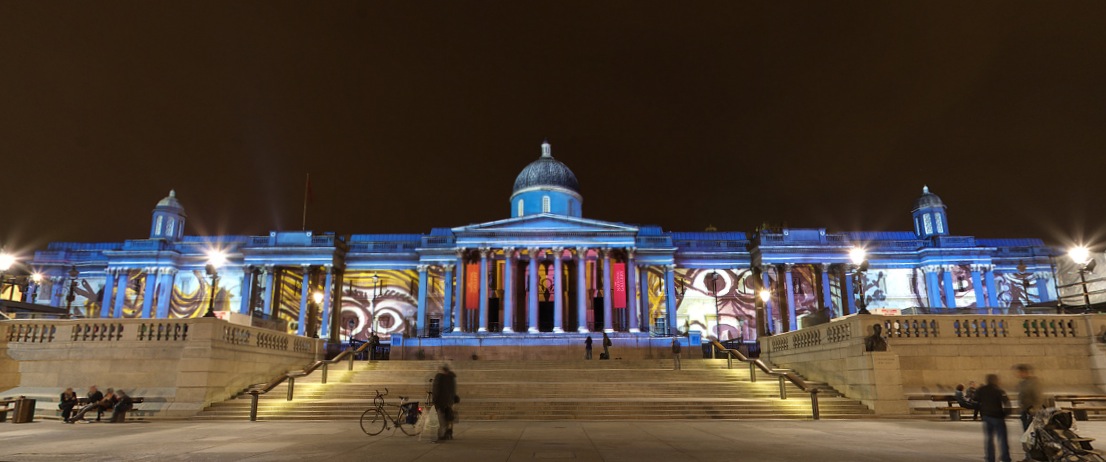
Tom Mills. Picasso: Challenging the Past at the National Gallery. (February 2009) From a 360-degree photograph. Click photograph to go to original on www.360cities.net.
Lest visitors think that Pablo Picasso (Spanish, 1881-1973) had betrayed or diluted his innovative impulses, the introductory paragraph to the exhibition–boldly written on the wall near the entry–states “he certainly was not a slave to the canon.” Thus, a confusing tone was set, turning up throughout the exhibition, that simultaneously attempted to admire Picasso’s admiration for “traditional” artists while, in some cases, denying them admiration.
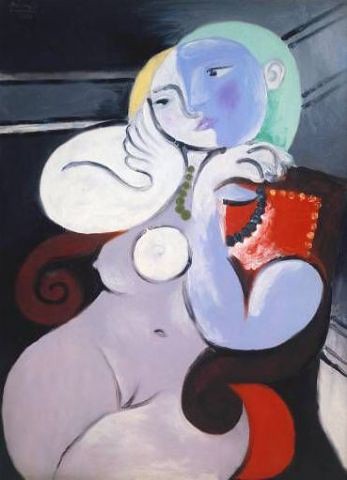
Pablo Picasso (Spanish, 1881-1973) Nude Woman in a Red Armchair (1932) Oil on Canvas. 130 by 97 cm. Tate Museum, UK.
An example was the exhibition’s treatment of Ingres. Making a comparison between the National Gallery’s Portrait of Madame Paul-Sigisbert Moitessier by Jean Auguste Dominique Ingres (French, 1780-1867) to Picasso’s Nude Woman in a Red Armchair, the exhibition claimed that Ingres, like Picasso “idealized eroticism,” and that “the more one looks at Ingres, the less plausible his work seems.” According to the film accompanying the exhibition, Ingres’ arms and fingers appear to have no bones, and figures seem dramatically out of distortion, as if they were anticipating Picasso’s work. It seemed like revisionism. (See my previous post on Ingres’ careful attention to the human figure.) It was as though Ingres could not be appreciated on his own terms, but only on Picasso’s.

Jean August Dominique Ingres (French, 1780-1867) Portrait of Madame Paul-Sigisbert Moitessier (1856) Oil on canvas. 120 by 92.1 cm. National Gallery, London
Seeing Picasso’s works, I don’t necessarily think that he would have shared this perspective. There is no denying the copious amounts of time he spent reworking Diego Velázquez’s (Spanish, 1599-1660) Las Meninas or the Rape of the Sabines by Nicolas Poussin (French, 1594-1665). This is what makes Picasso great: his simultaneous departure from and use of classical themes. As I walked through the exhibition I was remineded of F. Scott Fitzgerald’s comment: “The test of a first-rate intelligence is the ability to hold two opposed ideas in the mind at the same time, and still retain the ability to function.” Despite the startling variety of his output–one piece reflects his classical training, another is nearly completely abstract, a work full of color, and another nearly void of spectrum–Picasso confidently comes across in each painting.
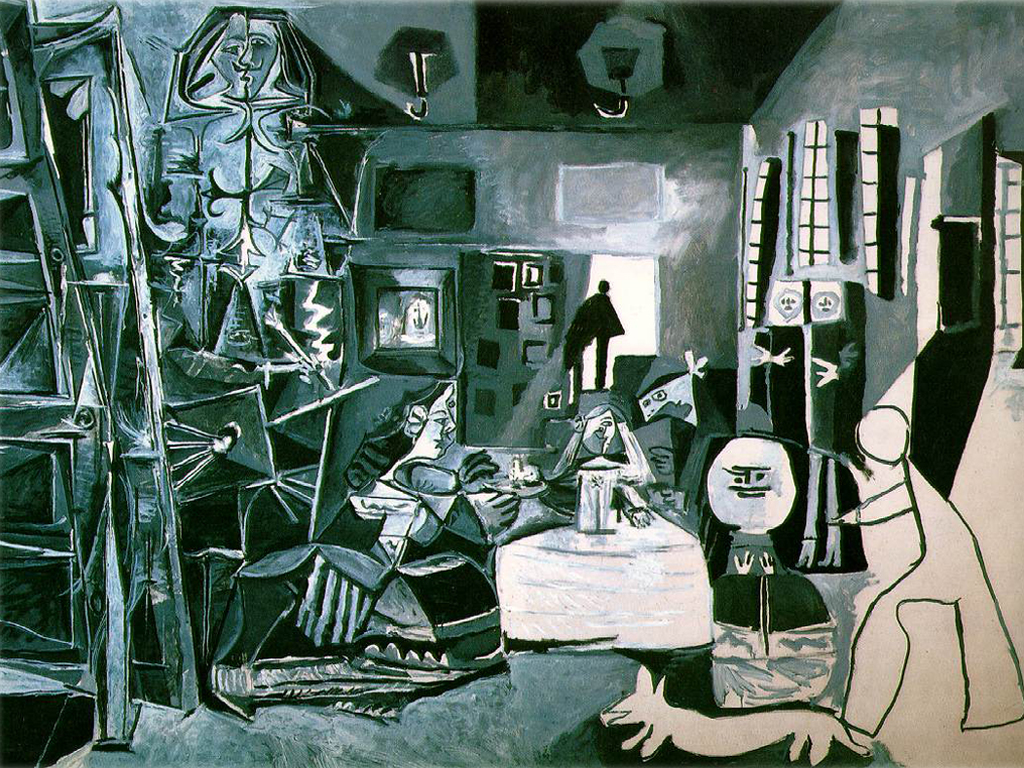
Pablo Picasso (Spanish, 1881-1973) Las Meninas, after Diego Velázquez (1957) Oil on canvas. Picasso Museum, Spain.
The exhibition seemed organized for those who already love and acknowledge Picasso as part of the canon. As such, it was, at first, difficult for me–someone who still struggles to relate to his works–to approach. However, the more I looked directly at the works, the more approachable they became. Despite the exhibition’s sometimes revisionist treatment of “the canon,” it was an ideal primer to his oeuvre. Deciphering Picasso’s translation of Las Meninas by Velázquez, for example, kept me occupied for at least 30 minutes and provided numerous insights into Picasso’s pictoral devices. It was a Rosetta Stone for Picasso.
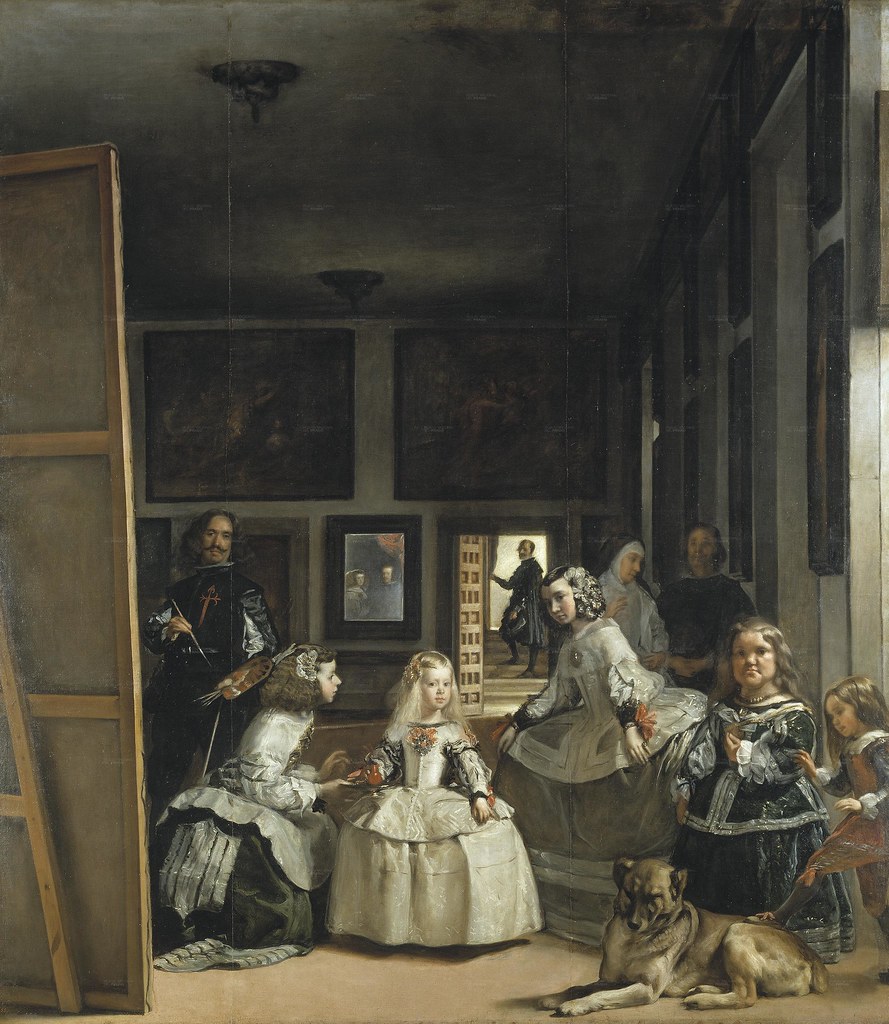
Diego Velázquez (Spanish, 1599-1660) Las Meninas (The Maids of Honor) or the Royal Family (1656-57) Oil on canvas. Museo del Prado, Madrid, Spain
A mentor of mine is fond of saying that “art is very personal.” Personally, Picasso is a shock to my natural inclinations. However, I admire his genius and, with the help of this exhibition, found myself thinking: “That bastard! He was good.”
Léon Bonnat (French, 1833-1922): The First Classical Realist?
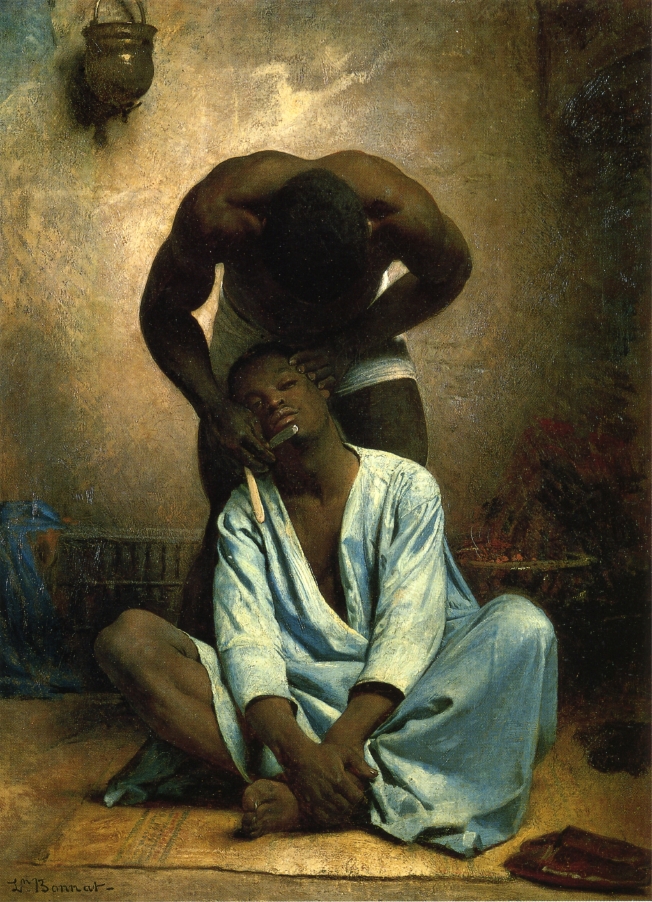
Léon Bonnat (French, 1833-1922) The Barber of Suez (1876) 80 by 58.42 cm. Oil on canvas. Private collection.
During the last quarter of the nineteenth century, few French painters have been as influential and forgotten as Léon Bonnat (1833-1922). He was trained in the Academic tradition and eventually became Director of the Ecole des Beaux-Arts in Paris, yet he was a champion of controversial painters, such as Gustave Courbet, and a lifelong friend of Edgar Degas, who was closely associated with the anti-academic Impressionist movement. Trained in Madrid and Paris, he was a bridge between two artistic cultures, which he combined in his own work and his mentoring of a generation of painters that included Thomas Eakins and John Singer Sargent. His relationship with Spanish art would have far-reaching implications for nineteenth-century painting by legitimizing Spanish Masters, particularly Velázquez and Ribera, whose work had a great deal in common with French Realism in its depiction of the human figure.
Because he destroyed all his own personal correspondence, what we know about Bonnat is usually gleaned from his students and the public records. In his wonderful book, The Revenge of Thomas Eakins, Sidney Kirkpatrick writes:
Bonnat went to great effort to capture the realism of this model, sometimes requiring his subjects to sit fifty or more times before completing portraits. The essential words to describe Bonnat’s paintings, as well as his reaching style–as more of his students reported–were “truth and logic.” . . . Bonnat’s personal struggles as an artist also resonated with Eakins. Writing to his father, Eakins related how Bonnat, as a young art student, had been deeply troubled by his teacher’s wanting him to paint the same way he did. Bonnat couldn’t oblige. “He was better than his teacher, although he [Bonnat] was doing such bad work [at the time],” Eakins went on. “His teacher told him he would have to stop painting, and then he went to [another teacher who] . . . told him to go and be a shoemaker, that was all he was fit for. A few years more and he was as big as the biggest of them.”
Bonnat was born to a middle-class family in Bayonne. In the border region near Spain, the city is in traditional Basque territory. Bonnat’s family, in particular, was comfortable enough with Spain to make a move to Madrid in 1847, where his father opened a modest book store.
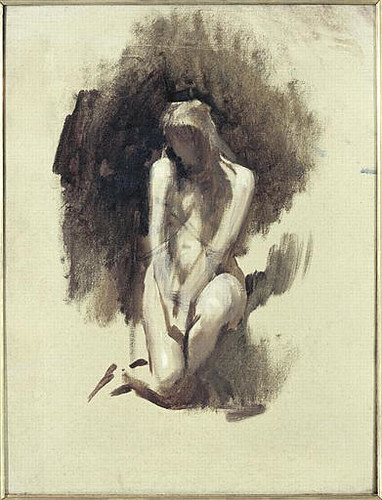
Léon Bonnat (French, 1833-1922) Study of female nude. Musée d'Orsay
In 1837, the Prado Museum was opened to the general public and, later, enlarged as part of major redevelopment of the Madrid. Regular visits to the museum were compulsory for students of the nearby Academia de Bellas Artes de San Fernando. There students were required to study Italian, Flemish, and Spanish Old Master works. Above all, and in order of importance, Velázquez, Murillo, Ribera and Zurburán–all well represented in the Prado’s collection–were considered models for nineteenth-century Spanish students.

Léon Bonnat (French, 1833-1922) Job. Oil on canvas.
Sometime between 1847 and 1855, Léon Bonnat was accepted and studied at the Academia. There he worked first under the instruction of José de Madrazo y Agudo (1781-1859), a student of Jacques Louis David (French, 1748-1825) and, then, his son, Federico de Madrazo y Kuntz (1815-1894), who had a life-long relationship with Jacques Auguste Dominique Ingres (French, 1780-1867). These painters were commanded enormous respect and influence in nineteenth-century Spanish art.
In 1853, Bonnat’s father died, prematurely ending his studies and requiring his family to return to Bayonne. There Bonnat quickly secured a 1,500-franc scholarship from the local Municipality to study at the Ecole des Beaux-Arts. Within a year, at at the age of 20 he had moved to Paris and entered the studio of Léon Cogniet (1794-1880).
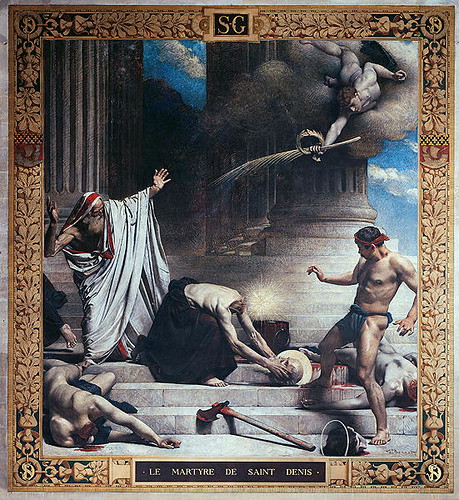
Léon Bonnat (French, 1833-1922) The Martyrdom of Saint Denis (c. 1880) Fresco. Parisian Parthenon, France.
By 1857 Bonnat had submitted three portraits to the annual Salon, all of which were accepted and initiated a life-long career of portraiture, which ensured a steady paycheck and a stream of important clients that included Victor Hugo, Alexandre Dumas, the Empress Eugene, and the official images of four successive French presidents. Also in 1857, Bonnat competed for and won second place in the coveted Prix de Rome. Despite having lost state patronage to study in Rome, he was accepted to the French School in Rome and paid his own way. Studying there from 1858-1861, he produced three large-scale history paintings, Le Bon Samaritain (1859), Adam et Eve découvrant le corps d’Abel (1860) and Le martyre de Saint-André (1861), which were each sent to and accepted in the annual Paris Salon.
Almost immediately upon his return from Rome, Bonnat was welcomed into the French Academy and the upper echelon of respectable French art culture. In 1863 and 1864, two of his works are acquired by Princess Mathilde and Empress Eugénie, respectively. He was awarded the Légion d’Honneur (1867), made a member of the Salon jury (1869)–a position he would hold until his death–a member of the Institute de France (1881), a professor of at the Ecole des Beaux-Arts in Paris (1888), awarded the Grand Croix (1900), and made Director of the Ecole des Beaux-Arts (1905).
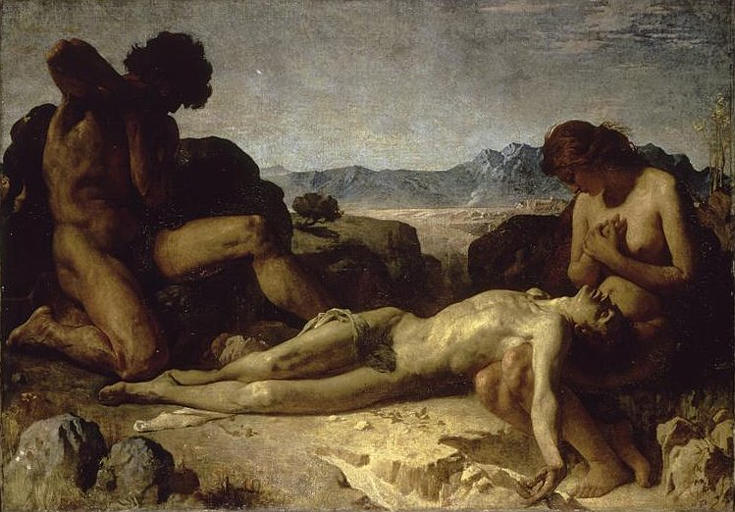
Léon Bonnat (French, 1833-1922) Adam and Eve Mourning the Death of Abel (c. 1860) Oil on canvas.
Despite having accrued significant and real recognition from the Academy, Bonnat courted controversy. As a young painter in 1863, he supported new reforms in the Ecole des Beaux-Arts that opened the very conservative school to, among other things, allow students to be instructed in oil painting. Beginning in 1869 as a member of the Salon Jury, Bonnat became a proponent for the controversial work of Eduoard Manet and Gustave Courbet. He was also a lifelong friend of Edgar Degas.
As I did research for this post, it occurred to me that, like Bonnat, many contemporary artists are struggling with the combination of the Classical Tradition and Realism in their work. The former emphasizes the ideal and the latter the real, often with particular emphasis on imperfection. I think that so-called “Classical Realists” would do well to look at the work of Bonnat, who combined a love of Ingres with a reverence for Ribera. They would benefit more looking at his paintings than from William-Adolphe Bouguereau (French, 1825-1905), for example, who was a strict Classicist.
Nineteenth-Century Meddling: St. Mark by Frans Hals
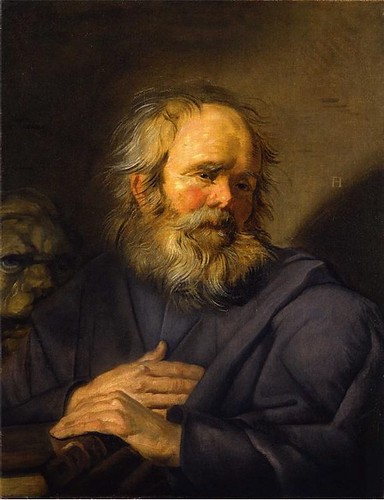
Frans Hals (Flemish, 1580-1666) St. Mark. Oil on canvas. 27 by 20 3/4 in. (68.5 by 52.5 cm). Colnaghi Gallery, Munich.
Most of the people who read this blog have a positive opinion of nineteenth-century art culture. They might be surprised to know that, in many cases, the nineteenth century was not kind to Old Master paintings. It was common for collectors to “improve” paintings by hiring painters to update or adjust them. Many paintings didn’t survive the century and others were transformed.
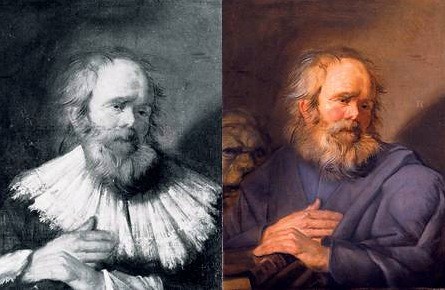
Frans Hals (Flemish, 1580-1666) St. Mark. Oil on canvas. 27 by 20 3/4 in. (68.5 by 52.5 cm). Colnaghi Gallery, Munich. Previous to restoration (Left) and after restoration (Right).
That was the case with St. Mark by Frans Hals (Flemish, 1580-1666), which is currently on sale and view at the Barnheimer Fine Old Master Gallery in Munich. (Asking price is $7.7 million.) In 1972, the painting failed to sale at a Christie’s auction were it was atributed to Luca Giorando (a bizarre assumption). In 1973, the painting was sent to a restorer, who removed a small patch of paint and discovered Hals’ signature. It was a surprise because Hals, who is best known for his portraits, rarely painted religious scenes.
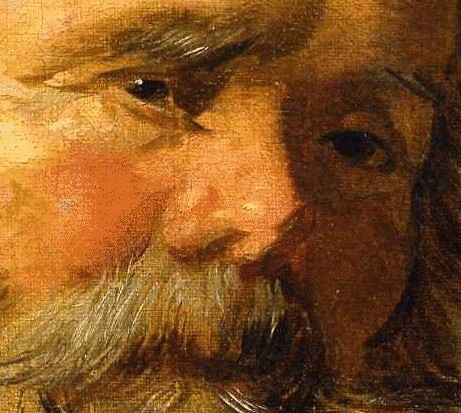
Frans Hals (Flemish, 1580-1666) St. Mark. Oil on canvas. 27 by 20 3/4 in. (68.5 by 52.5 cm). Colnaghi Gallery, Munich. (Detail)
Sometime in the nineteenth century, a collector thought the painting would be better were it to look more like other Hals’ portraits. Thus, a painter was hired to add lace collars and cuffs, which covered the apostolic robes and the lion, a traditional symbol for St. Mark.
The Prodigal Son in Modern Life Series by James Tissot
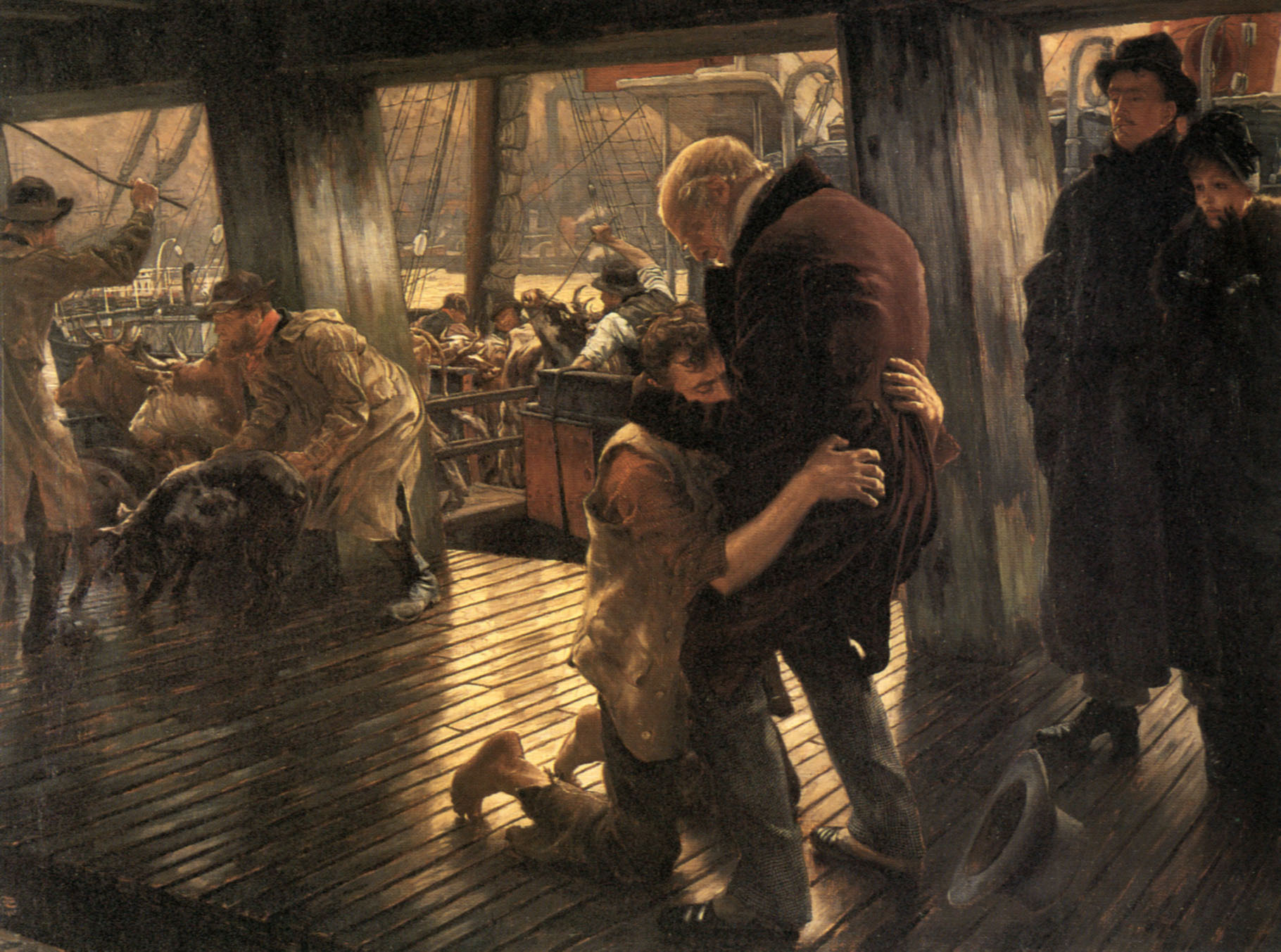
James Jacques Joseph Tissot (1836-1902) The Prodigal Son in Modern Life: The Return. Oil on Canvas (c. 1882) Muse?e de Nantes, France. (Click for high-resolution image.)
After such a long absence, I thought it fitting to make this post’s topic reflect both my sincere repentance at not having actively updated the blog and my hopes that I’ll be forgiven by those who have been patiently waiting for any sign I was still alive.
I have been in deep-research mode, and have a number of exciting things to share. Next week, I’ll begin off-loading a number of the projects I am doing on the blog and, hopefully, reignite a dialogue with many of you.
Tissot’s Prodigal Son in Modern Life
James Tissot (French, 1836-1902) is largely remembered for his scenes and portraits of the upper-middle class, but, during the 1880s he had a religious awakening and produced a number of works inspired by the New Testament. In 1885, he had what he referred to as an “epiphany” and “revelation” that lead him on a pilgrimmage to cathedrals in France and to create a series of 35 scenes from the life of Christ.
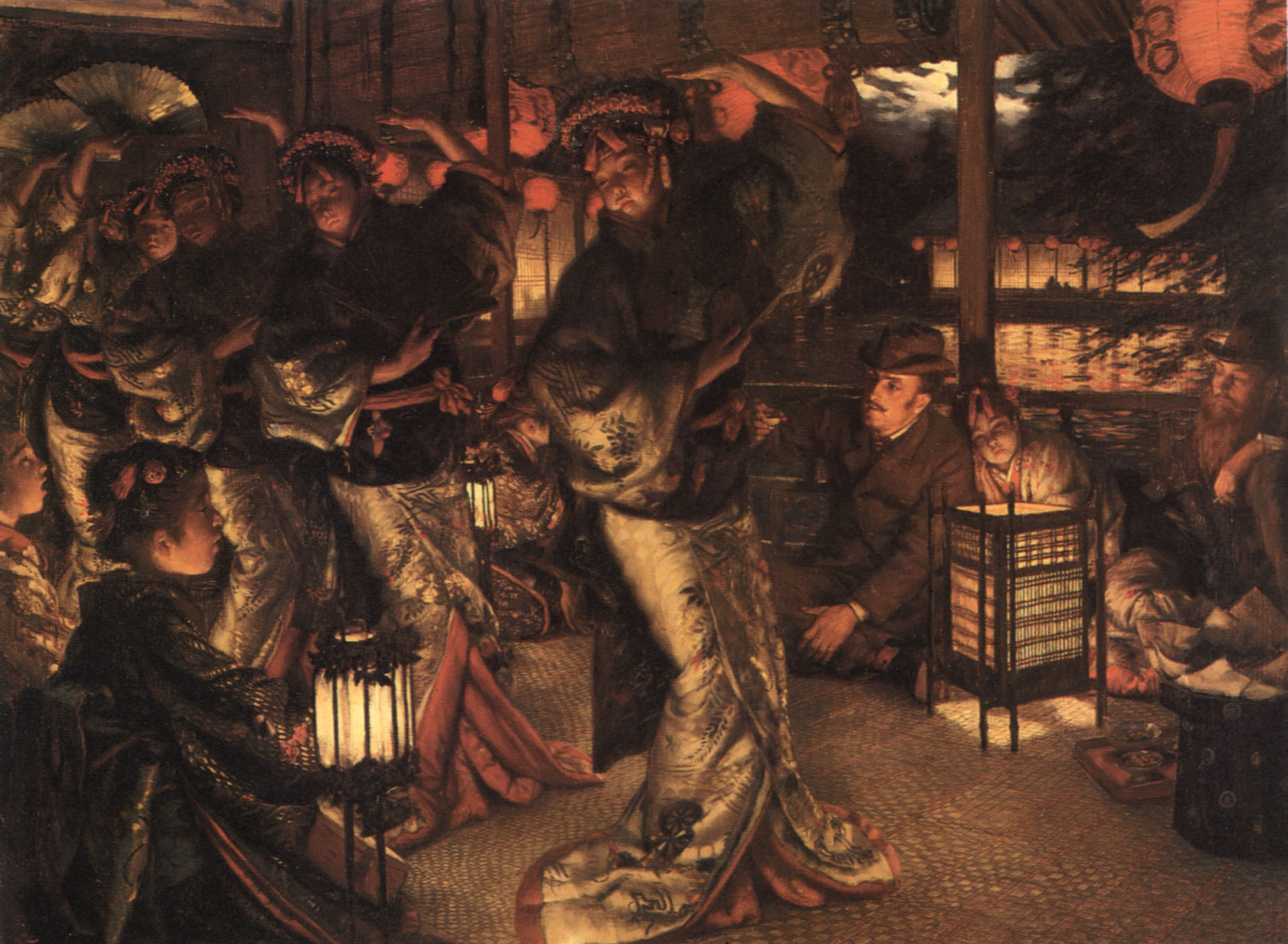
James Jacques Joseph Tissot (1836-1902) The Prodigal Son in Modern Life: In Foreign Climes. Oil on Canvas (c. 1882) Muse?e de Nantes, France. (Click for high-resolution image.)
During this religious decade Tissot did multiple version of the Prodigal Son. This particular series is titled “The Prodigal Son in Modern Times” and consists of three paintings all set in contemporary English life. They were exhibited at a one-man show at the Dudley Gallery (London) in May of 1882 and accompanied by watercolor sketches of the same paintings and etchings that were later reproduced widely in England.

James Jacques Joseph Tissot (1836-1902) The Prodigal Son in Modern Life: The Departure. Oil on Canvas (c. 1882) Muse?e de Nantes, France. (Click for high-resolution image.)
Shortly after the show, Tissot returned to France and took the three original oils with him. They remained in his studio until his death in 1902 and were, then, offered to the Louvre, which would not take them. Instead, the three paintings were taken by Musée de Nantes, located in Tissot’s hometown, where they remain today.
Restoring a Masterpiece: CSI for the Art World, Only Happier
Artwork is not often built to last or to move, yet we insist on both. Some time ago, I worked with a collector of eighteenth-century French paintings who regularly shipped works to his home in Utah. Moving paintings from a relatively humid Western Europe to the American desert compounded other problems associated with older works of art. Paint decays over time, causing colors to lose their original hues. Glazes age, darken colors and yellowing the overall work. But, perhaps more dangerous that all of these is the lack of–or dramatic increase in–humidity. Works on panel (i.e. wood), in particular, tend to crack, buckle or completely detiorate. Solving these problems can cause collectors to recruit a CSI-like team of experts to stabalize restore and conserve a work.
(Dim your computer screen to emulate CSI filming.)
In trying to explain this to another collector, I was very happy to find this video, published by the Indianapolis Museum of Art on the restoration and conservation of a major work in its collection: Madonna and Child with St. Nicolas of Babi and St. Justina by Sebastiano Mainardi (San Gimignano, 1460-1513). Painted with oil on wood, the altarpiece was moved to the US in the early twentieth century. At the time, in order to stablized the large panel of wood it was painted on, a complex lattice of wood–called a “cradle”–was fastened to the back. Cradles were a typical solution to stabalizing wood panels throughout the nineteenth century. Though well intentioned, they prevent wood from breathing and cause it to buckle and crack, which then leads to problems with the paint on its surface. The solution, as demonstrated by the video, can stretch the capabilities of modern technology.
The Most Wanted Painting (The Flemish Were Not Far Off)
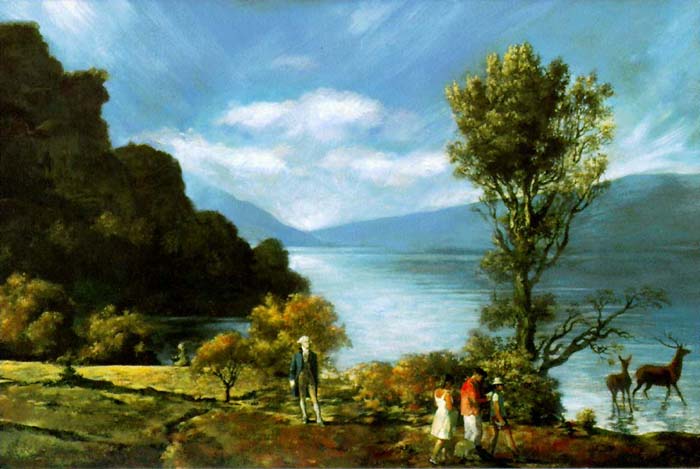
Vitaly Komar and Alex Melamid. Most Wanted Painting, America. (1995) Digital composite image.Vitaly Komar and Alex Melamid. Most Wanted Painting, America. (1995) Digital composite image. (Note George Washington in the center of the work.)
What if we made art according to surveys? What if artists, like many politicians, relied on polls? This week, the public radio show This American Life features an interview with two digital artists, Vitaly Komar and Alex Melamid, who received a grant from Chase Manhattan Bank to determine the attributes of the most and least wanted painting. To do this, Komar and Melamid conducted a number of online surveys allowing participants to choose their favorite elements from famous works. The result has been called the “most wanted” painting.
Having read through study, it is difficult to determine the level of professionalism in its methods. The results were only published online and were never peer reviewed. Regardless of its integrity, it is an interesting exercise.

Vitaly Komar and Alex Melamid. Most Wanted Painting, France. (1995) Digital composite image.
Of the dozen countries represented in the study, all of them, with the exception of Holland, preferred realistic landscapes. The Dutch, for reasons unexplained in the study, value abstract art, which, for most other countries, is the “least preferred” type of painting. The contents of the “most wanted” are surprisingly uniform:
- landscape
- mountain on the left
- tree on the right
- wild animals
- gathering of people
- famous political figure
- strong blues
The elements read like a description of any number of sixteenth-century Flemish paintings.
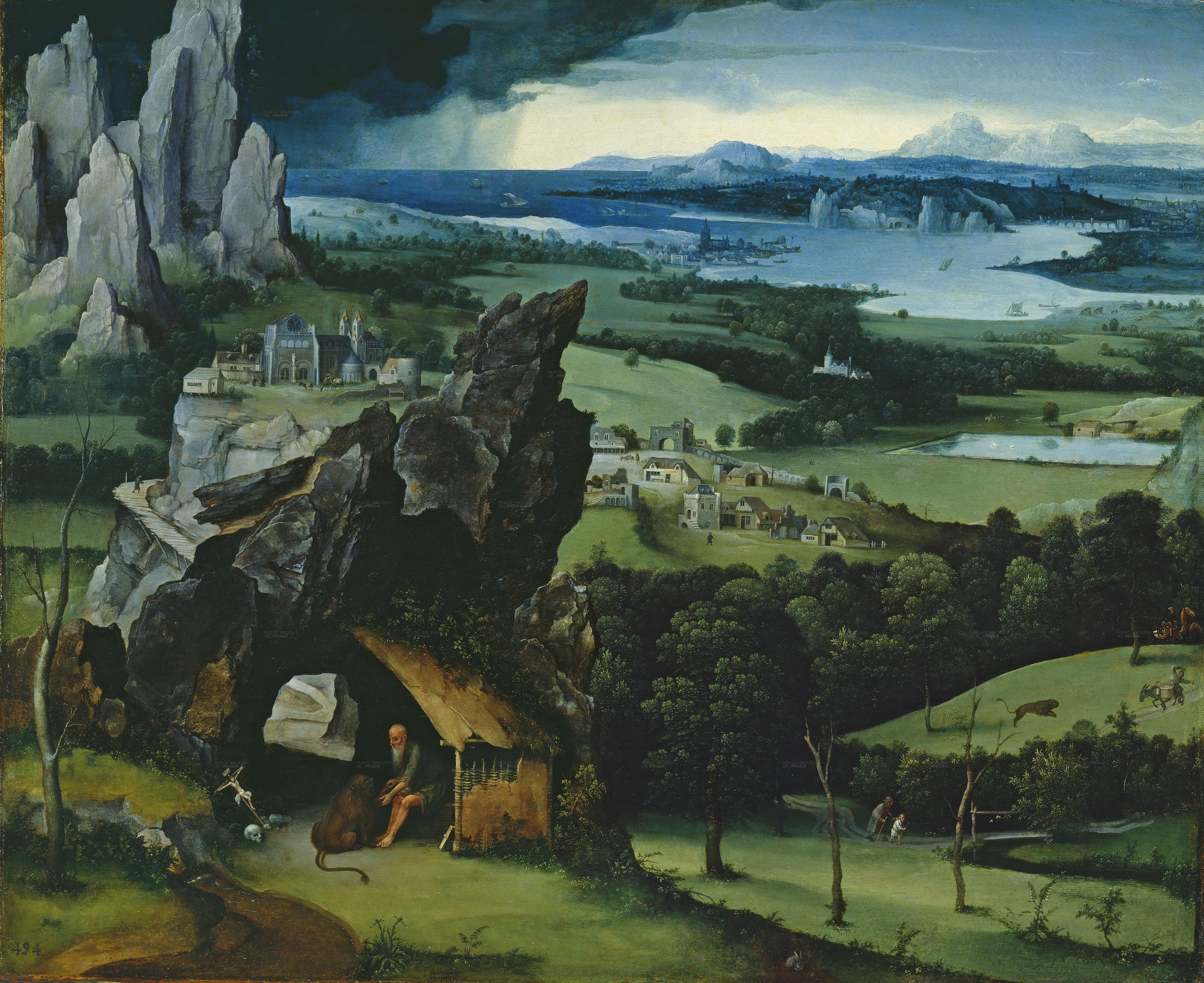
JOACHIM PATINIR (Flemish, 1480-1524) Landscape with Saint Jerome (c. 1516-1517) Oil on board. 74 BY 91 cm. Prado Museum, Madrid.
Several years ago, I had a conversation with one of London’s foremost dealers of Old Masters paintings. He told me that, of all paintings, landscapes were the most popular in his gallery. When asked “Why?” he responded: “I suppose it is because they are the least controversial. They can be enjoyed without taxing the viewer. And, they do not make any overt political or value statements that need to be defended.”
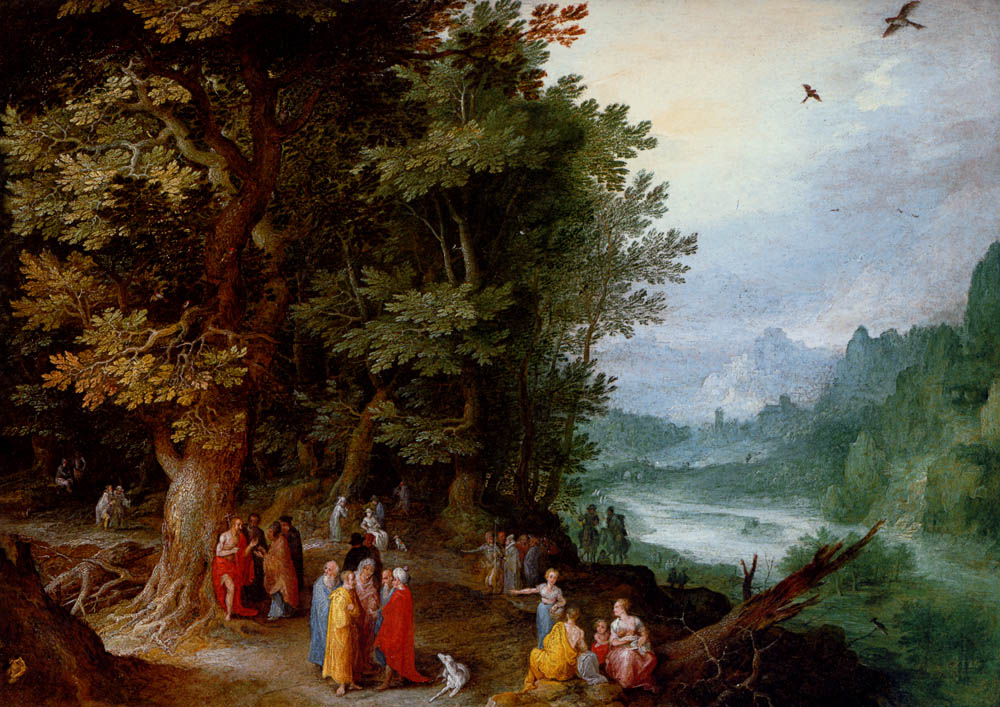
JAN BREUGHEL, THE ELDER (1568-1625) Saint John preaching in the wilderness (c. 1615) Oil on copper 25.5 BY 35 cm.
No doubt there are many reasons to love these paintings that have little to do with political correctness. Personally, I love works by Patinir and Jan Breughel. They were often small and, rather than hung on a wall, meant to be looked at while holding them on a lap with with a magnifying glass. The paintings are full of rich detail, distant views, and multiple paths. These are works that can be looked at again and again, each time with a new discovery.
The idea that painting could be put together by committee flies in the face of our belief in the lone genius painter. However, in their public radio interview the authors of “The Most Wanted Painting” study are quick to point out that the notion that our ideas about a creative genius are just as clichéed and inaccurate as our judgment that painting by polls are somehow unable to create good art. Though I am not suggesting art should be created by polling, I would suggest an adjustment to anyone attempting to repeat and improve upon the “most wanted” painting.
Several years ago, Malcolm Gladwell, author of many books and a writer for the New Yorker, gave a lecture on “What we can learn from spaghetti sauce.” In it, he profiles a food scientist that found that instead of trying to satisfy the American palette with one perfect spaghetti sauce–the unreachable Holy Grail for food production industry-we should be looking for the perfect sauces. According to taste testings, Americans fell into one of three categories of spaghetti sauce. The same proved true for coffee and a number of other foods. As a result, most companies produce a limited variety of each category of food to meet the needs of each general group’s taste.
If I were a gambling man, I would bet that the same would be true for the “most wanted” painting. Perhaps someone reading this would be able to convince Chase Manhattan Bank for a second grant.
Three Paintings by Anthony Van Dyck (Flemish, 1599-1641) for Christmas
When Anthony Van Dyck (Flemish, 1599-1641) made these three paintings, he was between 19 and 20 years old. All three were owned by Peter Paul Rubens (Flemish, 1577-1640), and were bought from his collection by the Spanish royal family after Rubens’ death. That Rubens had them in his private collection says a great deal about his admiration for Van Dyck. Rubens was 12 years older than Van Dyck and had hired him to work as his chief assistant in his studio. “Assistant” doesn’t do enough justice to Van Dyck, who was young but extremely competent. Even today, scholars have a difficult time distinguishing between the two artists’ work during the period they worked together.

Anthony Van Dyck (Flemish, 1599-1641) The Capture of Christ or Judas' Kiss (c. 1618-1620) Oil on canvas. 344 cm x 249 cm. Prado Museum, Madrid.
In this first work, Christ is betrayed by Judas, who leads a crowd of Suducees and Pharisees (i.e. member of the ruling Jewish priesthood) to take Christ into custody. Christ had just offered his interceding prayer in the Garden of Gethsemane, while three faithful apostles (Peter, James and John) had fallen asleep keeping watch.
Van Dyck brilliantly creates a torrent of action swooping in towards Christ, the only figure with two feet on the ground, effectively stopping the large crowd by himself. The contrasting patches of dark and light, red and black create an emotional upheaval. It’s an unsettling painting, and, with figures at almost real-life proportions, imposing.
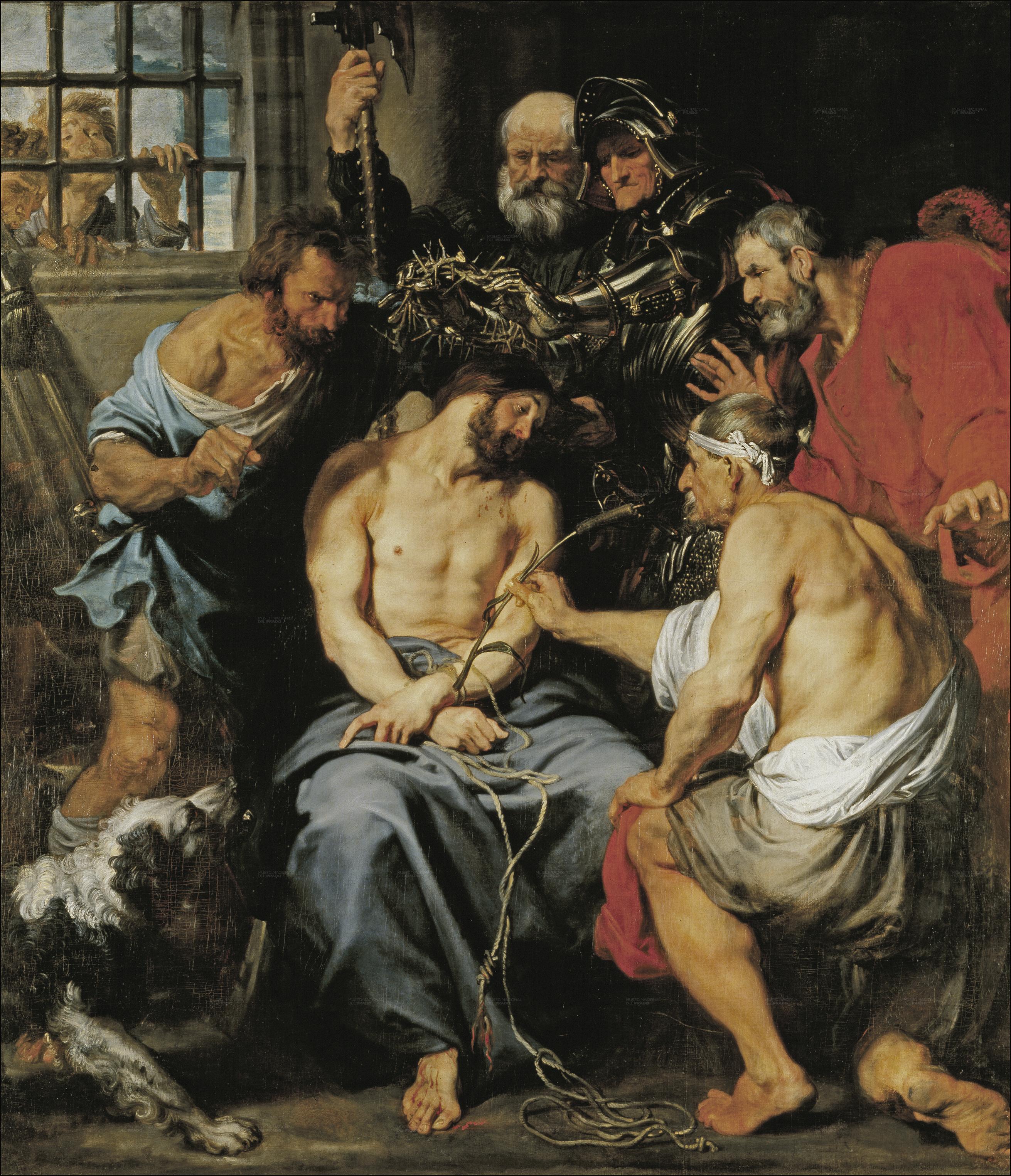
Anthony Van Dyck (Flemish, 1599-1641) Crowning Christ with Thorns (c. 1618-1620) Oil on canvas. 224 cm x 197 cm. Prado Museum, Madrid.
Looking at this painting, its hard to know whether you are in the prison, and therefore an accomplice, or, like the figures in the top left of the painting, looking through a window. In either case, you have a front-and-center view of the scene. Christ is being crowned with thorns by Roman soldiers.
Van Dyck uses an astounding arsenal–especially given his young age–for his cast of characters. Armor, dog fur, the weakened, pale skin of Christ, the young, healthy skin of the Roman soldiers, wood, sky, rope . . . up close (click on the image for a much larger version) and in person, the brushwork is incredibely varied and the pallet rich.
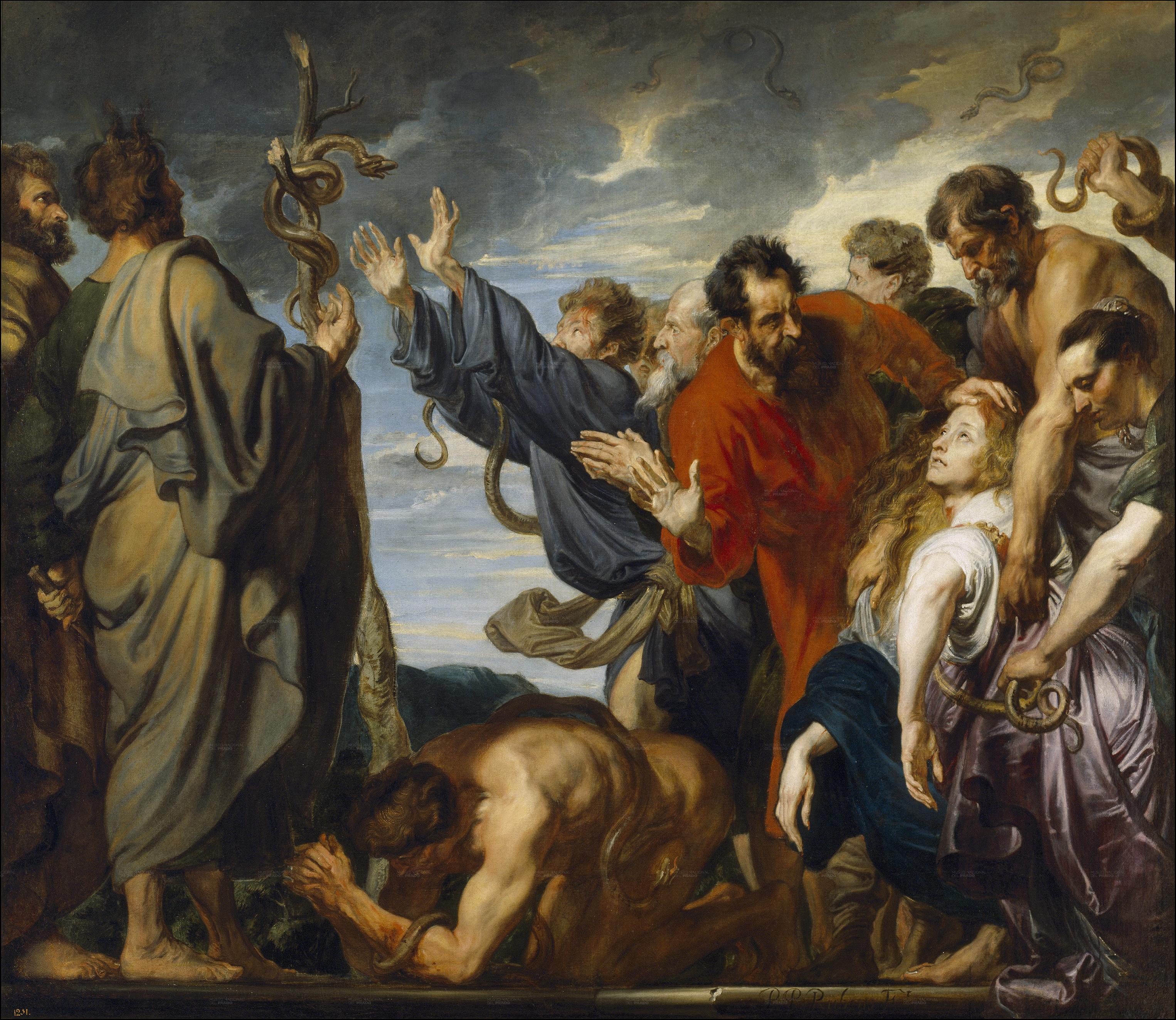
Anthony Van Dyck (Flemish, 1599-1641) The Brass Serpents (c. 1618-120) Oil on canvas. 205 cm x 235 cm . Prado Museum, Madrid.
Though not overtly Christian to us today, this painting would have been an obvious reference to Christ’s saving role. It depicts a story from Number chapter 21 in the Bible. Jehovah sent poisonous sepents among the Israelites, and many were bitten. He then commanded Moses to create a brass serpent and put it on a pole. Any person who would look at the brass serpent would be instantly healed. Many did not look, and died. According to the book of John chapter 3 verse 14: “And as Moses lifted up the serpent in the wilderness, even so must the Son of Man be lifted up.”
Van Dyck painted this for a very Bible-literate audience that would have understood the reference to Christ. All three of these paintings hang in the same room, but separately, at the Prado Museum, but I don’t know if there were meant to hang together. Sometimes I wish The Brass Serpents were hung to the right of the The Capture of Christ. The symmetry and dates of the three makes me wonder if they were meant to be together, perhaps with the Crowning of Christ with Thorns in between.
In any case, have a wonderful Christmas.
Eve After the Fall by Eugène Delaplanche (French, 1831-1892)
Lately, I have been looking at my collection of images by theme, grouping Biblical and mythological subjects in categories. (It becomes helpful to have these groupings, which would normally not be seen in museums, when giving lectures or teaching children.) It was while piecing together my images of Eve that I found several photos I had taken of Eugène Delaplanche’s (French, 1831-1892) work Eve After the Fall (1869).
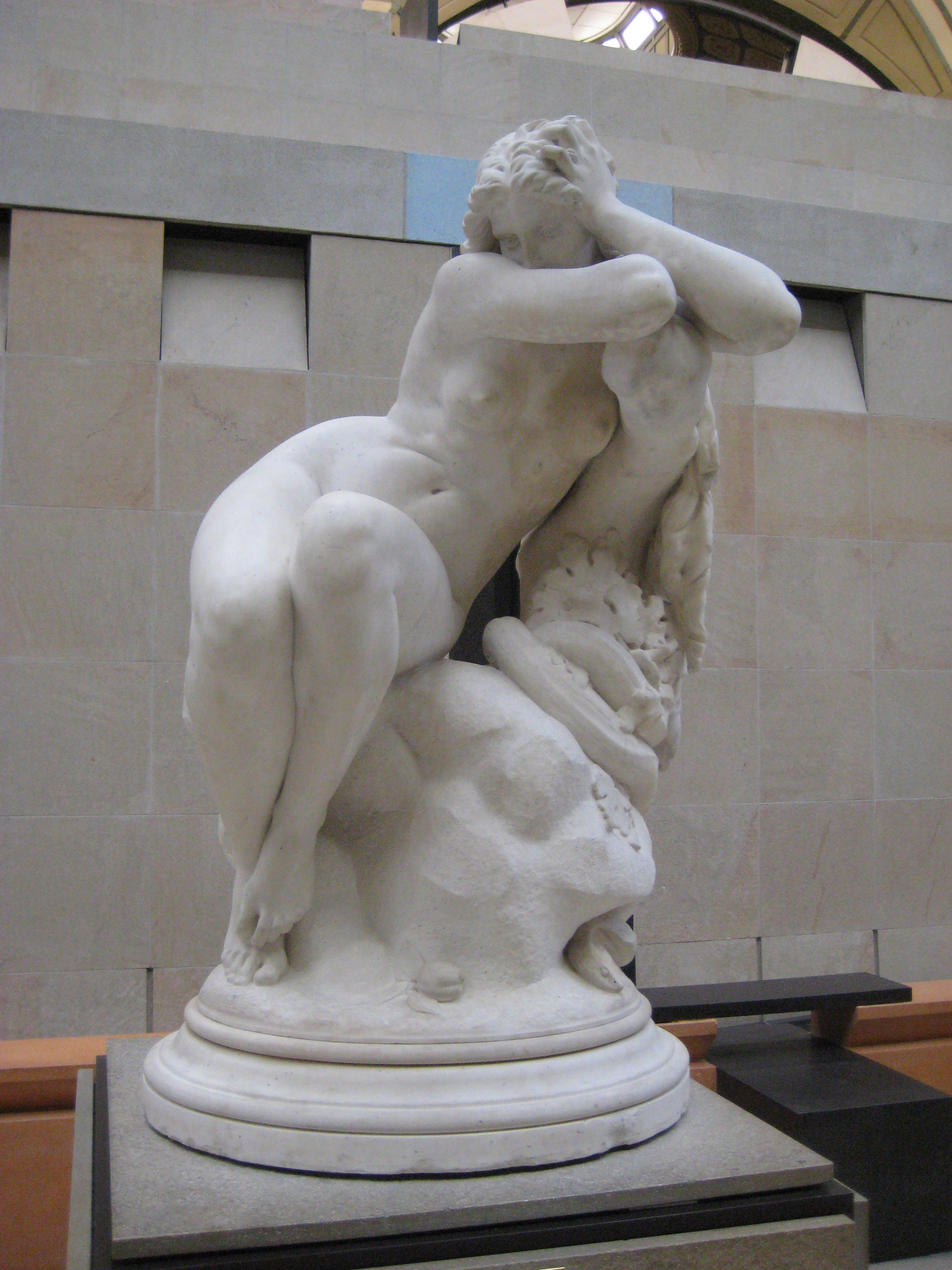
Eugène Delaplanche (French, 1831-1892) Eve After the Fall (1869) Marble. Musée d'Orsay, Paris.
I will never forget the first time I saw it, years ago, at the Musée d’Orsay. Although I was familiar with Eve’s eating of the forbidden fruit and her subsequent expulsion from Eden, I had never considered her feelings and, especially, the moment of realization she must have had after eating the Forbidden Fruit. The sculpture filled me with sympathy for Eve and remorse for my own bad decisions in life. Only great art can do that.
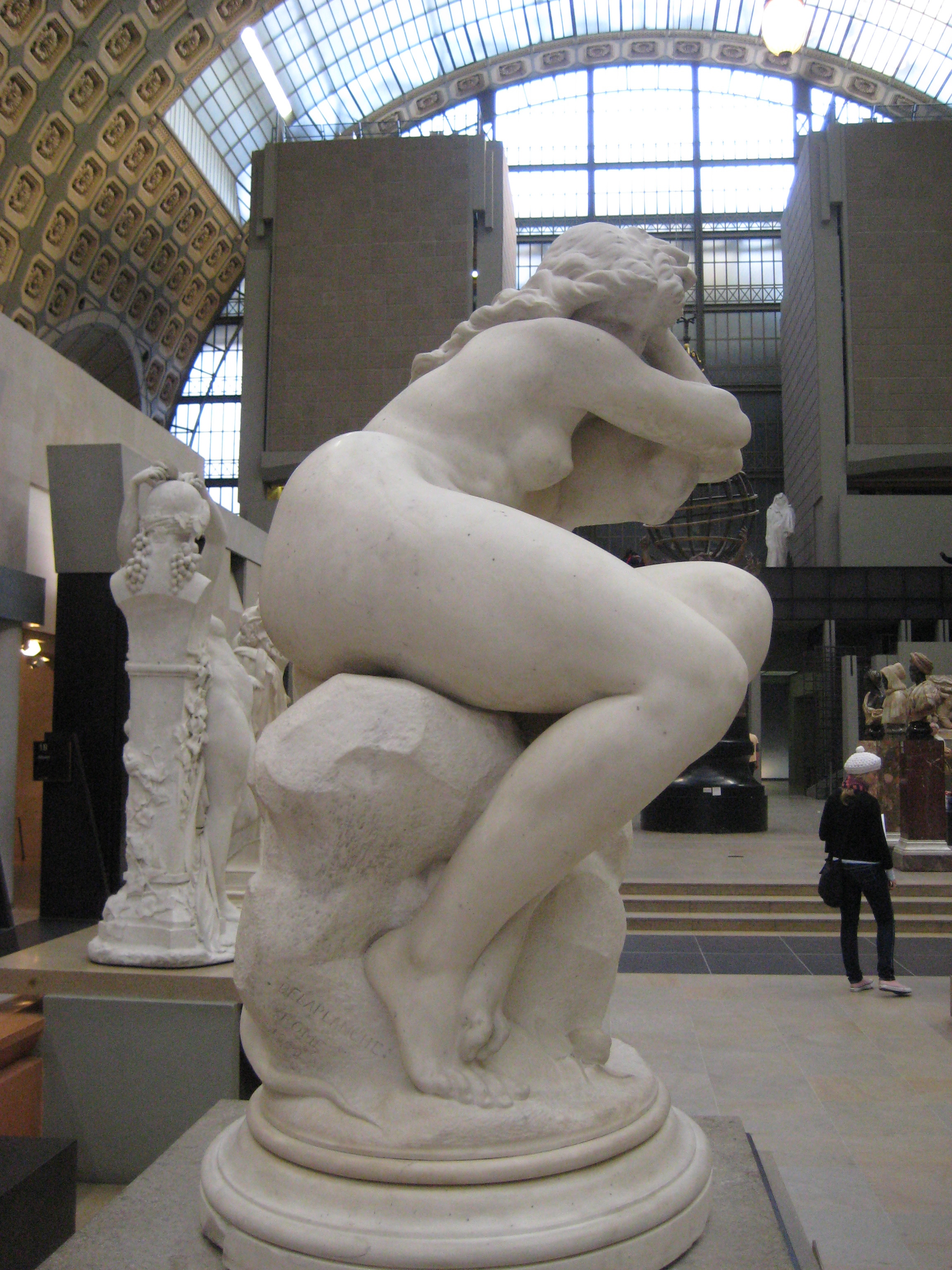
Eugène Delaplanche (French, 1831-1892) Eve After the Fall (1869) Marble. Musée d'Orsay, Paris (Side View)
Delaplanche studied under the neoclassical sculptor Francisque Joseph Duret (French, 1804-1865) . In 1864, Delaplanche was awarded the Prix de Rome and, subsequently, went to Italy where he studied Greco-Roman works and the sculptures of Michaelangelo and Bernini. He returned to Paris with an approach his work that combined classical idealism with natural forms. The result in Eve After the Fall (1869), done shortly after returning from Rome, is almost Hellenistic, but much larger in scale than most Greek statues.

Eugène Delaplanche (French, 1831-1892) Eve After the Fall (1869) Marble. Musée d'Orsay, Paris. (From Behind)
Eve is beautiful, yet forceful. Her features are idealized, yet her figure, almost drawn into a fetal position from horror, is sinuous, organic.
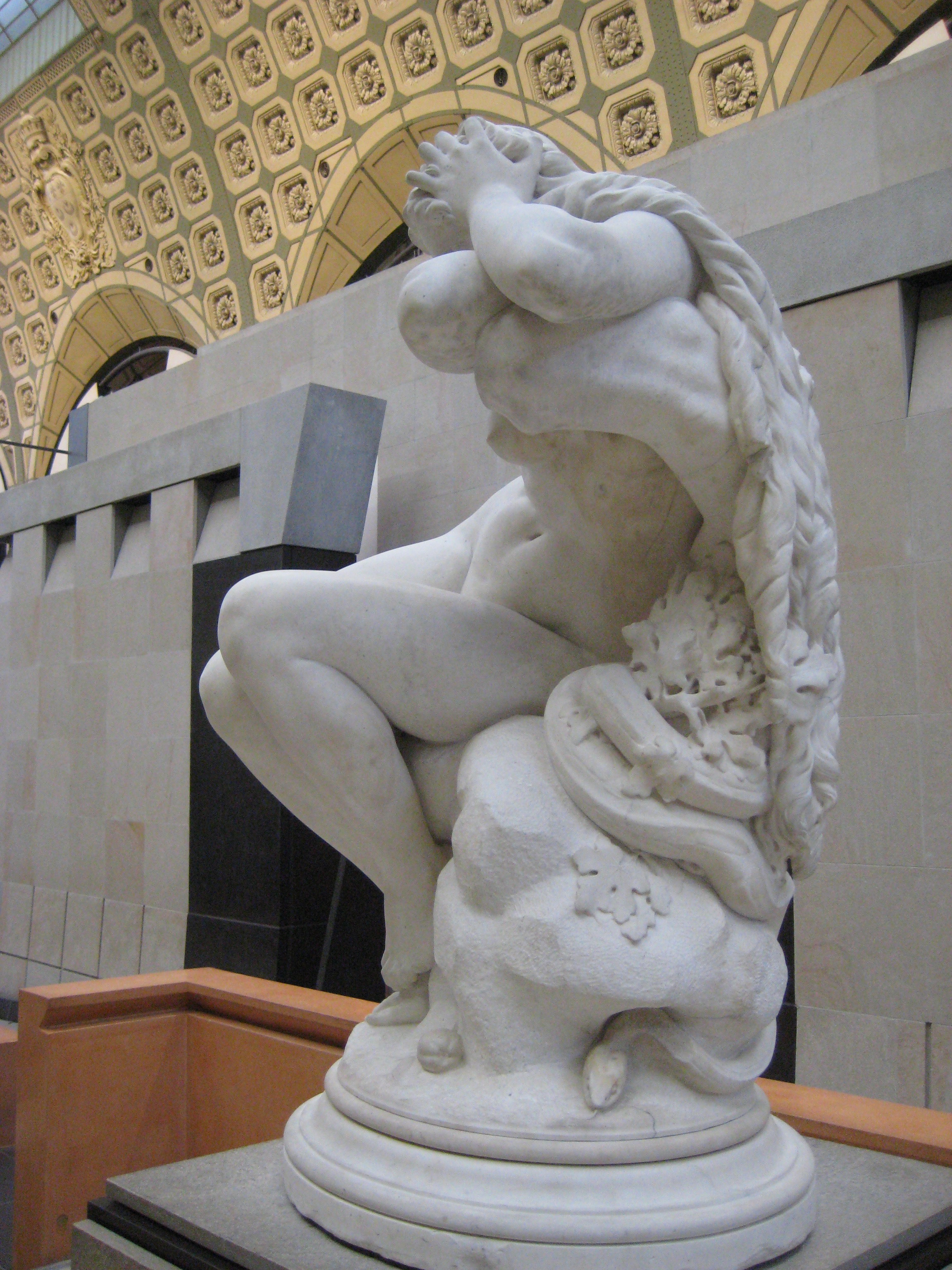
Eugène Delaplanche (French, 1831-1892) Eve After the Fall (1869) Marble. Musée d'Orsay, Paris (Side View)
All of the elements of the story are here: the discarded, bitten fruit from the Tree o Life, the serpent coiled around the tree, and Eve, full of horror and realization of her transgression.
Eugène Delaplanche (French, 1831-1892) Eve After the Fall (1869) Marble. Musée d'Orsay, Paris (Detail of Eyes)
Delaplanche went on to do a number of works and recieved a number of prizes. Unfortunately, like many of his contemporary sculptors and unlike many contemporary painters, little has been written about his work and life.
Drawing Is Not the Only Way to Paint (e.g. Velázquez)
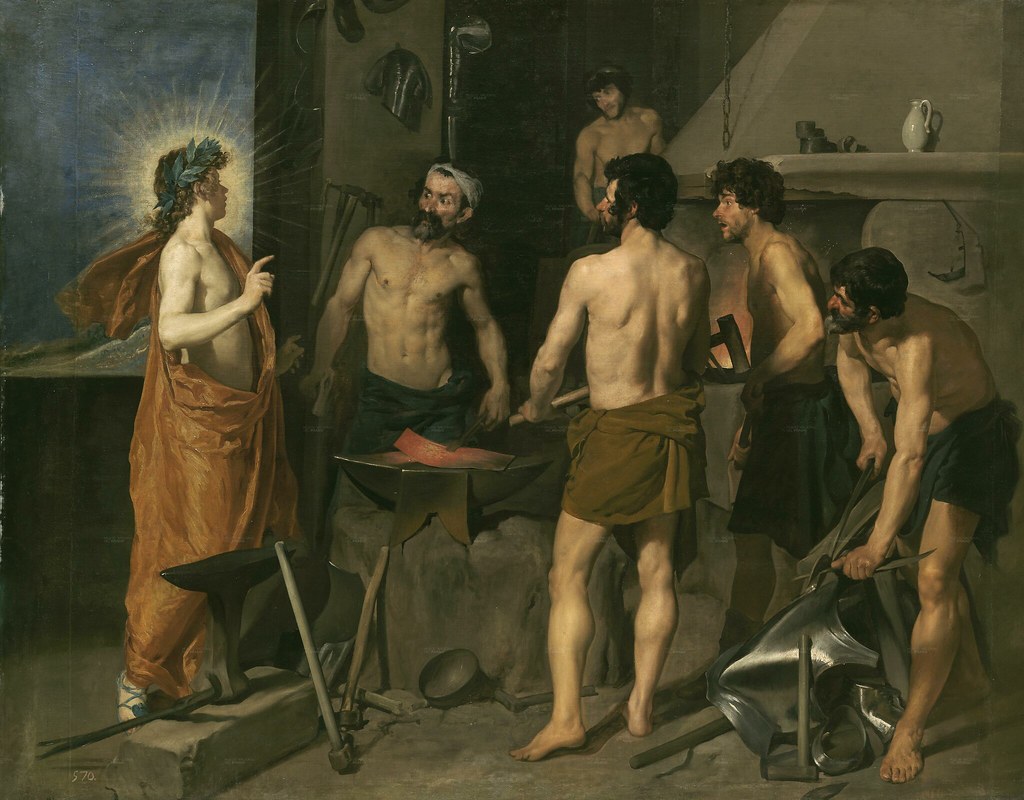
Diego Rodríguez de Silva y Velázquez (Spanish, 1599-1660) The Forge of Vulcan (1630) Oil on canvas. 230 BY 290CM. Prado Museum, Madrid. (Click image for larger version)
In several of my posts, I have pressed the importance of drawing. But it is important to know that not all the greats drew. One artist, in particular, who did not was Diego Rodríguez de Silva y Velázquez (Spanish, 1599-1660). Simply known as “Velázquez,” he was the greatest painter in the history of Spain and admired everywhere by academic and non-academic painters alike.
As mentioned in a previous post, Leon Bonnat, who became Director of the Ecole des Beaux Arts, regularly sent his students to Mardrid to study Velázquez’s works. Thomas Eakins said he was the “greatest painter who ever lived.” Painters as diverse as Millet, Manet, Sargent, Degas, Courbet, and Whistler admired and studied Velázquez’s paintings. They alll may have been surprised to learn what modern technology has taught us about Velázquez’s working method.
We know of only about 100 paintings by Veláquez, 45 of which are kept in the Prado Museum in Madrid. There, they have undergone chemical analysis of his pigments and a barrage of tests to show what lies under the paint. In the book Velázquez: The Technique of a Genius, Jonathan Brown and Carmen Garrido publish some of these findings.
Velázquez does not seem to have started with a fixed idea for a composition, but rather preferred to see what happened as he worked, making adjustments as he painted . . . The contours of figures overlap as their position in the composition changes or as elements are added or subtracted. Even within the forms of individual figures changes can be observed. The positions of hands and sleeves are adjusted, collars and lace are shifted, as are other parts of costume.
Landscape and neutral interior backgrounds were added, generally speaking, after the contours of the figures had been established.
(Jonathan Broan and Carmen Garrido, Velazquez: Technique of a Genius. (New Haven and London: Yale University Press, 1998), p. 18.)
One of my favorite paintings by Velázquez, The Forge of Vulcan, is a good example of this improvisational approach. Originally, the head of Vulcan, the older man in the left-hand side of the painting, was turned away from Apollo.
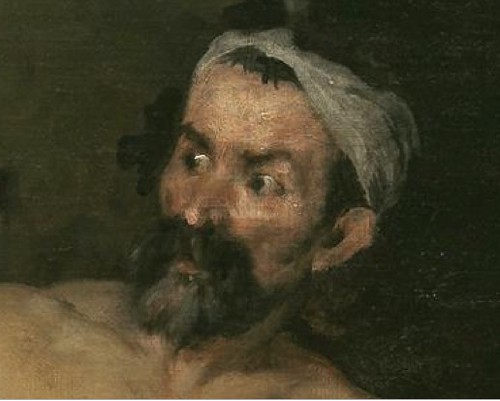
Diego Rodríguez de Silva y Velázquez (Spanish, 1599-1660) The Forge of Vulcan, detail. (1630) Oil on canvas. 230 BY 290CM. Prado Museum, Madrid.
To the left of Vulcan’s head, we can see a dark patch of brown paint where the back of his head used to be. In addition to this change, Velázquez enlarged the canvas. Over time, the pieces that were glued on became separated from the original piece and lines on the left and right of the canvas have become visible (See the first image.)
Not having drawn out the composition before hand, Velázquez created more work for himself. At the same time, it allowed him to go where his creativity led.
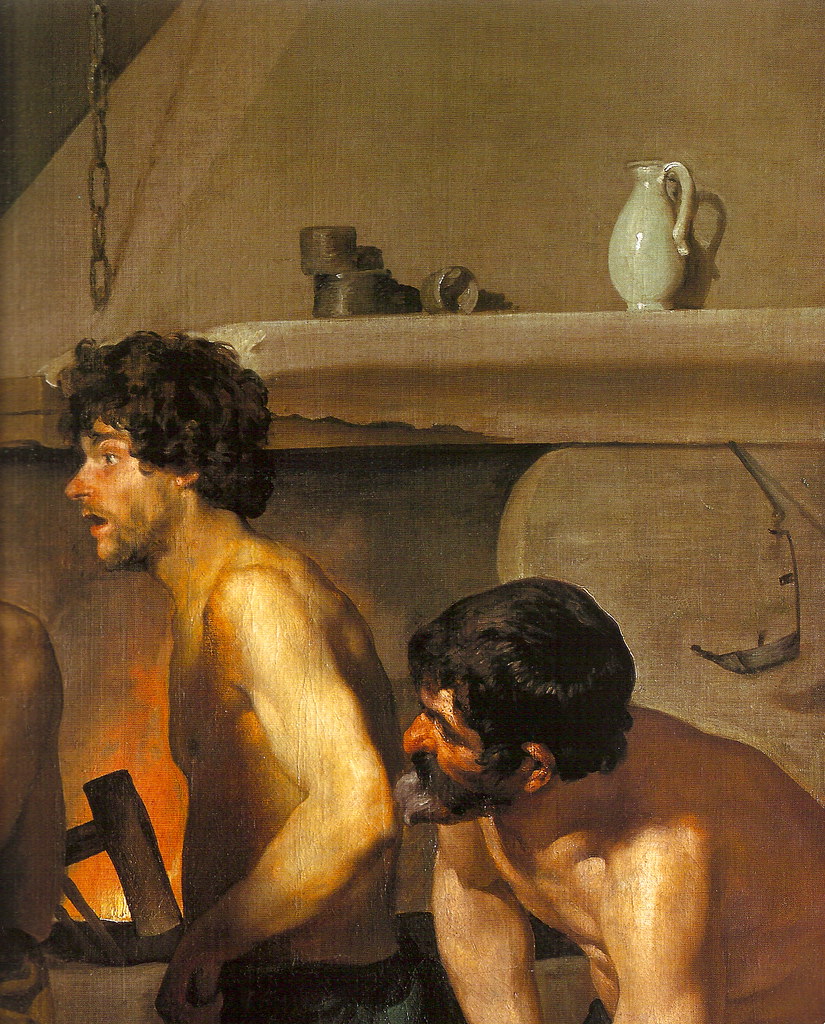
Diego Rodríguez de Silva y Velázquez (Spanish, 1599-1660) The Forge of Vulcan, detail. (1630) Oil on canvas. 230 BY 290CM. Prado Museum, Madrid. (Click image for larger version)
The results are stunning.
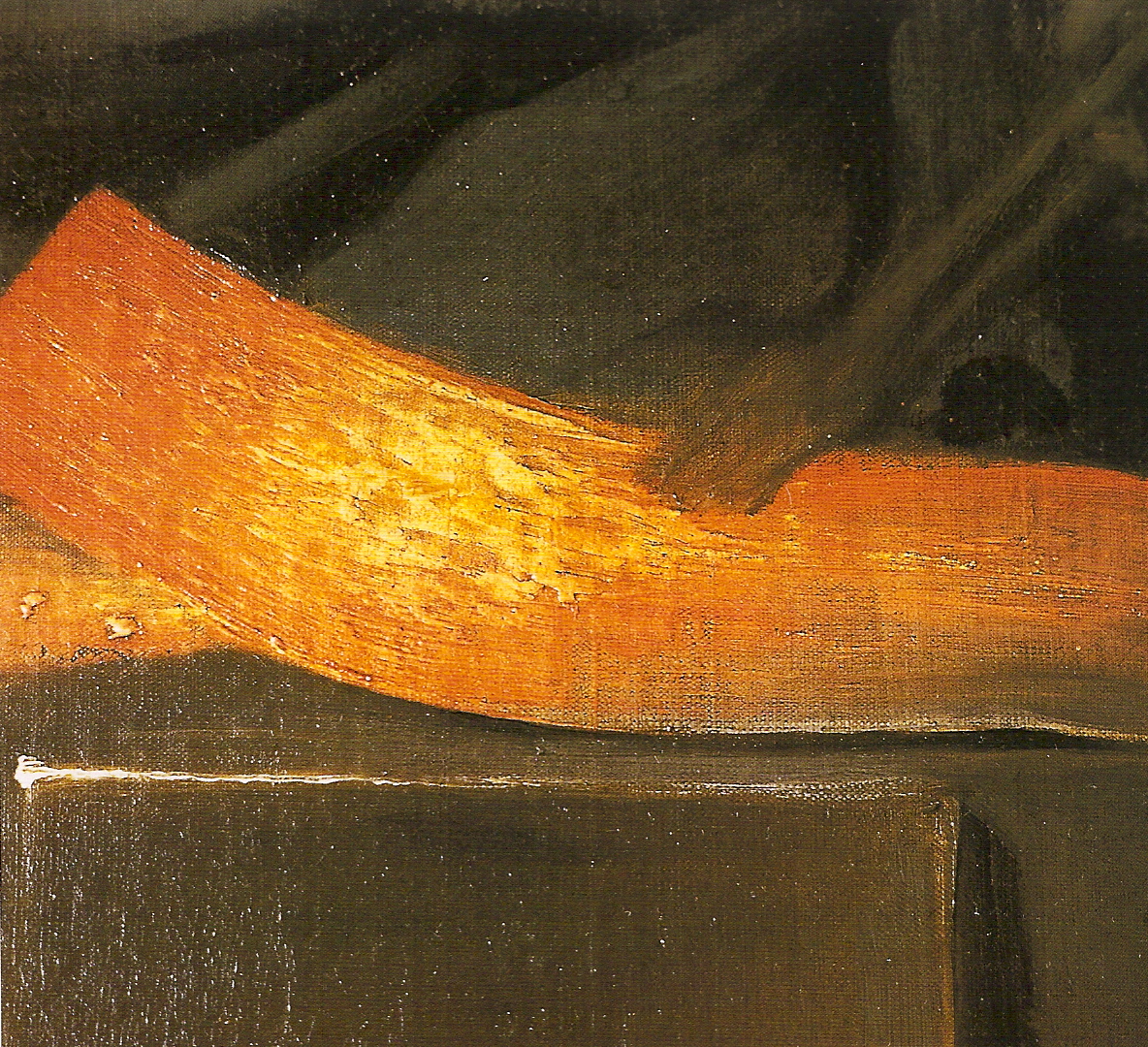
Diego Rodríguez de Silva y Velázquez (Spanish, 1599-1660) The Forge of Vulcan, detail. (1630) Oil on canvas. 230 BY 290CM. Prado Museum, Madrid. (Click image for larger version)
Obviously, drawing isn’t everything.