In Goethe’s Faust, Mephistopheles takes Faust to a mountain where he witnesses a Witch’s Sabbath (a.k.a. Witch’s Shabbat). The unholy meeting of demons and humans featured satanic offerings and resulted in plagues. Stories of these gatherings have a long history in European literature. (For more, go here.) The women who attend are traditionally skyclad, a ritual nudity practiced by pagans and witches.
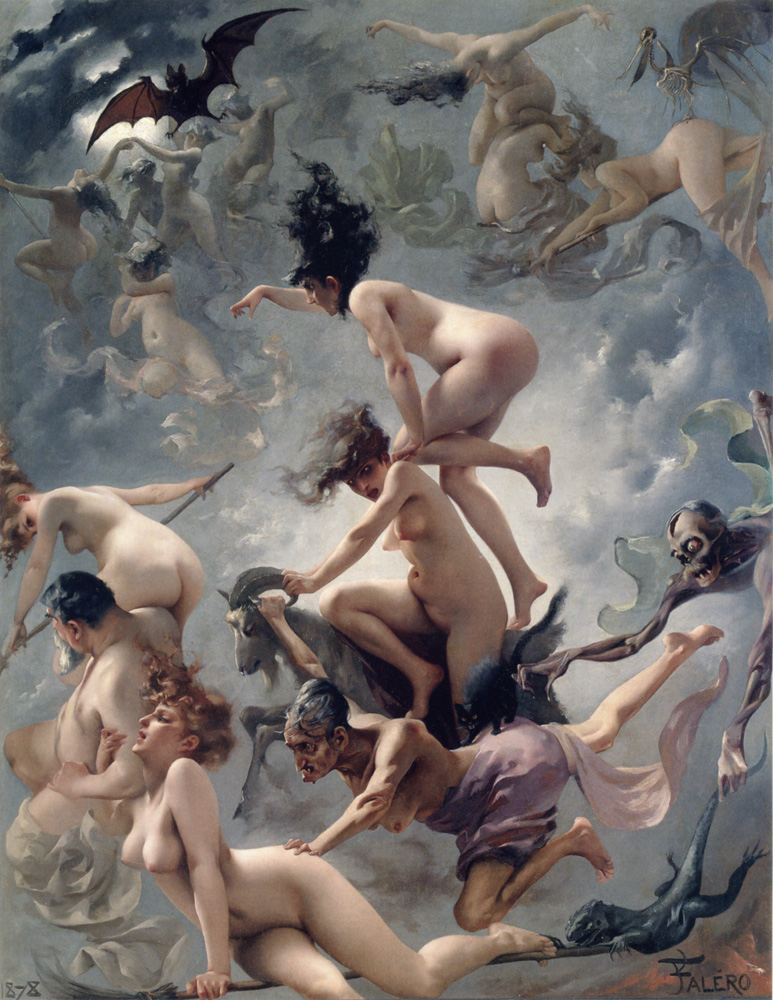
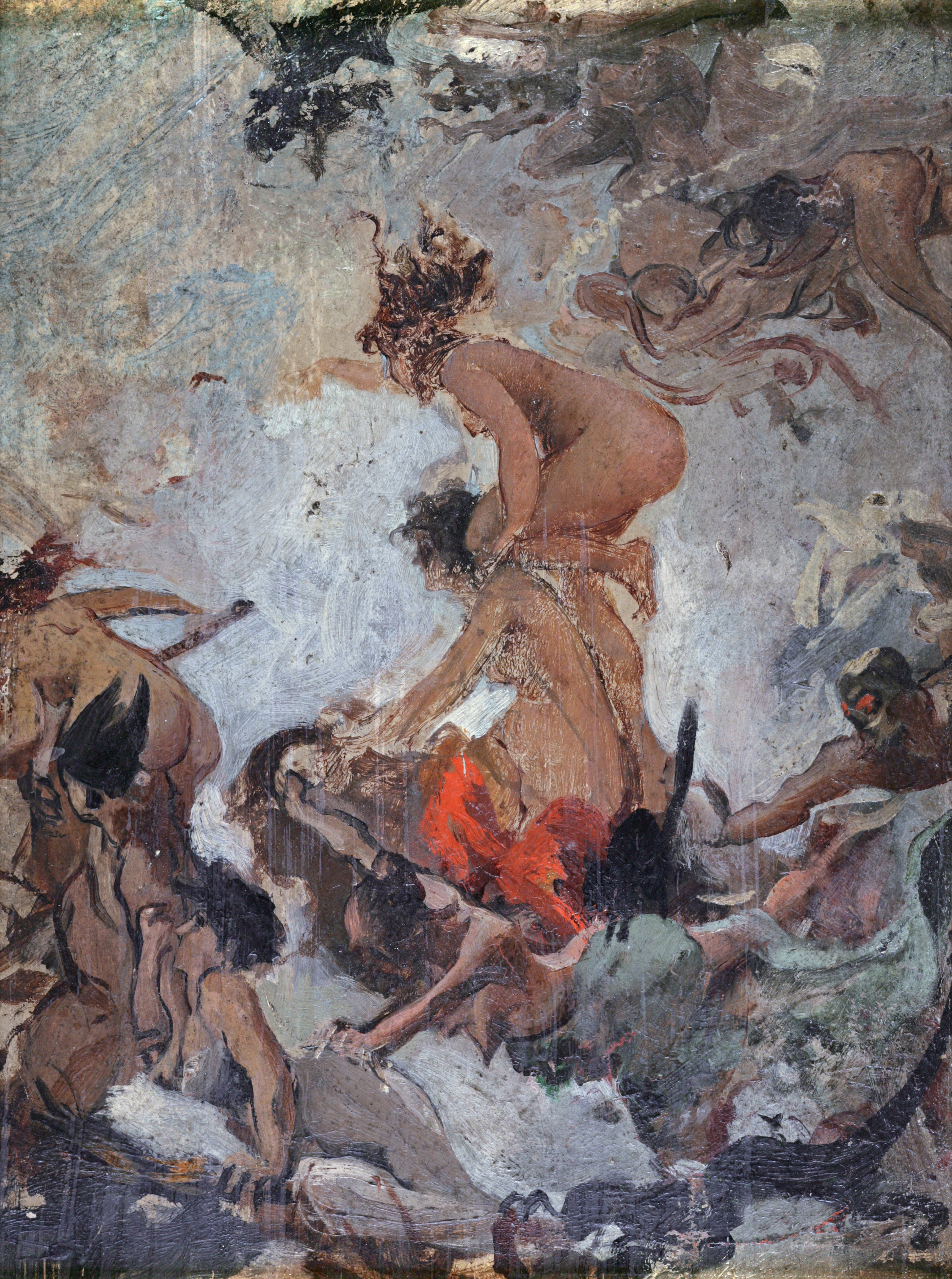
This work is scandalous by most people’s sensibilities–including mine–however, it is illustrative of contradictory attitude towards nudity in nineteenth century France and most of western society. At a time when it was shameful to see a woman’s ankles in public, it was somehow acceptable for more-than-suggestive works featuring nudity, as long as the narrative was tied to some redeemable theme.
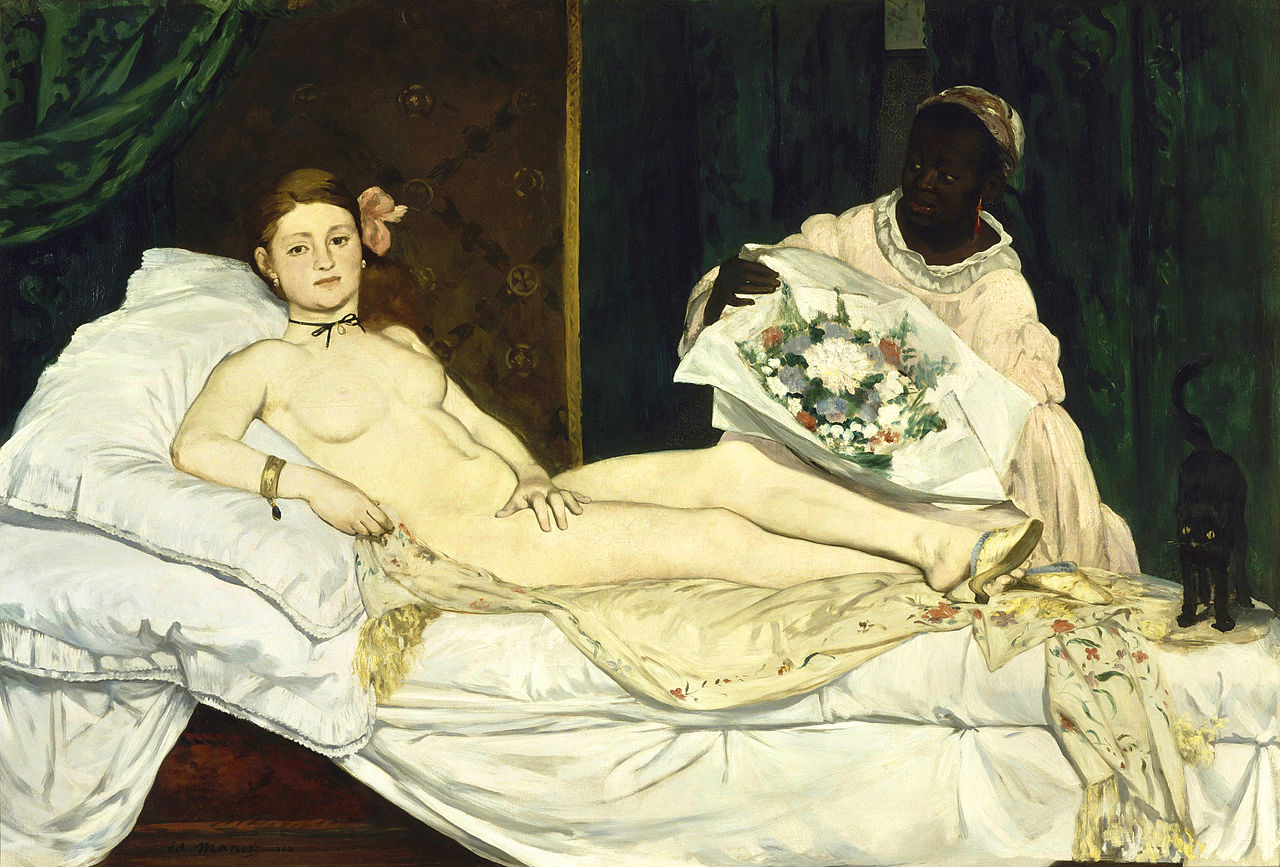
This selective bias bias is perhaps best illustrated in the debate between Alexandre Cabanel’s The Birth of Venus (1863) and Édouard Manet’s Olympia (1863). Both featured nude woman and were accepted to the same national contest where they were exhibited to the public.
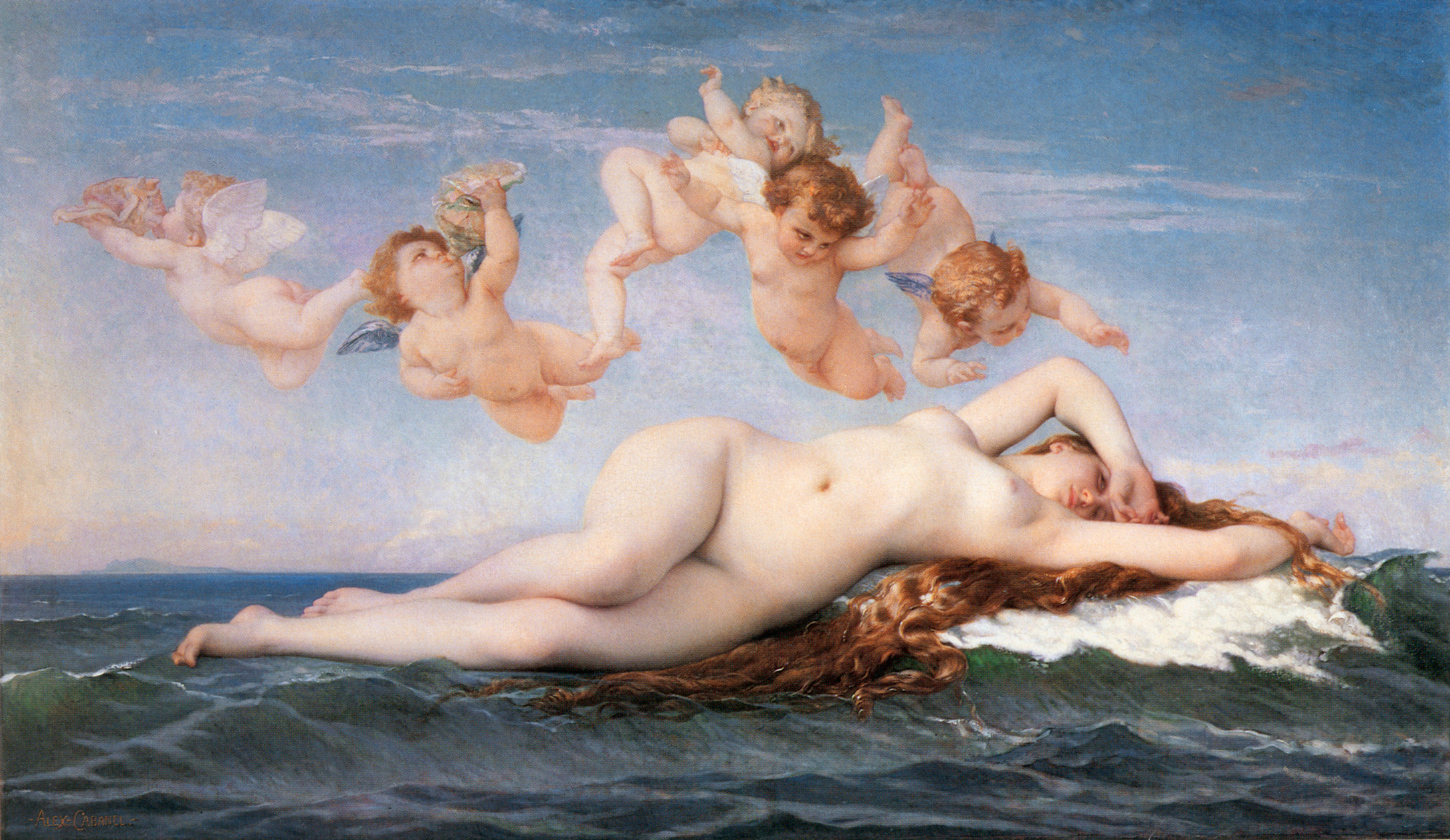
But, while Cabanel’s was considered to be a critical success and continuation of the classical tradition, Manet’s was seen as obscene for its realistic approach to the female nude.
In his day, Luis Ricardo Faléro (Spanish, 1851-1896) was a consumately trained academic painter, whose work fit soundly within the contraditions of his time. His works were prized for their thinly-vieled eroticism. But, collectors could maintain their reputation by pointing to the “merit” of their subjects.


Thanks for the great images. I had never heard of Luis Ricardo Falero.
Hi!
Thats strange to me : Why Human subjects of the premedieval are clothed but after medieva they arent ?
really why?
Reply me to my Email please.
Hi!
Thats strange to me : Why Human subjects of the premedieval are clothed but after medieval they arent ?
really why?
Reply me to my Email please.
You have put your finger on it. The society that fails to appreciate the relatedness of different responses to a common phenomenon is unwhole and hypocritical. It embraces Freud’s narcissism of petty differences, which tries to pretend that one’s pleasures are fundamentally different from those of others, when they are actually more alike than not. The richest and most profound art integrates the range of human experience.
thanks you very much, good luck
Nice list, you labels actually help me better than just reading reviews 🙂
Fabulous art and creative concepts absent today