Posts Tagged: James McNeill Whistler
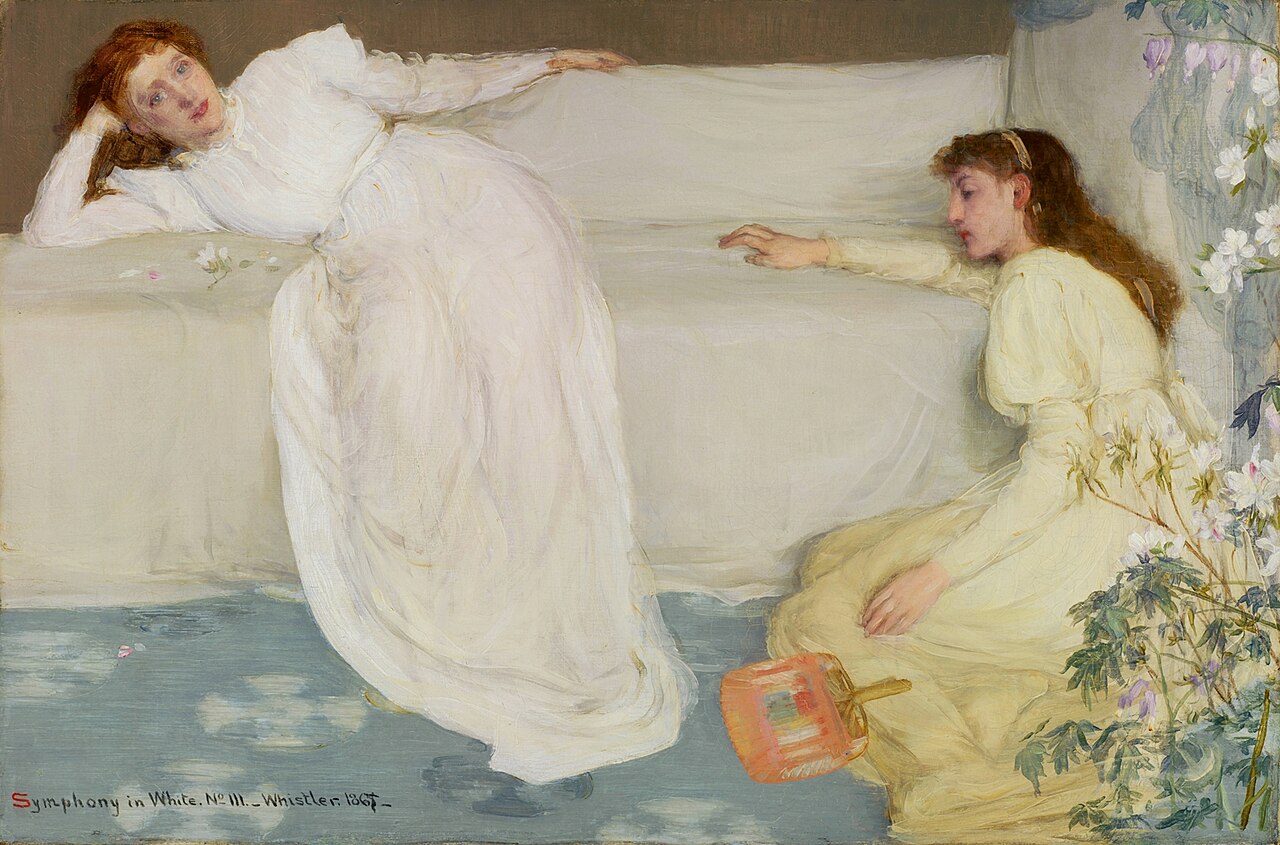
Advice to Artists: A Letter from Whistler to Fantin-Latour
I have been reading the biography of Edward E. Simmons (American, 1852 – 1931), From Seven to Seventy: Memories of a Painter and Yankee (1922). Simmons seemed to know every major artist of his time, from Rosa Bonheur to Jules Bastien LePage, and John Singer Sargent. He shares a wealth of personal insights. One I thought worth highlighting is what Simmons calls “a letter of [James McNeill] Whistler’s, written in the sixties, to [Henri] Fantin-Latour, which I am going to quote, trusting that there may be some young artist, in however remote a land, who, reading it for the first time, will say: ‘I will profit; I will learn my trade.'” Here is the letter Simmons quotes:
Dear Fantin,
I have far too many things to tell you for me to write them all this morning, for I am in an impossible press of work. It is the pain of giving birth. You know what that is. I have several pictures in my head and they issue with difficulty. For I must tell you that I am grown exacting and “difficile”—very different from what I was when I threw everything pell-mell on canvas, knowing that instinct and fine color would carry me through. Ah, my dear Fantin, what an education I have given myself! Or, rather, what a fearful want of education I am conscious of! With the fine gifts I naturally possess, what a painter I should now be, if, vain and satisfied with these powers, I hadn’t disregarded everything else! You see I came at an unfortunate moment. Courbet and his influence were odious. The regret, the rage, even the hatred I feel for all that now, would perhaps astonish you, but here is the explanation. It isn’t poor Courbet that I loathe, nor even his works; I recognize, as I always did, their qualities. Nor do I lament the influence of his painting on mine. There isn’t any one will be found in my canvases. That can’t be otherwise, for I am too individual and have always been rich in qualities which he hadn’t and which were enough for me. But this is why all that was so bad for me.
That damned realism made such a direct appeal to my vanity as a painter, and, flouting all traditions, I shouted, with the assurance of ignorance, “Vive la Nature!” “Nature,” my boy—that cry was a piece of bad luck for me. My friend, our little society was as refractory as you like. Oh, why wasn’t I a pupil of Ingres?—How safely he would have led us!
Drawing! by Jove! Color—color is vice. Certainly it can be and has the right to be one of the finest virtues. Grasped with a strong hand, controlled by her master drawing, color is a splendid bride, with a husband worthy of her—her lover, but her master, too, the most magnificent mistress in the world, and the result is to be seen in all the lovely things produced from their union. But coupled with indecision, with a weak, timid, vicious drawing, easily satisfied, color becomes a jade making game of her mate, and abusing him just as she pleases, taking the thing lightly so long as she has a good time, treating her unfortunate companion like a duffer who bores her—which is just what he does. And look at the result! a chaos of intoxication, of trickery, regret, unfinished things. Well, enough of this. It explains the immense amount of work that I am now doing. I have been teaching myself thus for a year or more and I am sure that I shall make up the wasted time. But—what labor and pain!
—James McNeill Whistler
Quoted in Edward Simmons. From Seven to Seventy: Memories of a Painter and Yankee. New York & London: Harper and Brothers, 1922. 133-134.