Posts in Category: Ramblings/Ideas
Reader Question: What’s on my nightstand?
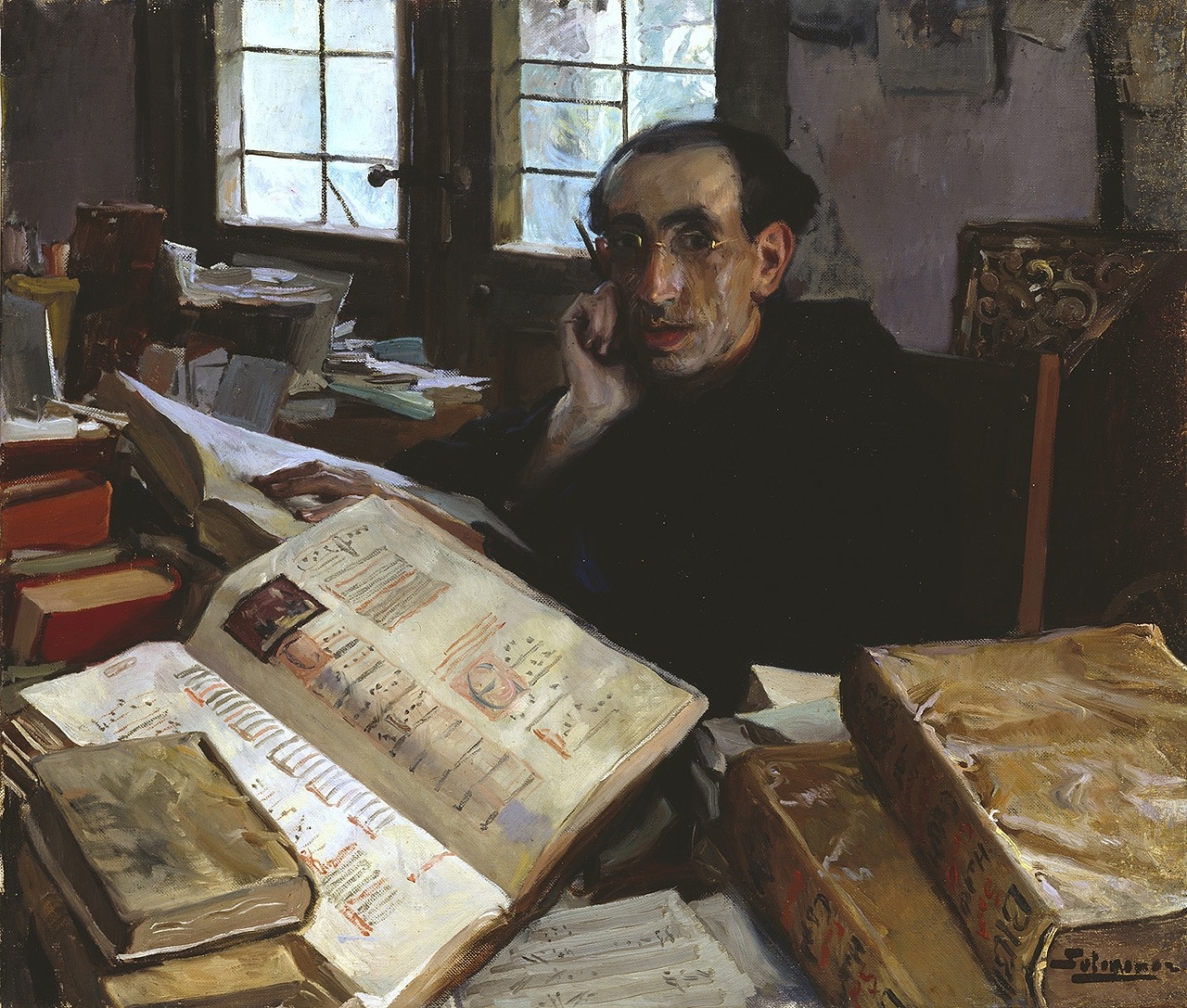
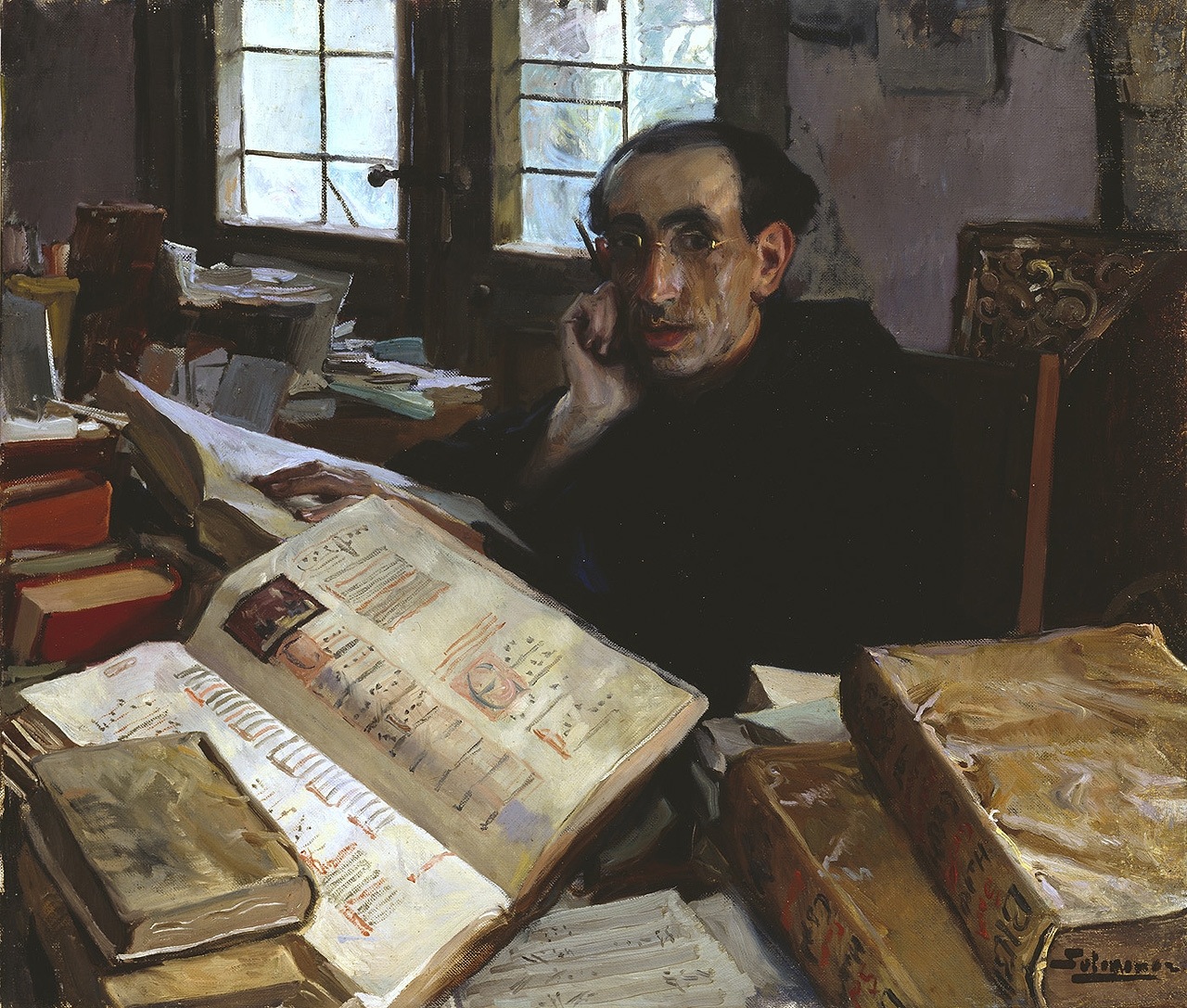
Fernando Álvarez de Sotomayor y Zaragoza (Spanish, 1875-1960) Retrato del padre Villalba (Portrait of Father Villalba) 86 X 100 cm. Museo Nacional del Prado, Madrid.
___
Recently, I received an email from a BeardedRoman reader asking me for list of books on my nightstand. I thought I would post my answer here. And, I would love to know what is on your nightstand too.
I regularly get book recommendations from readers, and I love it. Through their suggestions and my own research projects, over the years I have built a large library. (At last count, I have nearly 1,500 books.) I have books piled by bed and all around my house. No, I have not read all of them–some were only bought for a single, useful chapter. Other I have read multiple times.
The books I have listed below are literally the ones that have been by my bed. I have my finger in every one of them and have been bouncing between them all for weeks. They don’t necessarily relate to any current work I am doing–that’s another pile. These are what I am reading for fun. As I made the list, I was surprised at how many were directly related to art history. (No wonder I am boring at parties.) But, as you can see from the list, my second love is poetry.
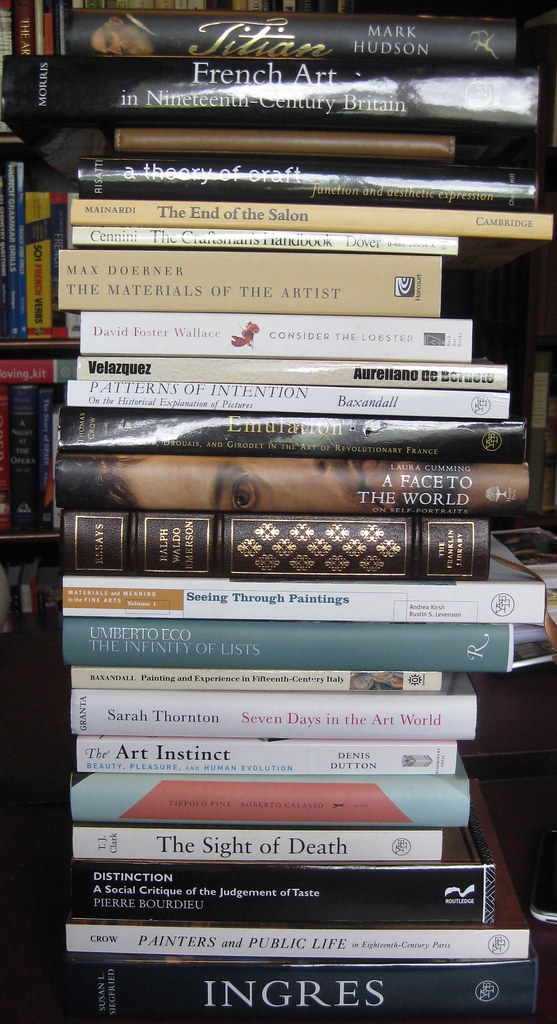
Books on my nightstand. (Or, more accurately, the ones piled around my bed.)
____
After naming the book and the author, I have written a very brief personal impression of each book.
- Titian: The Last Days by Mark Hudson. There are few straight biographies of Titian. Most that I have read are a scholarly studies of the artist’s works combined with political and social commentary that would not be anything like reading the biography of, say, Benjamin Franklin. I’ve learned something about time an place from Hudson’s book; but, overall I have struggled to get through it. Hudson seems to be as interested in talking about himself as he is about Titian.
- French Art in Nineteenth-Century Britain by Edward Morris. This is a great study of the relationship between the French and British at a time when the great international arms race was the arts. France was winning and the British couldn’t help but admire the art it.
- Hopes and Fears for Art by William Morris. Morris was the philosophical and moral leader of the Arts & Crafts movement that was a reaction against industrialization. This is an impassioned lecture he gave in defense of his movement.
- Master of Shadows by Mark Lamster. This biography of Rubens is one of the best books I have read on any subject in a long time. Weaving together Rubens with the political and artistic dramas of his time, it is clear that the artist was as much a diplomat as a painter. I fell in love with Rubens again; both his art and his humanity.
- A Theory of Craft: Function and Aesthetic Expression by Kenneth R. Trapp. Lately, I’ve been obsessed with the role of craftsmanship versus concept in art. Does the way somethings is made matter; or, is it the final product that counts?
- The End of the Salon: Art and the State in the Early Third Republic by Patricia Mainardi. A very good discussion on how one of the most important institutions in the history of art fizzled out.
- The Craftsman’s Handbook (Il Libro dell’Arte) by Cennino d’Andrea Cennini, trans. by Daniel V. Thompson, Jr. Perhaps one of the most widely-read handbooks for artists, this book is a lot of fun to read. Cennini wasn’t always accurate; but, he does give an important insight into the practical considerations of making art in 15th-century Florence.
- The Materials of the Artist and their Use in Painting by Mac Doerner. So much of art history is about social and political history. I am anxious to learn more about the objects and how they were and art made.
- Consider the Lobster and Other Essays by David Foster Wallace. A recommendation from a friend, I cried while reading his essay on Dostoevsky.
- Velázquez by Aureliano de Beruete (Foreword by Léon Bonnat). Bonnat wrote the foreword just after being made Director of the Ecole des Beaux-Arts in Paris. His first sentence: “I was brought up in the worship of Velázquez.”
- Patterns of Intention: On the Historical Explanation of Pictures by Michael Baxandall. Baxandall shatters me with almost every sentence. He has changed the way I’ve thought about paintings. Example: ” . . . to say we ‘explain a picture as covered by a description’ can conveniently be seen as another way of saying that we explain, first, thoughts we have had about the picture, and only secondarily the picture.”
- Emulation: David, Drouais, and Girodet in the Art of Revolutionary France by Thomas Crow. An amazing recreation of the events and journals of three of the most influential painters of the nineteenth-century. Very thoughtful.
- A Face to the World: on Self-Portraits by Laura Cumming. I wish I had written this book! Cumming writes about why artists make self-portraits and why we love looking at them.
- Essays by Ralph Waldo Emerson. I have been reading his essay “The Poet” over and over again. It’s like scripture: each reading gets more meaningful.
- Seeing through Paintings by Andrea Kirsh and Rustin S. Levenson. A chemical analysis by two scientists on how art is made.
- The Infinity of Lists by Umberto Eco. Ever want to know how many demons have ever been named in Western literature? The basic premise of the book is that there is a history of list making in Western literature. From the Bible and Homer to Joyce, the lists say something about our culture. It’s a surprising and entertaining read.
- Painting and Experience in Fifteenth-Century Italy by Michael Baxandall. My favorite quote: “Art was too important for artists.”
- Seven Days in the Art World by Sarah Thornton. This is an mind-blowing, anthropological travelogue of the people who make, buy, and sell modern and contemporary art. Thornton is able to sit down with people and get candid reactions that made we alternatively laugh and want to reach through the page and strangle her interviewees.
- The Art Instinct: Beauty, Pleasure and Human Evolution by Denis Dutton. A discussion on why humans like art.
- Tiepolo Pink by Robert Calasso. Late in his career, Tiepolo did a series of 36 bizarre etchings that are rarely seen or discussed. This is a book about them.
- The Sight of Death: An Experiment in Art Writing by T. J. Clark. For several months, Clark works at the Getty Museum and sees the same paintings by Poussin day after day. This is his journal on impressions he had looking at them. It is amazing! The things he sees, the ideas he has, and the way he looks at these paintings have changed me. I want to be more like Clark. He is as much a poet as art historian.
- Distinction: A Social Critique of the Judgement of Taste by Pierre Bourdieu. While it is a few decades old, Distinction’s basic premise is: your education and birth are the predominant indicators of why you like the music, food, and art you do.
- Painters and Public Life in Eighteenth-Century Paris by Thomas E. Crow. Great study on how artists joined the age of mass media.
- Ingres: Painting Reimagined by Susan L. Siegfried. I just got this, and haven’t read much. But, it promises to be a new and controversial look at Ingres. Siegfried’s goals are to examine in depth Ingres’ history and genre paintings, which are largely ignored or dismissively categorized.
- Ballistics: Poems by Billy Collins. I have all of Collins’ books of poetry.
- Los Versos del Capitan (Captain’s Verses) by Pablo Neruda. I lived in Chile. Reading Neruda lets me slip back there, if only for a little while.
- Death in the Afternoon by Earnest Hemingway. This is a non-fiction book about bullfighting. As a result of studying Spanish painting, I have to know more about it. Bullfights (corridas) and bullfighters (toreros) are just part of the culture. I went to a bull fight last year at Las Ventas in Madrid. Since then, I’ve been trying to understand what happened and how I feel about it.
- Blizzard of One by Mark Strand. I have not even cracked it open yet.
Sargent and Velázquez
Note: Right now there are two remarkable exhibitions taking place: The Sacred Made Real, about religious Spanish sculpture, a loan of John Singer Sargent’s painting The Children of Darley Bolt (1882) to the Prado Museum, where it hangs next to Velázquez’s Las Meninas (c. 1656). I know I have written about Eakins and Velázquez before, but I haven’t been able to stop thinking about the Spanish Master’s influence on nineteenth-century artists. For me it is a source of endless curiosity and one of the more unexplored aspects of the period.
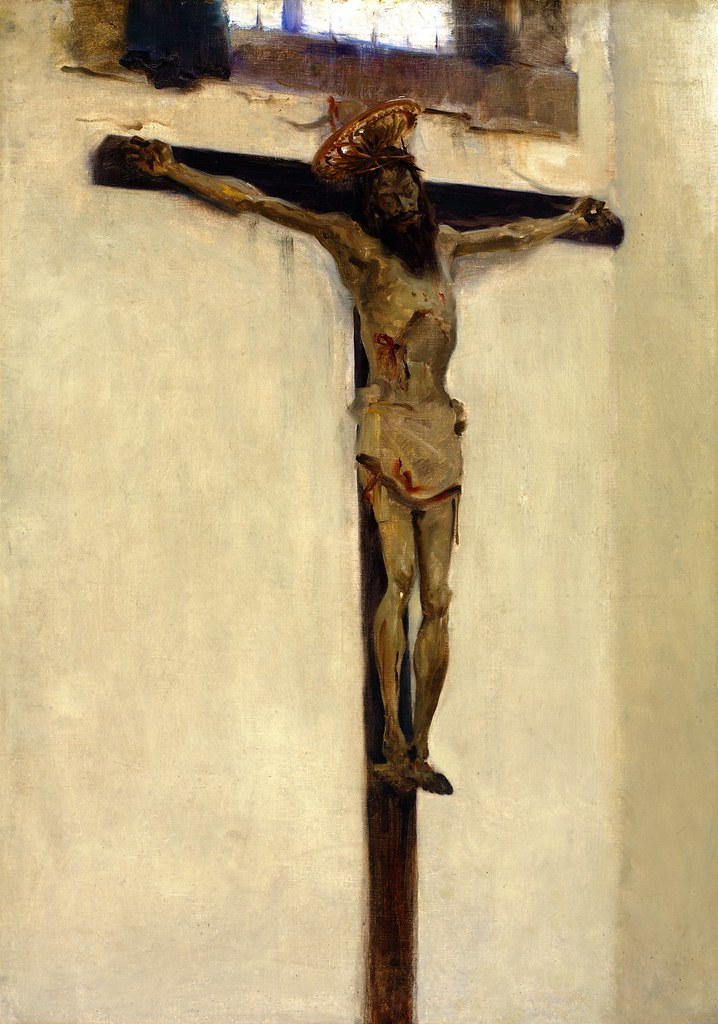
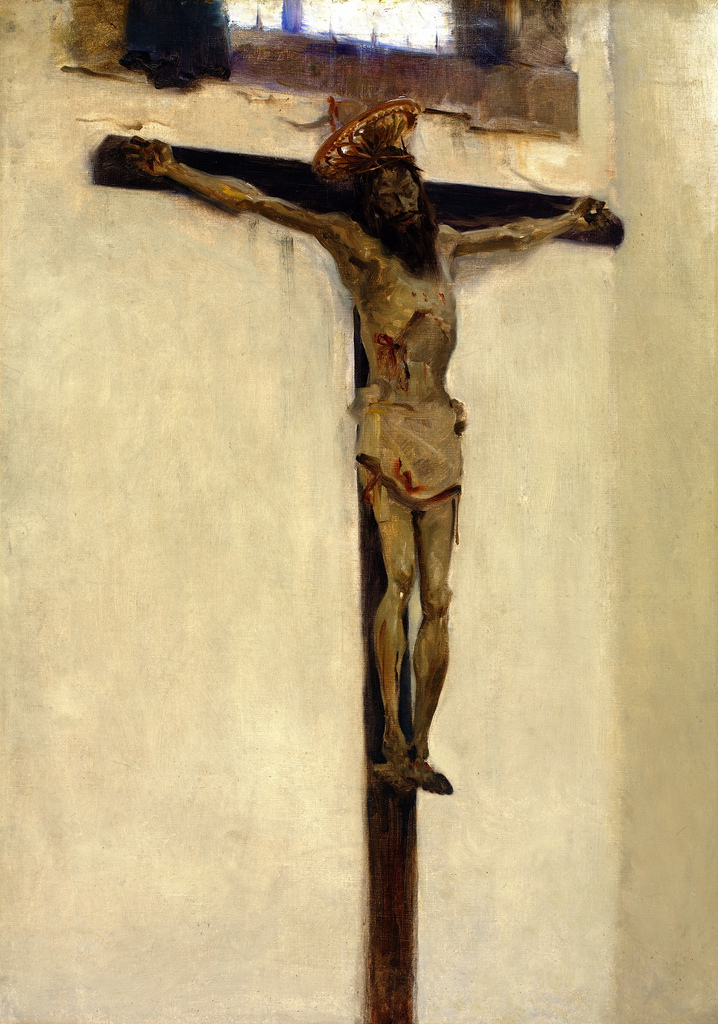
John Singer Sargent (American, 1856-1925 ) Crucifix (1879) Oil on canvas. Private Collection.
When John Singer Sargent travelled to Spain in 1879 his approach to painting fundamentally and irrevocably changed. There his understanding of painting was forever infused by the restrained palette, virtuosic brushwork and reverence for nature learned principally from Diego Velázquez (Spanish, 1599-1660).
Sargent travelled to Spain at a time when France, the center of the international art world, had rediscovered Spanish masters. King Louis-Philippe’s Galerie Espagnole (1835-1853) and the marriage of Emperor Napoleon III to Eugenie Contador, a Grandée of Spain (1853), brought a newfound appreciation to the Spanish Golden Age and its artists that excited a generation of artists working in Paris.
Édouard Manet, Léon Bonnat, Jean-Léon Gêrome, Thomas Eakins, Julian Alden Weir, William Merritt Chase, and many others travelled to Madrid to copy works found almost exclusively in the Prado Museum. Chief among the artists copied by foreigners was Diego Velázquez, considered a new, viable alternative to French classical models that dominated Academic painting.
Sargent was a student at the prestigious and exclusive École des Beaux-Arts, when his instructors Carolus-Duran (French, 1837-1917) and Léon Bonnat (French, 1833-1922) suggested that his development as an artist would improve dramatically from a visit to Spain. Sargent visited the Prado Museum multiple times from October to November in 1879. The official Registry of Copiers records Sargent copying The Crucifixion (c. 1632), Las Meninas (c. 1656), and Las Hilanderas (c. 1644) by Velázquez.
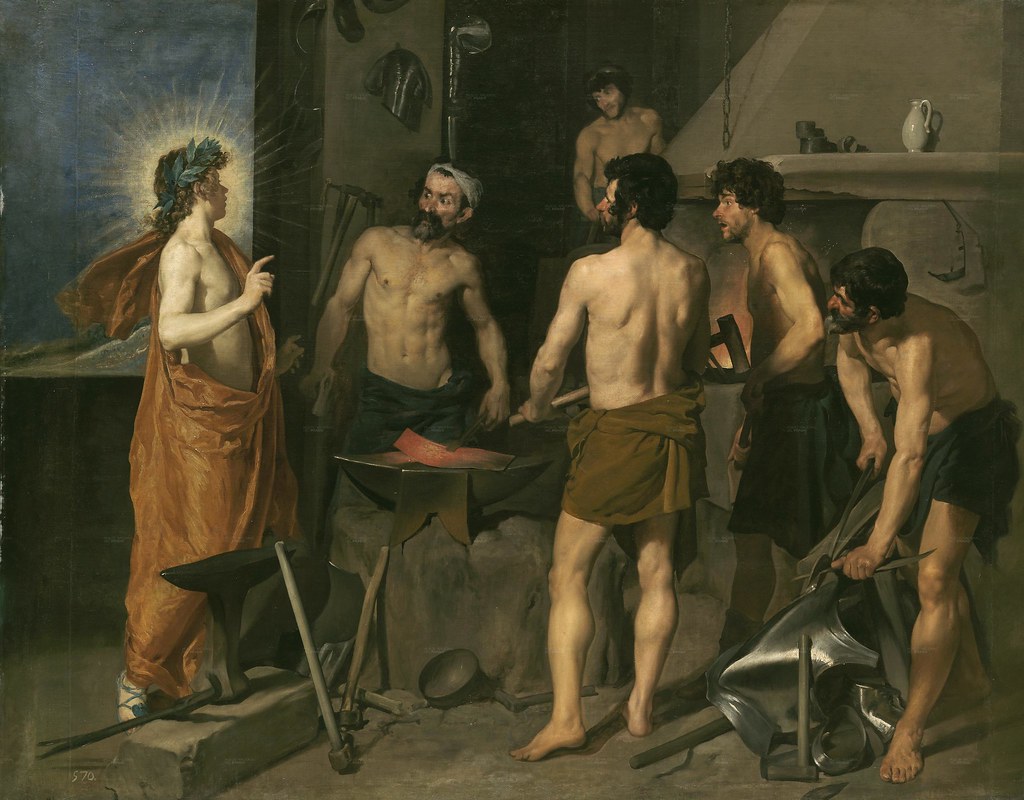
Diego Velázquez (Spanish, 1599-1660) The Forge of Vulcan (1630) Oil on canvas. 230 by 290 cm. Museo Nacional del Prado, Madrid.
As court painter to Philip IV of Spain, Velázquez was employed by the most powerful country on earth. However, unlike many other Baroque painters of his time, whose grandiose works were showcases of extravagant colors, exotic creatures, and obscure subjects,Velázquez’s work features everyday people in everyday settings. Even his few religious and mythological works are notable for not idealizing their subjects.

http://upload.wikimedia.org/wikipedia/commons/f/fd/Nicolas_Poussin_052.jpg
The French discovery of Velázquez came at a time when artists were breaking from a long-standing tradition of Classicism, which shunned Realism in favor of idealized subjects and painterly technique that obscured the artist’s hand. In Paris, Sargent’s education was considered the best in the world. It emphasized compositional formulas based on the Greco-Roman tradition as interpreted by French masters such as Nicolás Poussin (French, 1594-1665) and, later, Jacques-Louis David (French, 1748-1825). Their approach to art required rigorous draftsmanship that often resulted in statuesque, figures in classical landscapes or architecture. This interpretation of classicism was the official style in Europe for nearly 300 years. The rigidity of Academic painting limited the kinds of subjects artists could produce for competition and patronage.
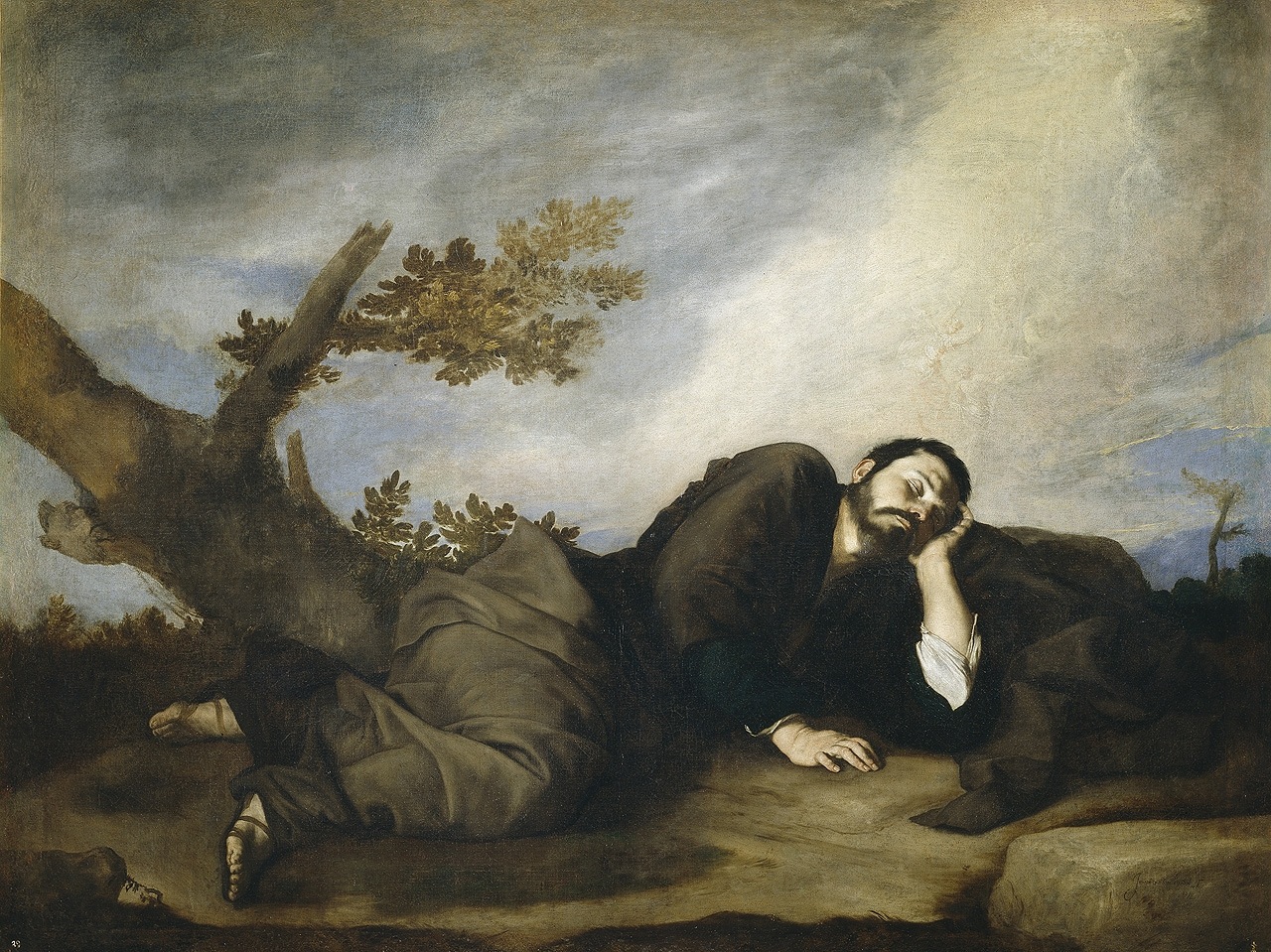
José de Ribera (Spanish, 1591-1652) El sueño de Jacob (1639) Oil on canvas. 179 by 233 cm. Museo Nacional del Prado, Madrid.
When Louis-Philippe opened his Galerie Espagnole in 1835, works by Velázquez, José de Ribera (Spanish, 1591-1652) and Francisco Zurburán (Spanish, 1598-1664) were introduced to the French public for the first time. Working at the same time as the founding fathers of French art, these Spanish artists offered an alternate classicism that emphasized nature.
The study of Velázquez’s work changed a generation of French artists’ approach. Unlike many Academic painter, Velázquez was unafraid to leave distinguishable brushstrokes on his canvases. Thick strokes of paint are clearly visible, demonstrating both his virtuosic skills–capable of reproducing an astonishing array of textures–and making the painting more of a three-dimensional work. His palette is limited, almost exclusively earth tones. When Velázquez did use color, it was muted, rather than garish; and, therefore, subjects appear more lifelike. Whether painting mythological figures, royal portraits, or multi-layered religious narratives, Velázquez captures the natural surroundings and features of his subjects without idealizing them. As a result, he exalts and dignifies the truth while simultaneously making them more approachable.
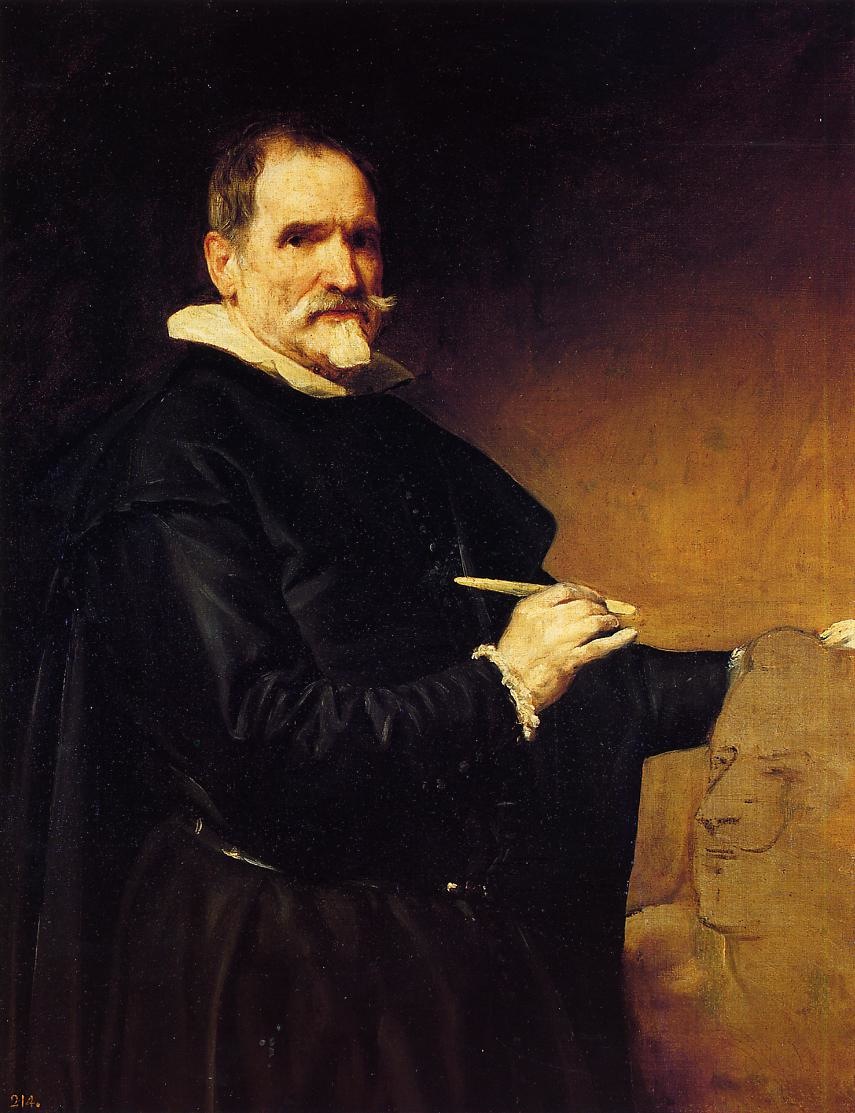
Diego Velázquez (Spanish, 1599-1660) Martínez Montañés ejecutando el busto de Felipe IV (c. 1635) Oil on canvas. Museo Nacional del Prado, Madrid
In Crucifixion, Sargent paints one of Velázquez’s most repeated subjects: the crucified Christ. It is important to note that, rather than the actual cricified Christ, both Velázquez and Sargent painted wooden crucifixes. Velázquez was influenced and mentored by the Spanish sculptor Juan Martínez Montañés (1568-1649).
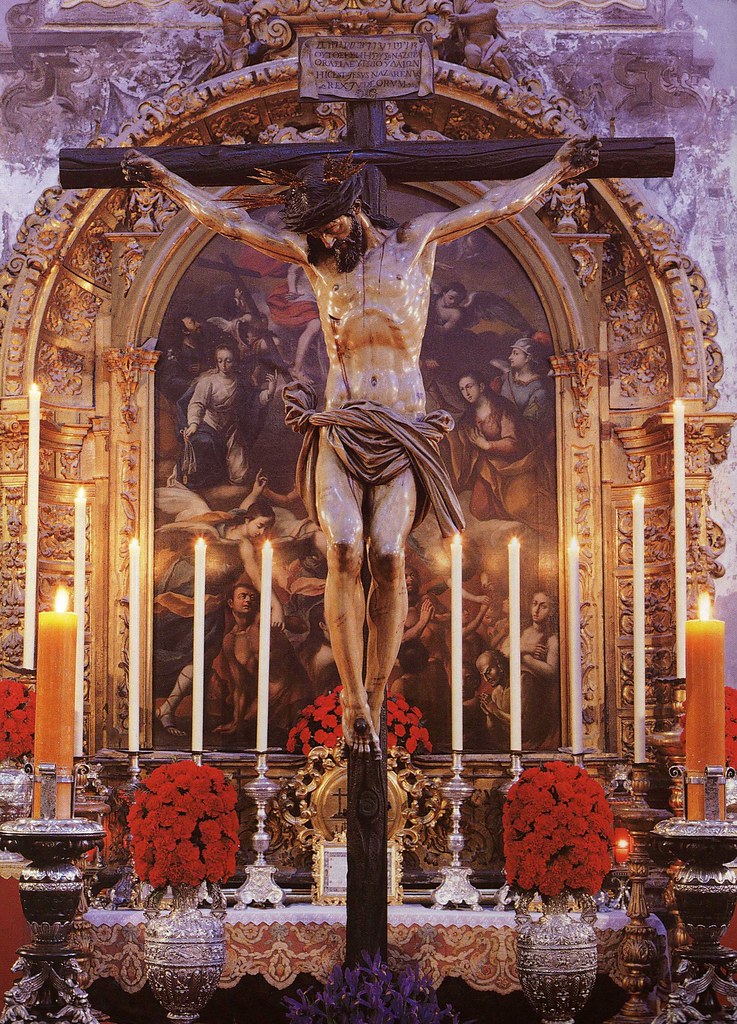
Juan Martínez Montañés (Spanish, 1568-1645( Cristo de la Clemencia o de los Cálices (c. 1604) Seville, Spain
Known as the Michelangelo of wood, Montañés created hundreds of religious sculptures that are still in use in religious festivals. The crucifix in Velázquez’s La venerable madre Jerónima de la Fuente (c. 1620) and Sargent’s Crucifixion are both based on Montañés models.
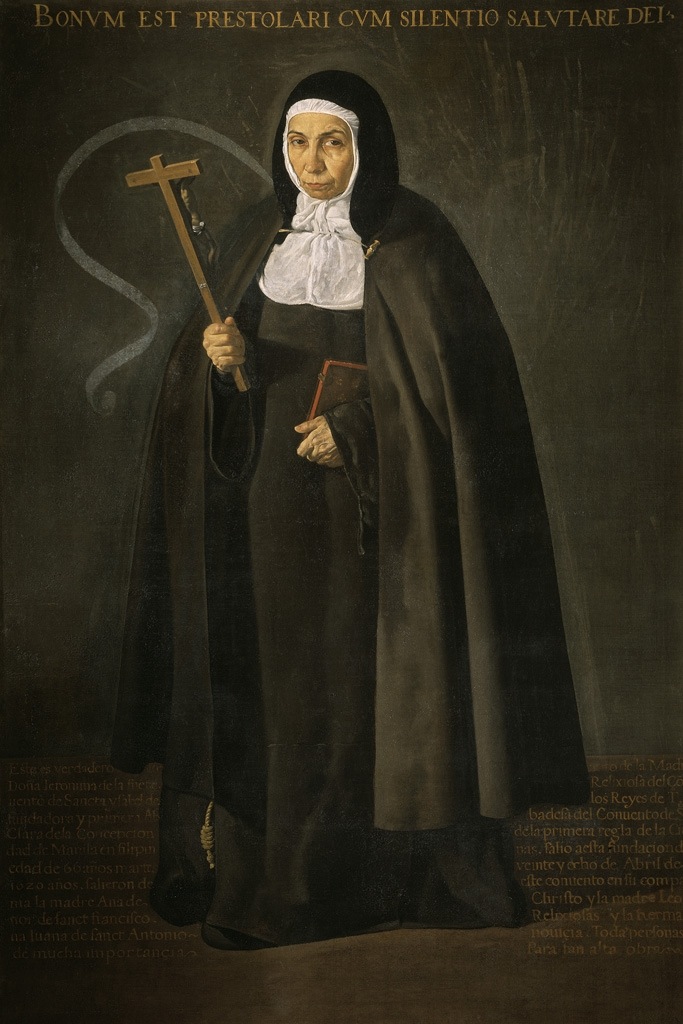
Diego Velázquez (Spanish, 1599-1660) La venerable madre Jerónima de la Fuente (c. 1620) Oil on canvas. 160 by 110 cm. Museo Nacional del Prado, Madrid.
In his Crucifixion, Sargent captures a private moment of meditation on Christ’s sacrifice. The crucifix hangs on a chapel wall while light streams from an upper window.
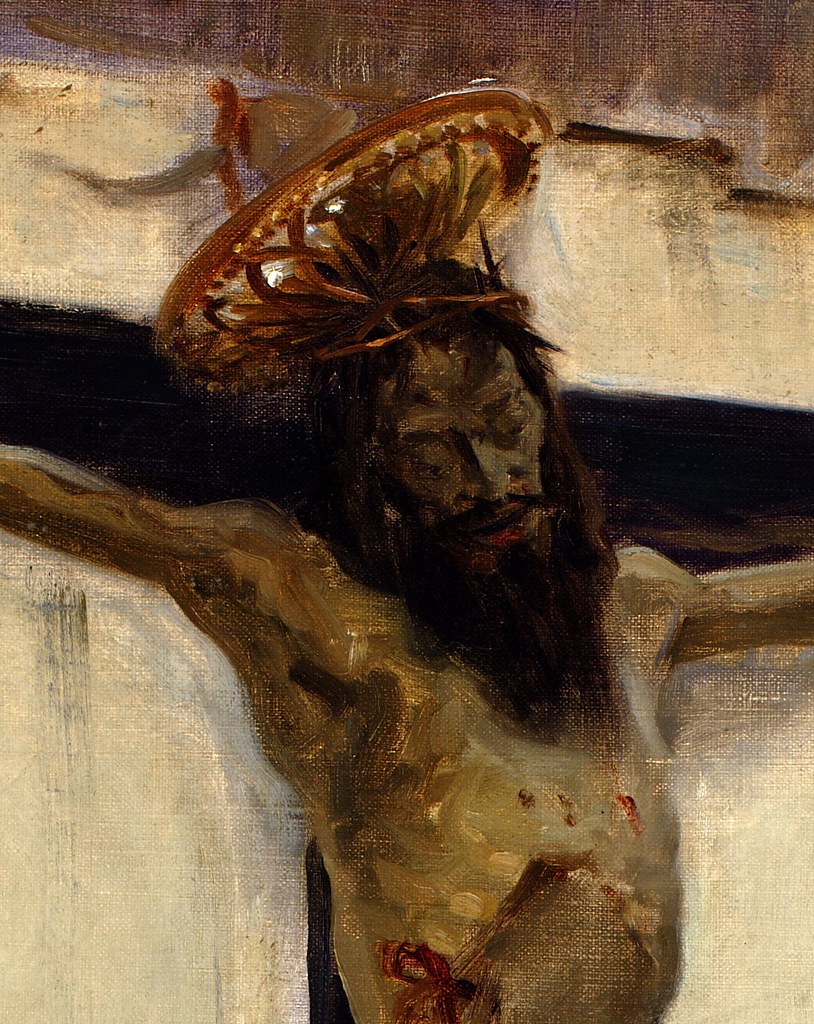
John Singer Sargent (American, 1856-1925 ) Crucifix (1879) Oil on canvas. Private Collection. Detail.
Using a wooden crucifix, rather than a realistic Christ, emphasizes the religious experience of the viewer, rather than Christ’s experience on the cross. This is a meditation on what reflecting on the crucifixion means to the viewer well after the event has taken place. Sargent capitalizes on this reflection by using Velázquez’s technique of broad visible brushstrokes. This allows the mind of the viewers to fill in the details and, therefore, participate in the subject in a way that incites the imagination like no detailed rendition could. Sargent also adopts Velázquez’s use of ochres. The nearly monochrome palette draws greater attention to Sargent’s remarkable brushwork, which like Velázquez, is unabashedly visible, at times broadly defining Christ figure and at others using miniscule strokes.
These hallmarks of Velázquez’s technique were studied and absorbed by Sargent. He transmuted them into his own French education and used the two to become the world’s most sought-after portraitist and, arguably, the greatest American painter of the nineteenth century.
Marie Antoinette (1876) by the Unlikely Lord Ronald Gower
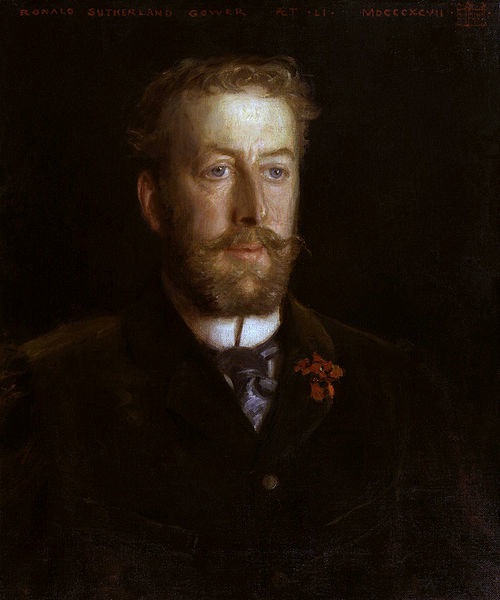
Henry Scott Tuke, R.A. (British, 1858-1929) Lord Ronald Gower (1897) Oil on canvas 24 by 20 in. National Portrait Gallery, London.
The youngest son of the powerful Duke of Sutherland, Lord Ronald Gower (British, 1845-1916) was educated at Eton and Cambridge. He distinguished himself as a popular politician, serving in the British Parliament from 1867-1874. Following his political career, Gower became an unlikely, critically-acclaimed sculptor and an historical writer. In the words of his mother, the Duchess of Sutherland, Gower had “a certain unpractical side of his character.”
Gower’s first serious attempt at sculpting was, ironically, for his mother’s grave in 1868. He collaborated with Matthew Noble (British, 1818-1876) who was hired for a memorial befitting the Duchess. Noble was the son of a stonemason who studied sculpture in London. Chronically ill from childhood, Noble nonetheless exhibited regularly at the Royal Academy’s annual exhibition until he died at the age of 58. Though Gower mentions Noble as a major influence in his artistic development, the ex-politician was largely self-taught.
Untrained and unmotivated by financial gain, Gower was derisively considered a “gentleman sculptor.” Despite all this, his work received international critical and popular praise. Gower’s sculptures were accepted to the Paris Salons of 1880 and 1881, the Paris International Exhibition of 1878, and numerous competitions at the Royal Academy, placed alongside sculptures by Alfred Leighton.
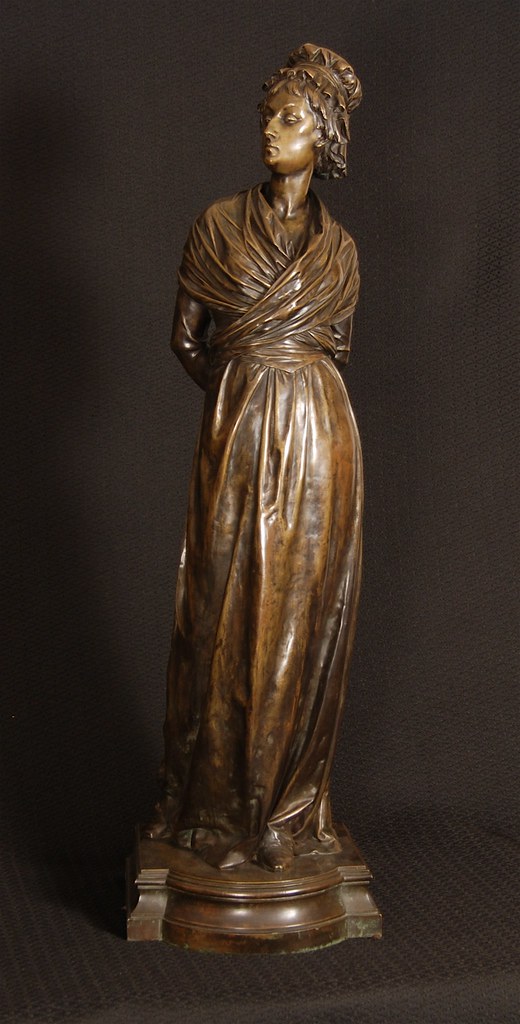
Lord Ronald Gower (British, 1845-1916) Marie Antoinette (1876) Bronze. Height: 46 in. Private National Gallery, London.
The first public sculpture by Lord Gower was Marie Antoinette (1876), completed two years after his retirement from politics. Eight years later, Gower published Marie Antoinette: An Historical Sketch (1885). Both the sculpture and the book were part of a larger late-nineteenth-century reexamination of Marie Antoinette’s reputation. Gower’s works joined a chorus of scholars who asserted that the Queen was a scapegoat of unrestrained revolutionary fervor.
During French Revolution of 1789, angry mobs successfully captured King Louis XVI and Queen Marie Antoinette. The King was quickly executed, while the Queen was kept under arrest, where she reportedly refused to eat or move. In the weeks that followed, révolutionnaires cast Marie Antoinette as the personification of Royal excess and frivolity. Her fate became a national debate. During a two-day show trail, filled with unsubstantiated accusations of gross immorality, Marie Antoinette refused to defend herself, saying “If I have not replied it is because Nature itself refuses to respond to such a charge laid against a mother.” Fearing rising sympathy for the deposed Queen, the Revolutionary Tribunal cut short her trial. A mother of four and 37 years old, Marie Antoinette was publicly and summarily beheaded on October 16, 1789 at 12:15 p.m. The incident was famously captured by Jacques-Louis David, a passionate supporter of the revolution–in his humiliating sketch of the Queen on the platform of the guillotine.
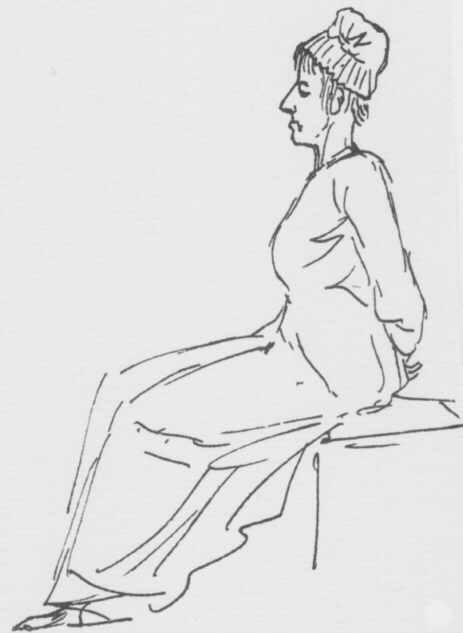
Jaques-Louis David (French, 1748-1825) Marie Antoinette one the Day of Execution (October 16, 1793) Pen and ink on paper. 150 by 100 mm. Musée du Louvre, Paris.
Lord Gower’s sculpture Marie Antoinette (1876) preceded his biography by nine years, indicating the subject had preoccupied him for some time. Gower depicts the deposed Queen being led to the guillotine. With hands tied behind her back and hair shorn to elicit further humiliation, the deposed Queen walks forward, resolutely and unbowed.
The work is not a technical masterpiece. Anatomically it is more stylistic than correct. Like so many of the the artists featured on this blog, there are very few examples of Gower’s work available for public view and almost no images to speak of. However, Gower’s last work, Hamlet (1888) is perhaps his best and most memorable.
In 1883, the city of Stratford-Upon-Avon commissioned Lord Gower to create a memorial to the city’s most famous citizen: William Shakespeare. Gower worked for five years at his own expense. (In his memoirs, Gower claims it cost him an average of £500 per year, which he never charged the city.)
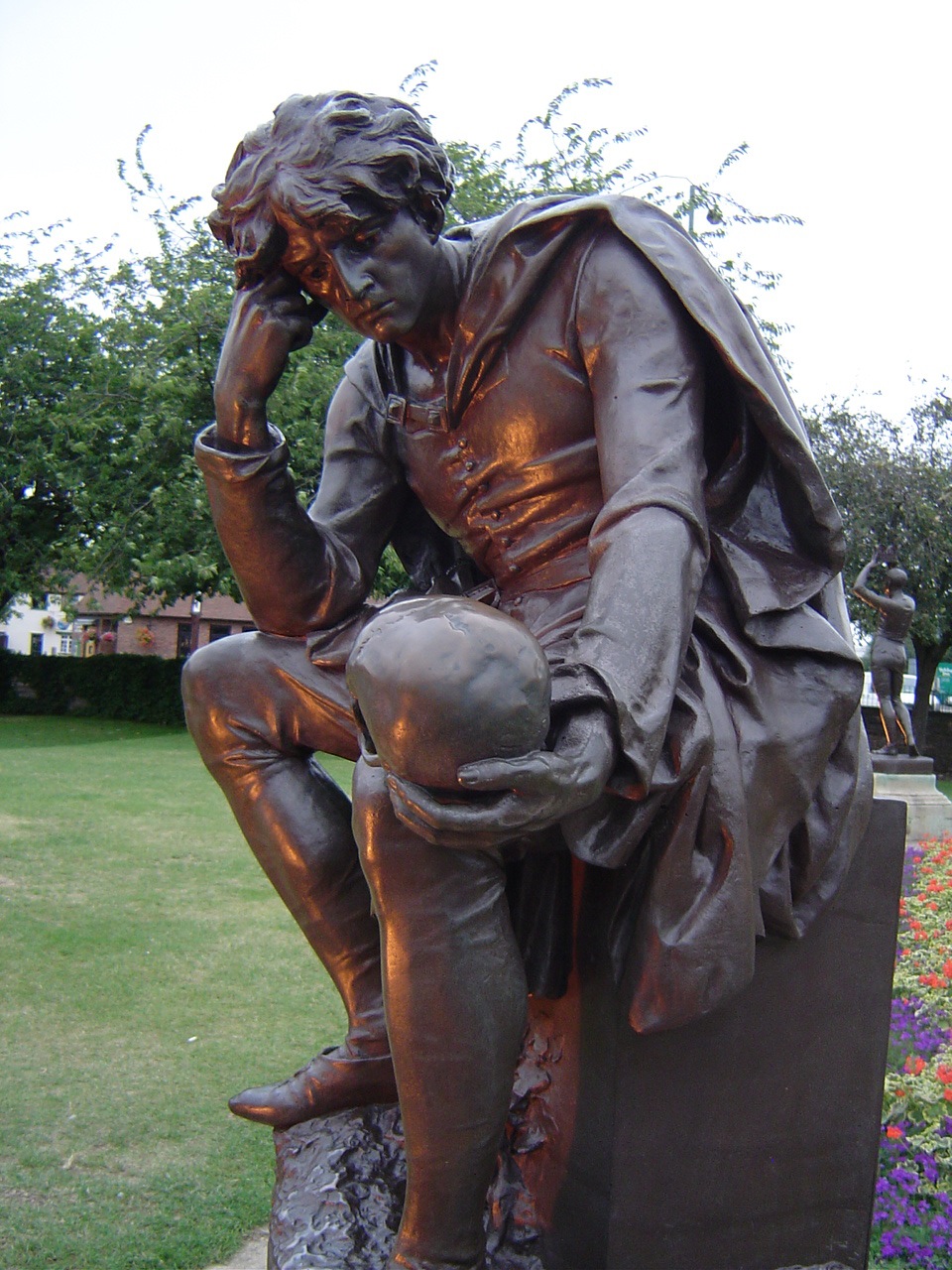
Lord Ronald Gower (British, 1845-1916) Hamlet (1888) Bronze. Life-size. Stratford-upon-Avon, United Kingdom. Photo via Wall Flower Gone Wild, Flickr.
Though he lived another 28 years, Lord Gower declared the monument his last work and never sculpted again.
75th Annual Grosvenor House Art & Antiques Fair
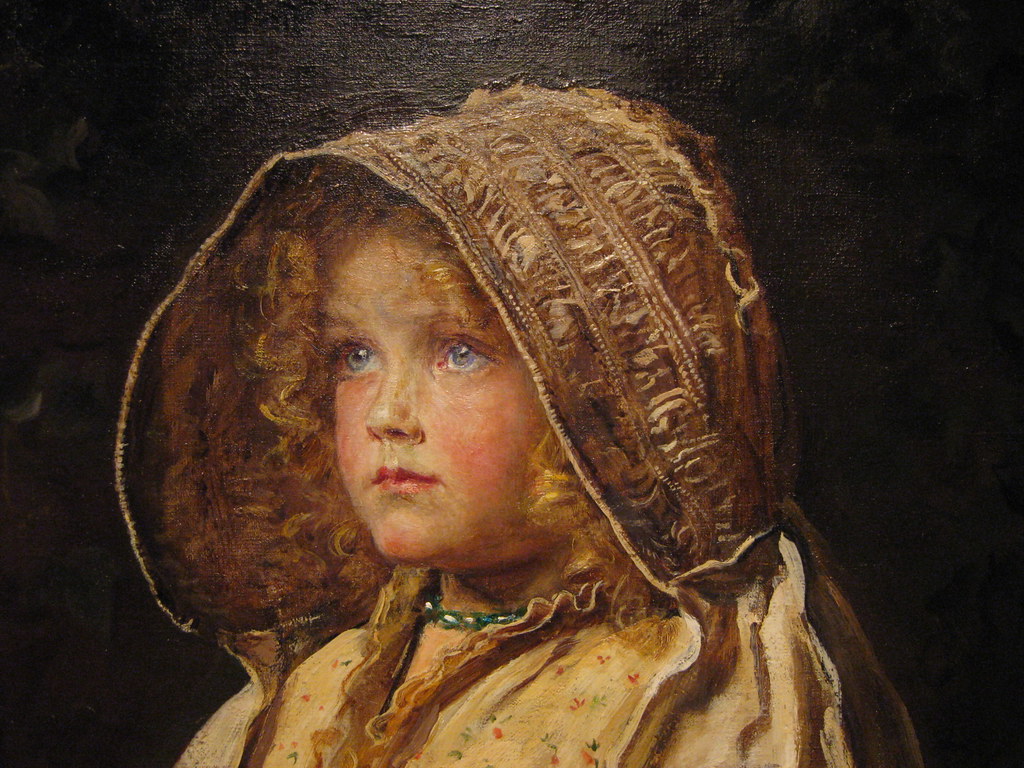
Sir John Everett Millais (Brittish, 1829-1896) For the Squire (1882) Oil on canvas. The Fine Art Society, London. (Detail). See the end of this post for more on the painting.
It’s been over for a week, but I feel compelled to post pictures from my visit to the Grosvenor House Art & Antiques Fair. Before it ended, I was able to spend several hours with dealers and buyers one of the longest-running and grandest art fairs in Europe.
Despite the gloom and doom supposedly hovering over the art world, there was a great deal of optimism from both dealers and collectors at the Fair. I came on the next to last day, and nearly everyone of the dealers of nineteenth-century or traditional art I talked with had sold a large number of his or her inventory. This was not the case with contemporary art dealers I met. Though not scientific, to me it indicates the slow and steady, if not always sexy, appeal of working with established genres.
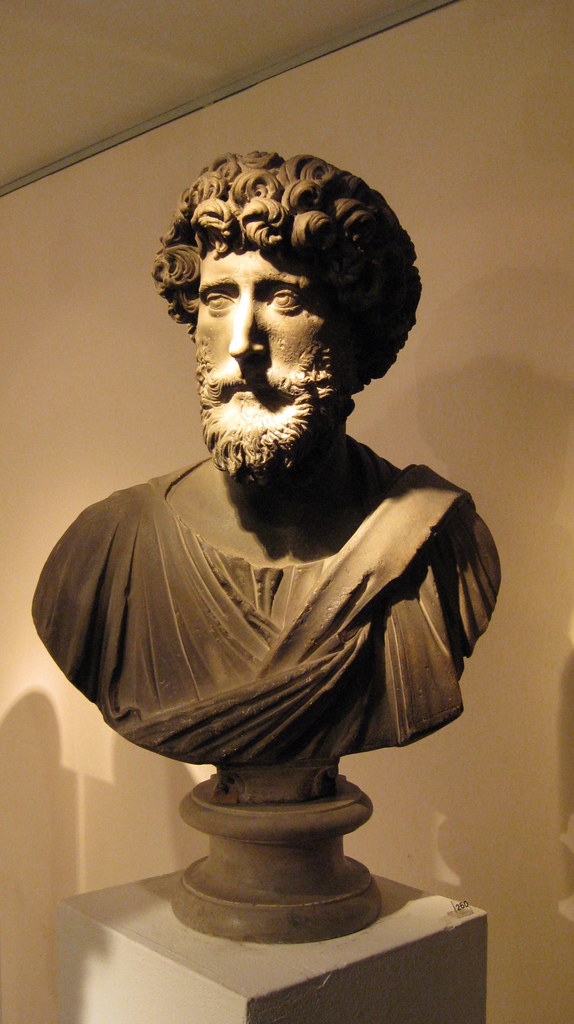
Bust. Cahn Basel St. Moritz, Antiquities dealers.
While there were world-class ceramics, furniture, modern art , works of silver and ancient relics, I was principally focused on nineteenth-century academic works. The photos from my visit, therefore, are a terribly unbalanced representation what was on view. Sorry.
Another thing to keep in mind: As in past review of fairs, I have taken photos of these images in person, at the fair and the results are sometimes surprisingly and sometimes less than ideal.

Thédore Géricault (French, 1791-1824) Two Galloping Horses. Pen and brown ink and brown wash, over an extensive underdrawing in black chalk. 35.3 by 48.4 cm. Stephen Ongpin Fine Art.
The first work that caught my eye was a remarkable sketch (above) by Géricault. Known for his obsession with horses–entire coffee-table books having been dedicated to them–its still startling to see one in person, and how much he can conjure with so few few lines.
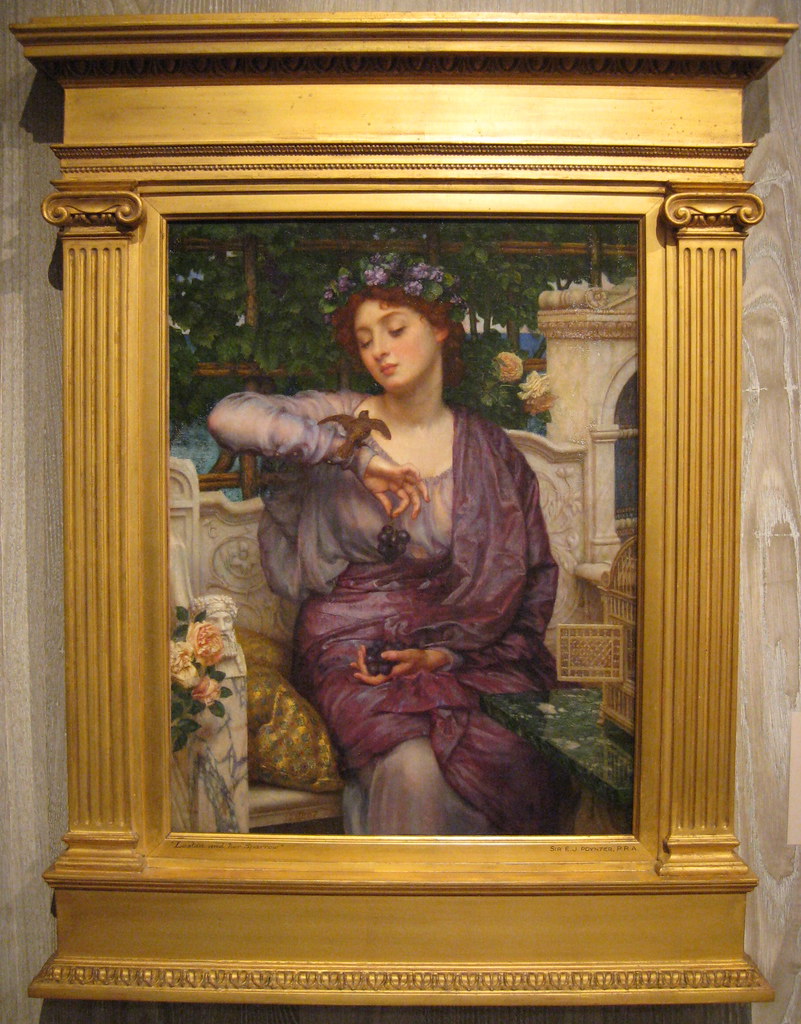
Sir Edward John Poynter (France, 1836- Great Britain, 1919) Lesbia and her Sparrow (1907) Oil on canvas. 50.8 by 38.1 cm. Richard Green, London.
Someone once told me a joke: “Question: What do you call the crumbs that fall from Richard Green’s table? Answer: Cake.”
The implication was that Richard Green Galleries is remarkably consistent in getting the best of the best. Most dealers and collectors would be satisfied to have the slightest portion of what this London dealer offers.
Previous to arriving several people had suggested that if I saw one work at Grosvenor, it should be the Green’s Lesbia and her Sparrow (above). A cult following of British Olympic painters (e.g. Leighton, Tadema, Godward, and Poynter) has come fruition in the pas three decades. Poynter is one of the group’s finest, and this is one of his gems.
Lesbia was the great love of the Roman poet Gaius Valerius Catullus (c.84-52 BC) and the subject of 25 of his surviving poems. Poynter chose one in particular as the subject for this painting:
Sparrow, my girl’s darling
Whom she plays with, whom she cuddles,
Whom she likes to tempt with finger-
Tip and teases to nip harder
When my own bright-eyed desire
Fancies some endearing fun
And a small solace for her pain,
I suppose, so heavy passion then rests:
Would I could play with you as she does
And lighten the spirit’s gloomy cares!
(cited in My Mistress’s Sparrow is Dead, ed. Jeffery Eugenides, Harper Perennial, London, 2009, p. x).
Poynter began his career working in stained glass and cabinetry. This probably contributed to his heightened use of color and remarkable ability to imitate various materials, a skilled often needed wood graining.
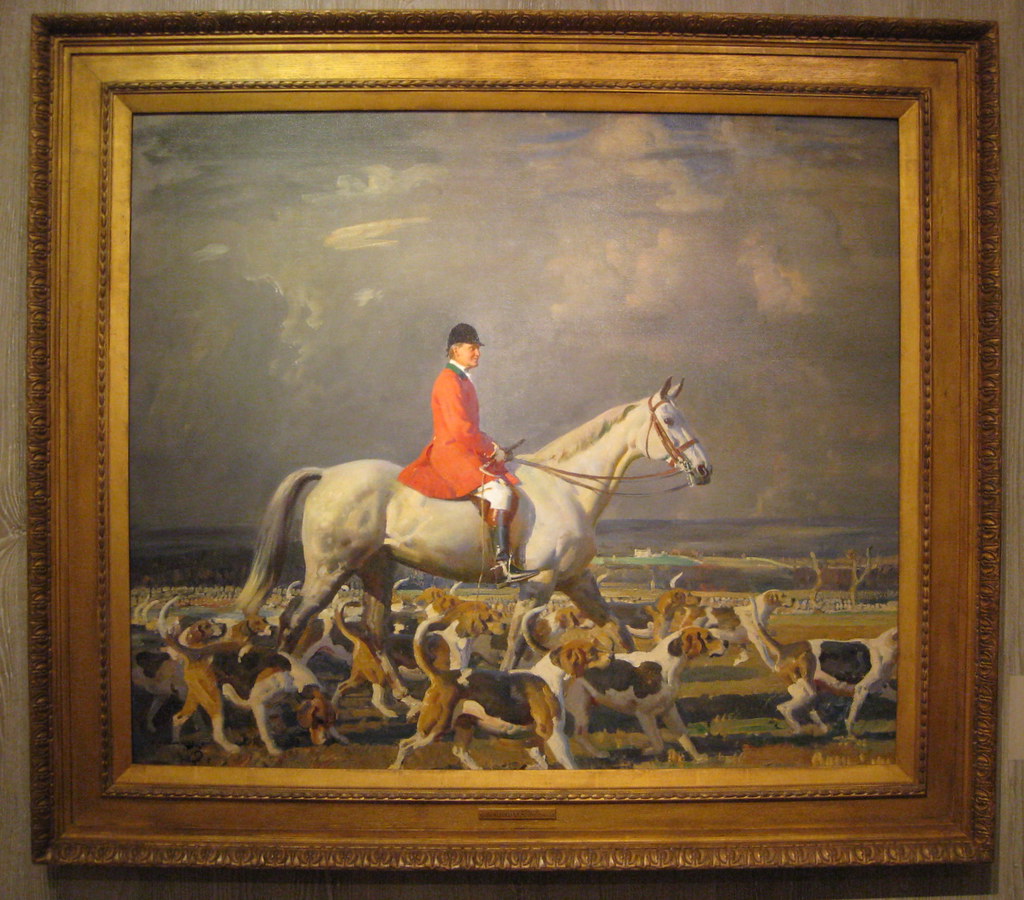
Sir Alfred Munnings (British, 1878-1959) A portrait of Frederick Henry Prince (1859-1953), Master of the Pau Foxhounds (1924) 96.5 by 114.3 cm. Richard Green Galleries, London.
Sir Alfred Munnings described Frederick Henry Prince (above) as “one of the most amazing characters I had ever met . . . a grown up boy.” This painting was commissioned by Prince, showing him at one of his favorite activities and the kind of scene Munnings had made his name producing: sporting pictures. If you are not familiar with Munnings’ work, you can be forgiven. Due to the way his paintings are sold–at sporting auctions and not nineteenth-century art auctions–outside of Great Britain, Munnings has not received the recognition his skill merits.
Everything in this painting is world class: the figures, the composition, observation of nature, and the economy of materials (note in particular the tails of the dogs; some only consisting of a single stroke.). Munnings is a genius.
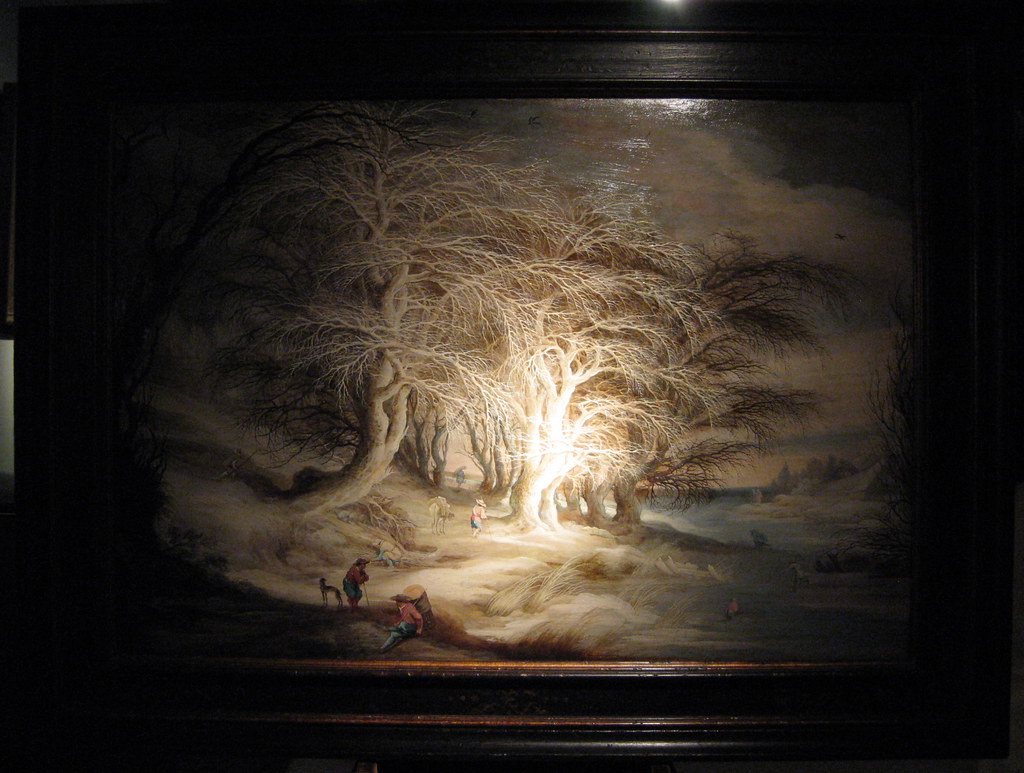
Gijsbrecht Leytens (Antwerp, 1586-1656) Winter landscape with people strolling on the banks o a frozen river where children play. Oil on panel. 72 by 105 cm. Private collection, for sale by De Jonckheere Fine Art.
Leytens is one of those great Flemish painters following in the wake of the Brueghel dynasty. There were so many wrote compositions mass-produced in enromous artist studios. Works that are able to transcend the typical formulae to create something original and compelling. The light and darks Winter landscape . . . (Above, and pitifully captured by my camera) made this work visible from far away. Upon close inspection it has all the charm of cabinet paintings from the period that were often meant to be viewed with a magnifying glass.
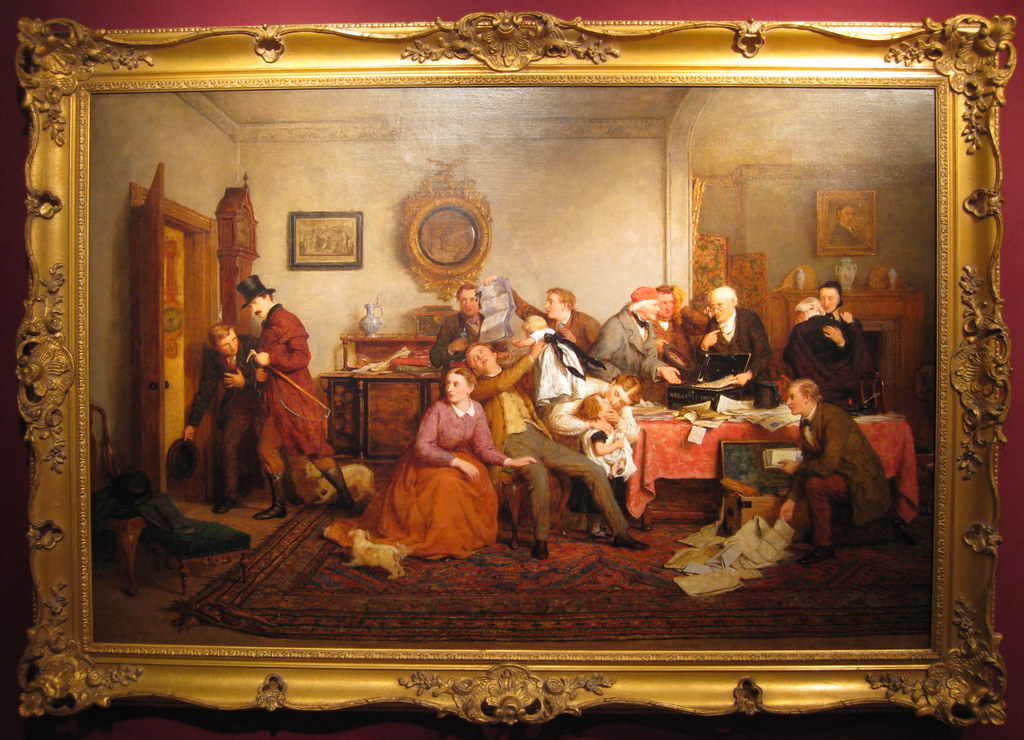
George Smith (British, 1829-1901) The Will Found. Oil on canvas. 29 by 44 in.
Behold the power of narrative painting. A family has lost the recently-deceased patriarch’s will, and a scoundrel–seen exiting stage right–trying to take advantage of the resulting ambiguity. After searching through numerous documents–in the foreground and on the table–the will is held high and the rightful, and obviously deserving, inheritors are vindicated. Mustached evil is chased out the door by the family dog, the embodiment of fidelity.
Though I haven’t found it yet, it is highly likely that George Smith produced The Will Found to be a print. Prints and contracts with printers were often more lucrative for painters than the sale of the original work. Such was the case with Holbien in the eighteenth century.
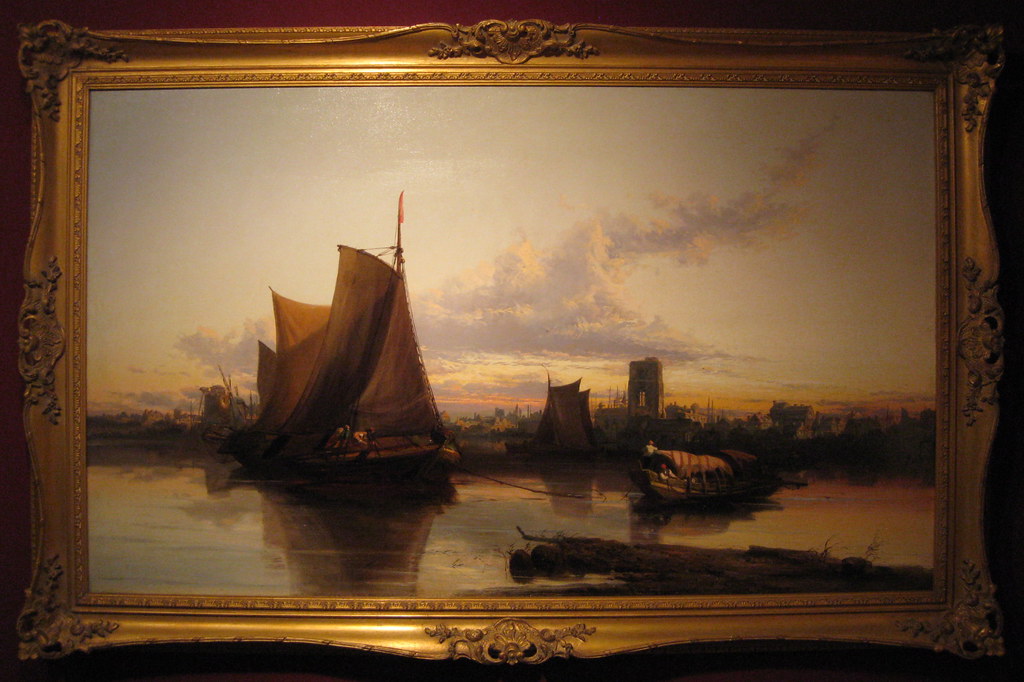
James Webb (British, 1825-1895) Sunset over Dordrecht Harbour. Oil on canvas. 28 3/4 by 49 in.
There is disappointingly little written about James Webb, who regularly exhibited at the Royal Academy. The preponderance of his output was in watercolor, not oils. Yet, he shows an astounding facility and painterliness in this work.

James Webb (British, 1825-1895) Sunset over Dordrecht Harbour. Oil on canvas. 28 3/4 by 49 in. (Detail)
Look at this beautiful passage of clouds!
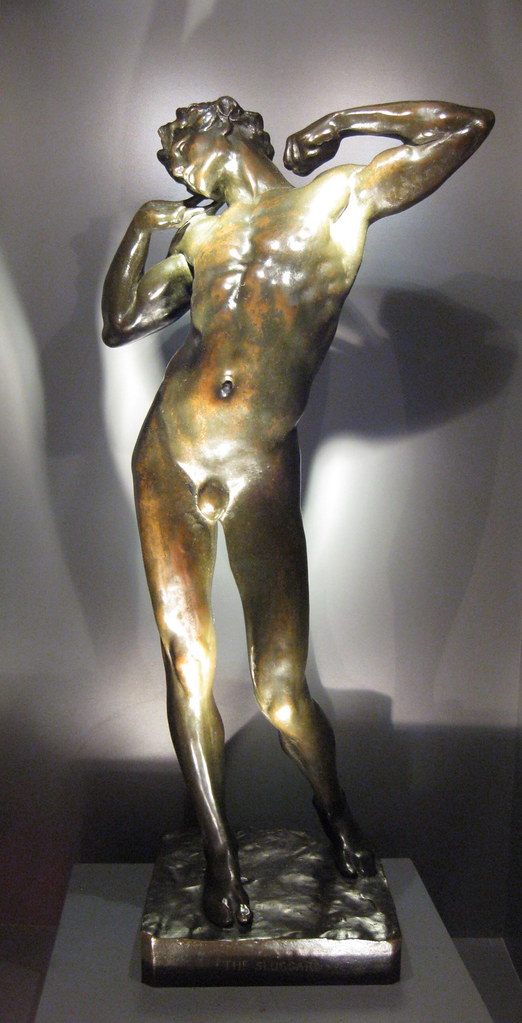
Frederick Lord Leighton (English, 1830-1896) The Sluggard (c. 1885) Bronze. 52.5 cm. Robert Bowman Galleries, London.
Robert Bowman is one of the world’s great dealers and experts of nineteenth-century sculpture. For several years he maintained both contemporary and nineteenth-century galleries. However, a few years ago, he downsized by closing his nineteenth-century gallery and showing those works almost exclusively at fairs like Maastricht and Grosvenor.
This year Bowman had several works by artists like Leighton and Rodin that can be seen in larger scale versions in museums around the world. Seeing The Sluggard (above), at this small size gave me a completely different eperience than the larger-than-life version I am used to seeing at the Royal Academy in London. While I find the larger version imposing and dynamic, this appears more delicate bring out a kind of beauty I hadn’t seen in the other. Also, the patina of this smaller work is beautifully rendered.
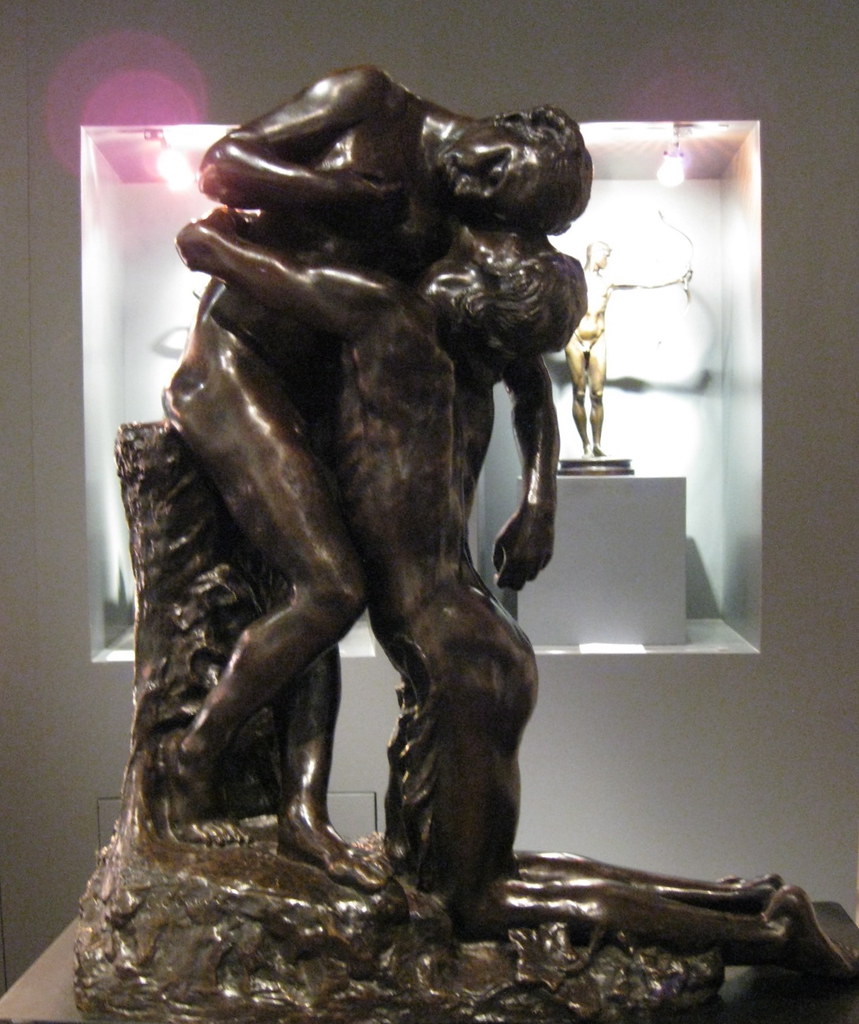
Camille Claudel (French, 1864-1943) L'Abandon (c. 1905) Bronze. Robert Bowman Galleries, London.
Claudel’s piece L’Abandon (above) was given a place of prestige at Bowman’s booth; and, it deserves all the attention it gets. According to Bowman:
This 1905 rare bronze . . . is the earliest edition ever seen on the open market. This is the second of an edition limited to 18, the first cast having been kept by the owners of the foundry.
Claudel, was 18 years old when she met and began a 15-year affair with August Rodin, aged 42. Understandably, Rodin had an enormous influence on her work. Bowman relates that the statue borrows from and reverses the gender roles of Eternal Spring (1881) by Rodin and is based ” on the eponymous 5th century Hindu legend in which the heroine, Sakoutala, loses the affection of her beloved prince only to regain it once more.”
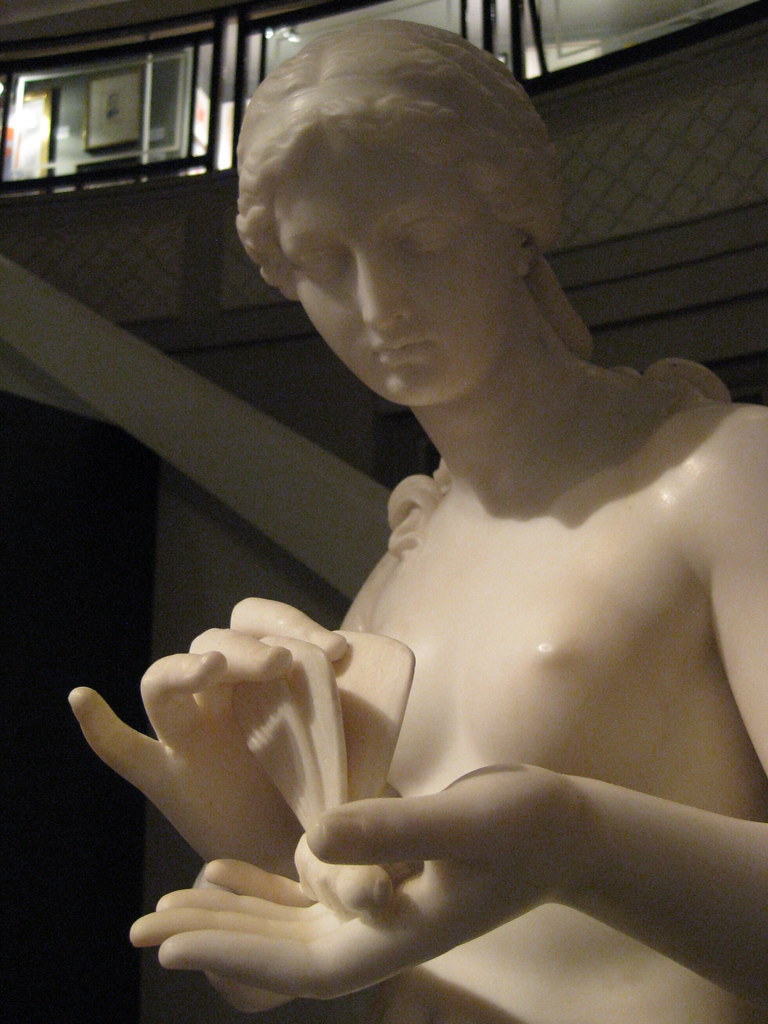
Edward Hodges Baily (English, 1788-1867) Psyche (c. 1850) White marble. Robert Brown Galleries, London. (Detail)
Baily is the sculptor of the iconic statue of Lord Nelson, standing atop the column in Trafalgar Square in London, perhaps the most seen statue in the country. The monument to Nelson was completed in 1843, and Psyche (above) statue was finished the same decade.

Psyche, unlike the statue of Lord Nelson, is meant to be seen at an intimate range. The delicate butterfly is held in beautifully articulated fingers that include minute details of fingernails and lines in the palm.
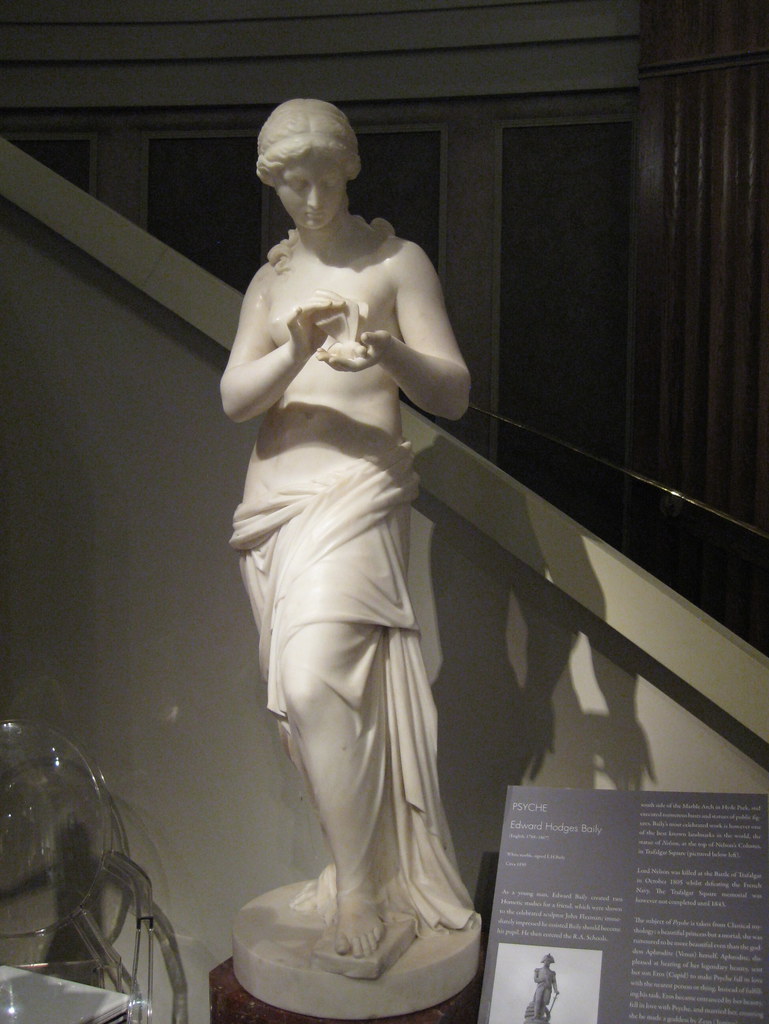
Edward Hodges Baily (English, 1788-1867) Psyche (c. 1850) White marble. Robert Brown Galleries, London.
The statue is the epitome of idealistic beauty and looking at it, even briefly, can drop your blood pressure by several points.
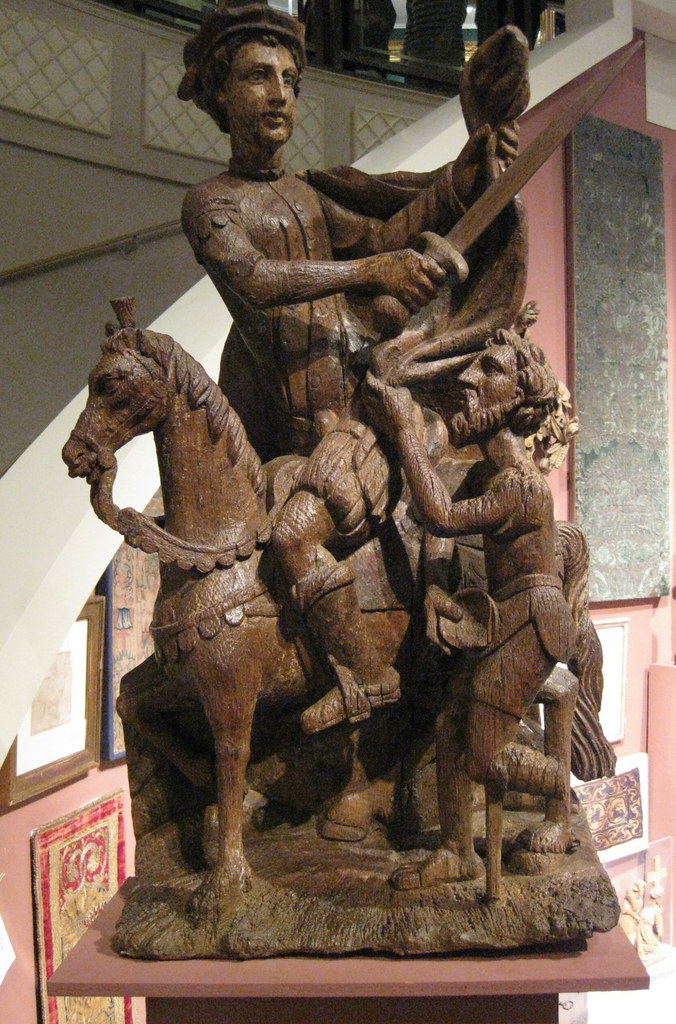
Anonymous (Flemish) St. Martin dividing his cloak for a beggar (c. 1380) Wood with some original polychrome. 81 by 43 by 26 cm. Joanna Booth, London.
Directly across from the Bowman Galleries stall was the that of Joanna Booth, a dealer in mediaeval and archaic works of art. St. Martin dividing his cloak for a beggar (above) is a remarkably fully-realized piece. This single angle of the work does not adequately capture the full effect it has in person. The beggar with a wooden leg, the bold gesture of the Saint cutting the cloth, and the interesting choice to make one so much larger than the other, the author’s mastery in depicting varied textures. . . here it looks almost like a cartoon caricature; but, in person, it takes on a majestic air that is humbling.
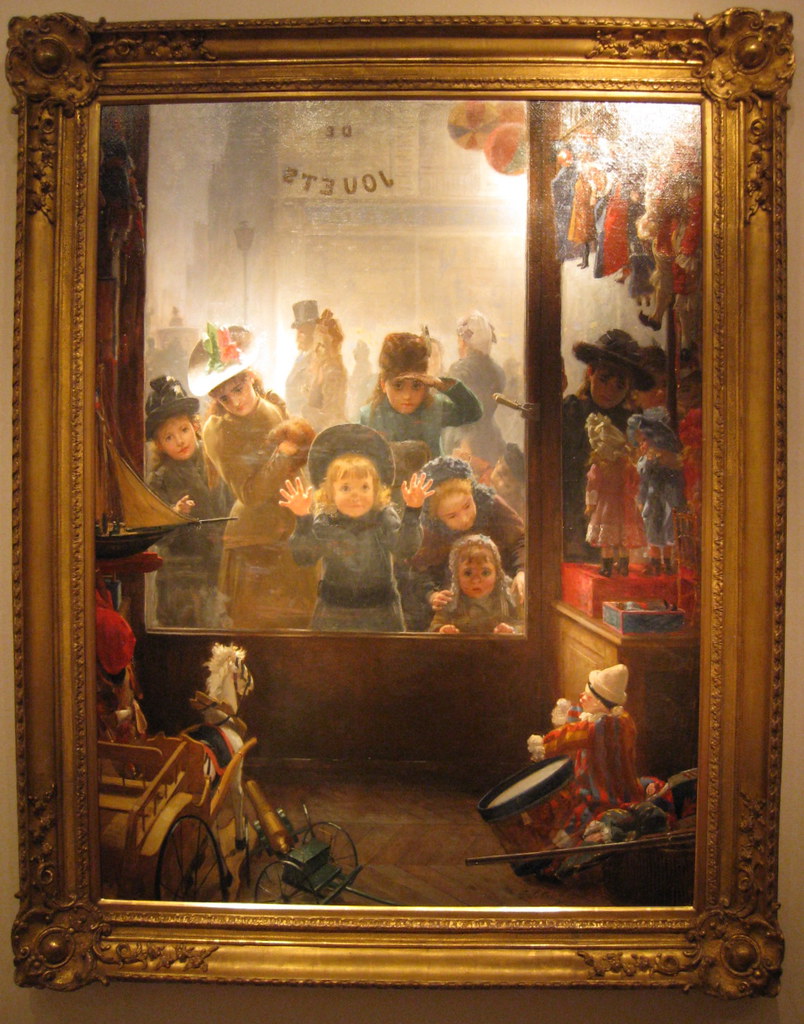
Tomoléon Lobrichon (French, 1831-1914) The Toyshop Window. Oil on canvas. 44.5 by 33.5 in. Walker Galleries, North Yorkshire.
For me, going to museums is exhausting, but I rarely get weighed down at fairs like Grosvenor. This is due in part to the kind of paintings, like The Toyshop Window (above) rarely, if ever, shown at museums. Museum are after a kind of gravitas in their paintings. Unfortunately, this makes a whole category of paintings, full of charm and humor, absent from public exhibitions. Like eating heavy foods all the time, I get museum indigestion. Sometimes, I want dessert or, at least, a sorbet, to cleanse my palate.
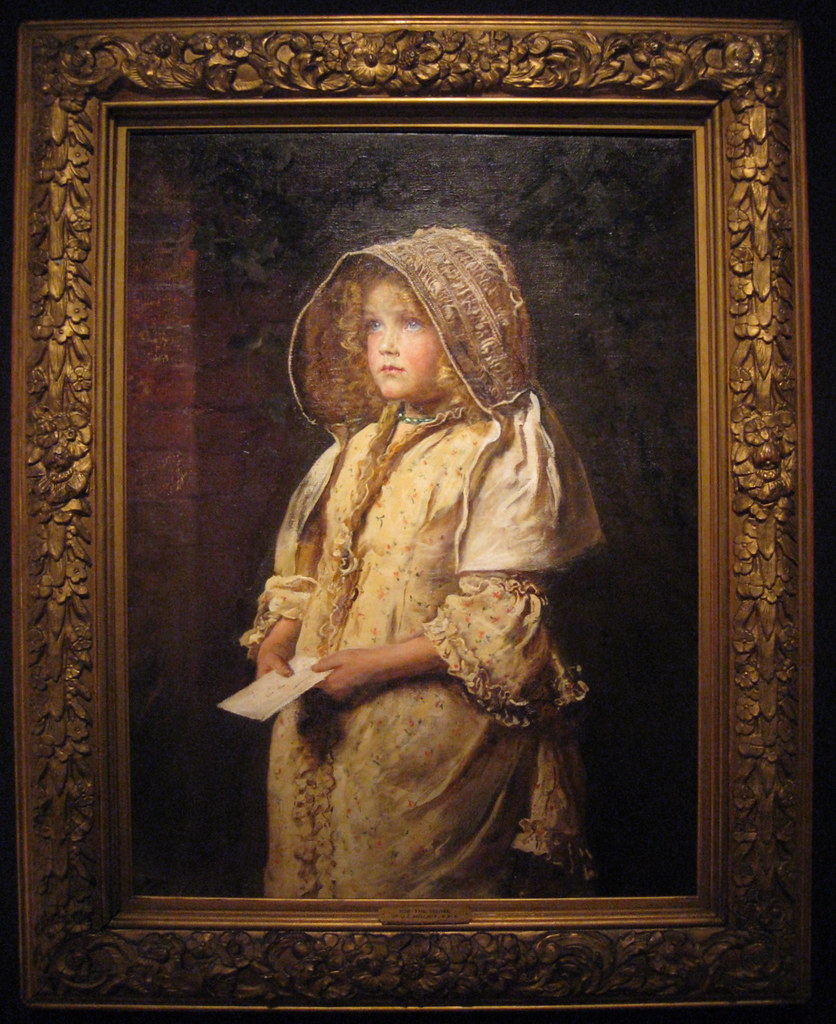
Sir John Everett Millais (Brittish, 1829-1896) For the Squire (1882) Oil on canvas. The Fine Art Society, London.
I wanted to begin and end this post with my favorite work from the exhibition: For the Squire (above) by John Everett Millais. Millais’s works rarely appear in the private market; and, when they do, it is not often in the form of a fully-realized canvas. It is the kind of work that will never be featured in a show due to the lack of drama. It has all the so-called sentimentality that turns many off to the period.
For me there is a purity of spirit, an innocence in this work that is communicated in a way that only painting can. The narrative–the delivering of a letter–is the lightest of pretexts for painting this little girl. Unlike the style that characterized his early Pre-Raphaelite works, this painting is not consumed with details. (The background, fabric, and hair are more suggested than copied.) Done when he was 53, it seems the product of a mellowed Millais.
—
There are many, many more works not included in this post that I have uploaded to my Flickr account. (In some cases, a work is followed by a photo of its label. That’s my way of remembering what I’ve seen and where I’ve seen it.)
Darwin & Dyce: A Meeting of Art and Science
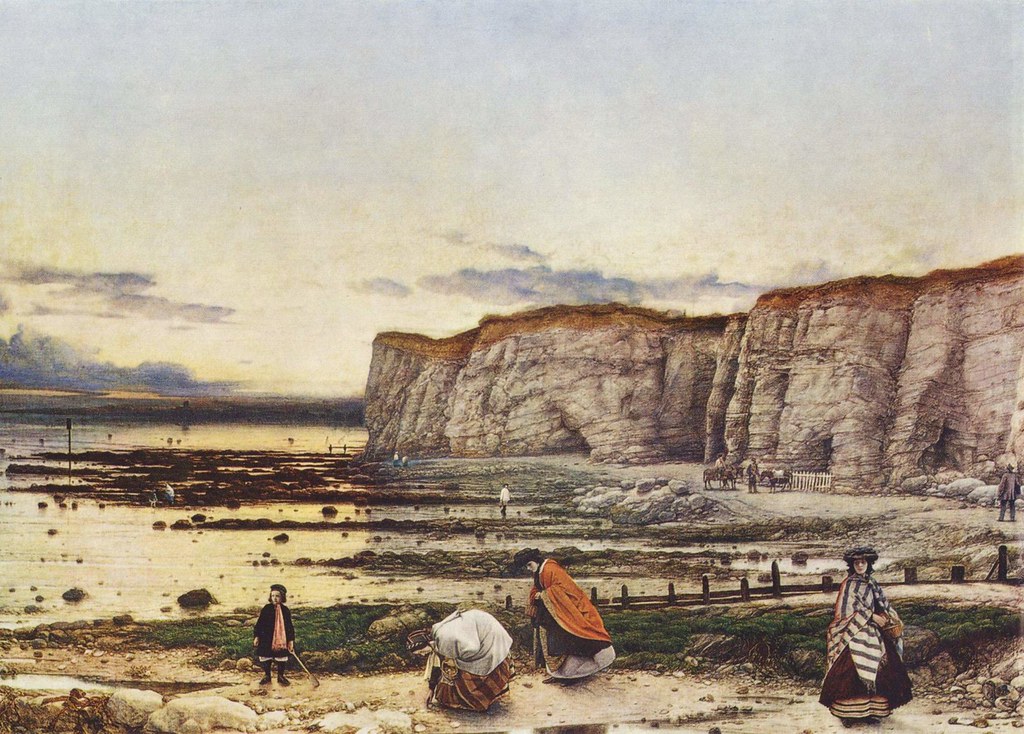
William Dyce (Scotland, 1806-1864) Pegwell Bay, Kent - a Recollection of October 5th 1858 (1859-1860) Oil on canvas 63 by 89 cm. Tate Britain, London. (Currently on loan to the Fitzwilliam Museum, Cambridge.)
Artists and art historians in the classical tradition like to point out the close relationship that art and science enjoyed from the Renaissance. Mathematical perspective, anatomical study of human and animal figures, geology, and meteorology all played serious roles in the fine arts.
This week the exhibition“Endless Forms: Charles Darwin, Natural Science and the Visual Arts” opens at the Fitzwilliam Museum in Cambridge, England. It features a number of contemporary reactions in the fine arts to the publication of Darwin’s Origin of the Species (1859). One of its most stunning works is by the Pre-Raphaelite painter William Dyce (Scotland, 1806-1864).
Dyce was an ardent Anglican who had painted several religious works. In 1858 he traveled to Southeastern England. There it had become fashionable for professionals and amateurs alike to dig ancient urchins, plants, and brachiopods from the chalk cliffs of Kent. At the time, there was no widely accepted scientific or religious theory to explain the fossils. It was not until one year later that Dawin published his own ideas and ignited a firestorm.
During the firestorm, from 1859 to 1860, Dyce painted Pegwell Bay, Kent – a Recollection of October 5th 1858. The title is a double entendre, referring both to his own memory of the scene and the collective rediscovery of relics from the dinosaur age. At first glance it looks like a typical, nineteenth-century landscape filled with well-bred people. Therein lies one of its great strengths: the commentary that behind something seemingly so ordinary there is a much greater issue at stake.
The painting itself has all the hallmarks of the best Pre-Raphaelite works: brilliant coloring, meticulous detail, careful observation, and poignancy of theme. For me, it is one of the great paintings of the 1850s, and one of the least known.
Forgotten Master: Carlos de Haes (Brussels, 1826-Madrid, 1898)
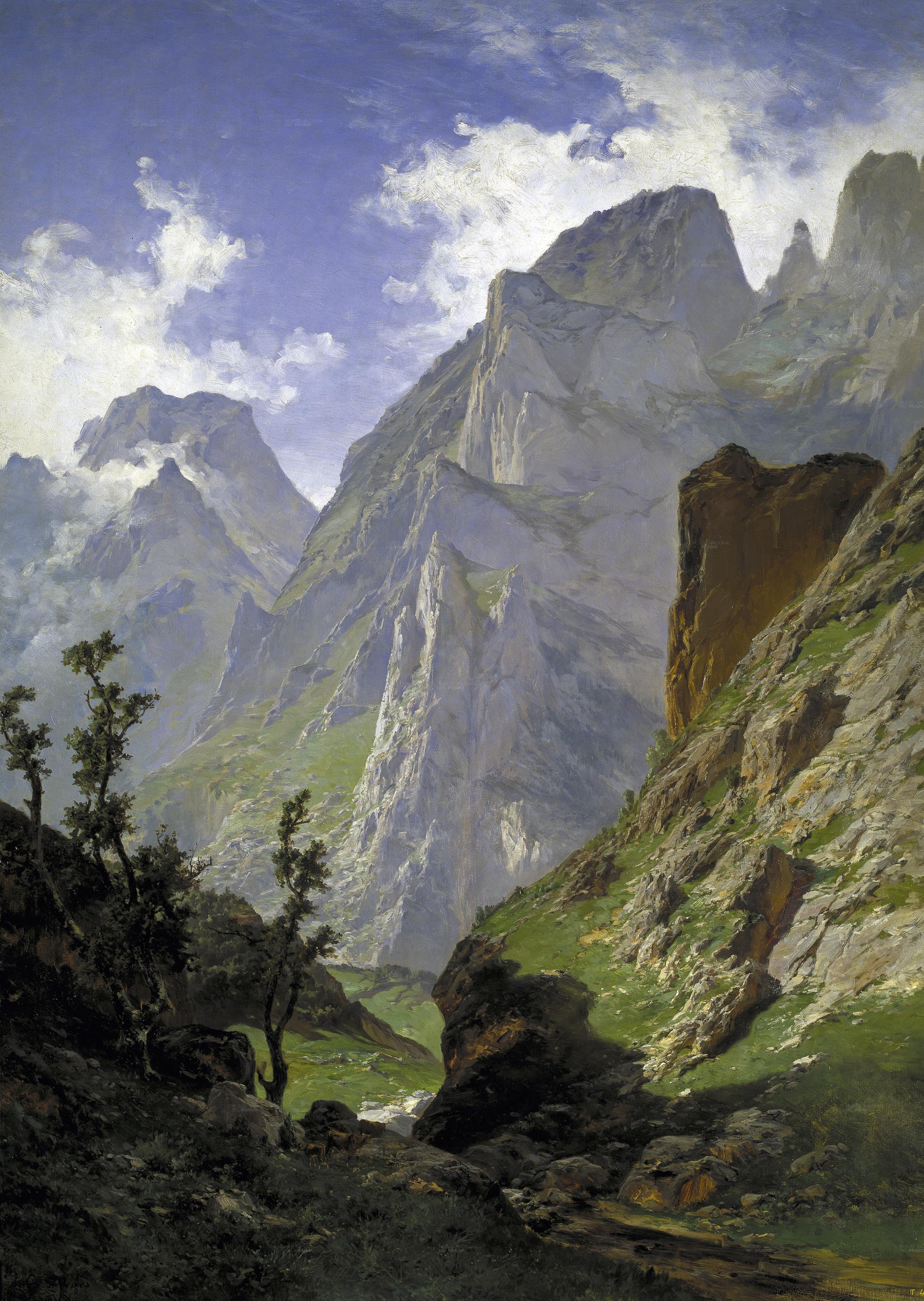
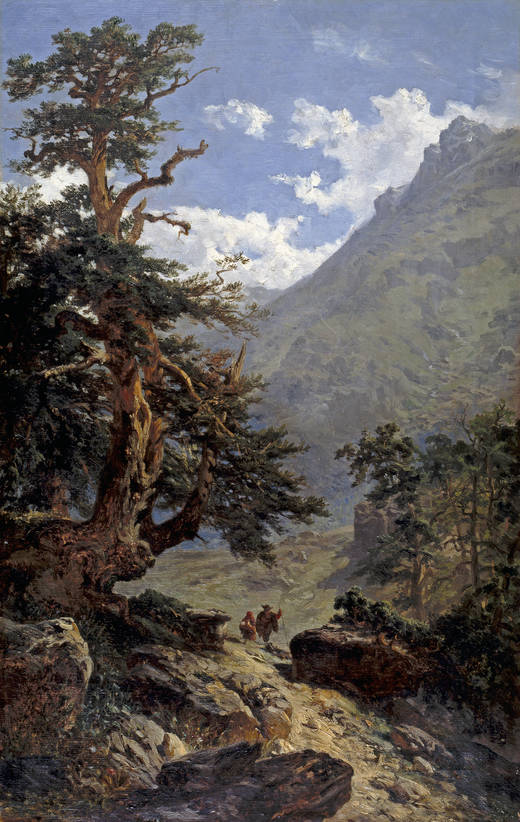
Carlos de Haes (Brussels, 1826-Madrid, 1898) La canal de Mancorbo en los Picos de Europa (1876) Oil on canvas. 168 x 123 cm. Museo Nacional del Prado, Madrid.
While not forgotten in Spain, Carlos de Haes’ work has been little recognized elsewhere. As a teacher and award-winning artists, Haes is perhaps Spain’s greatest landscape painter.

Photograph of Carlos de Haes (Brussels, 1826-1898) c. 1870.
Carlos de Haes (Brussels, 1826-Madrid, 1898) was born in Belguim to Spanish parents. Due to financial troubles, the family was forced to return to Spain in 1835. There, Haes studied with Luis de la Cruz, a Court Painter to King Ferndinand VII and a member of the Academia de Bellas Artes de San Fernando.
In 1850, at the age of 24, Haes traveled back to Brussels to study Flemish landscapes. There he competed and regularly placed in Belgium’s annual Salons. Six years later, Haes returned to Spain.
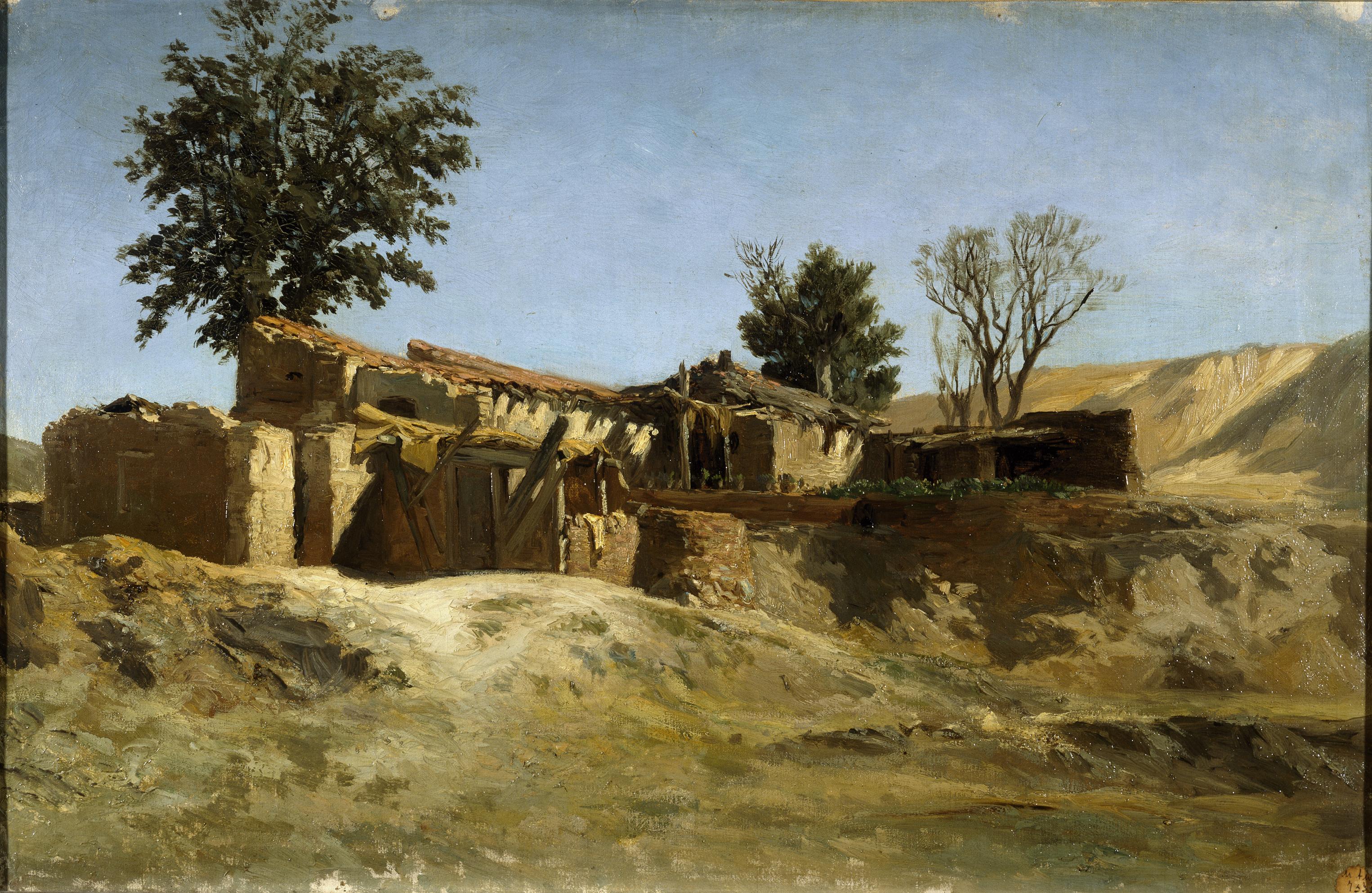
Carlos de Haes (Brussels, 1826-Madrid, 1898) Tejares de la montaña del Príncipe Pío (c. 1872) Oil on canvas. 39.2 x 61 cm. Museo Nacional del Prado, Madrid.
His international experience carried a great deal of currency in Spanish painting circles, and immediately set him apart from his peers who rarely studied beyond Spain and Italy. His dedication to landscape also changed the Spanish Academy’s attitude towards landscape painting.
Despite having been accepted as a major genre in other European countries, during the first half of the nineteenth century, Spain had not widely participated in Romantic and Sublime landscape painting. Instead, landscapes were considered a second-rate genre, a necessary part of an artist’s education insofar as it related to the composition of history painting.
Carlos de Haes (Brussels, 1826-Madrid, 1898) La vereda (1871) Oil on canva. 93.7 x 60.4 cm. Museo Nacional del Prado, Madrid.
Haes’ work Cercanías del moasterio de Piedra (1858) was the first landscape painting to win a First Place medal at the Exposicion Nacional, Spain’s equivalent of the Paris Salon. The award represented a giant leap forward in the estimation of landscape painting as a stand-alone discipline. Shortly afterwards, Haes was made a member of the Academia de Bellas Artes de San Fernando, the nation’s most prestigious art school. His appointment in 1860 to the Academia de San Fernandoand and subsequent teaching there effectively caught Spain up with other schools of landscape painting in Europe. As a teacher, Haes fathered a dynasty of Spanish landscape artists that continues today. Among Haes’s more prominent students are Martín Rico y Ortega (1833-1908), Jaime Morera (1854-1927).
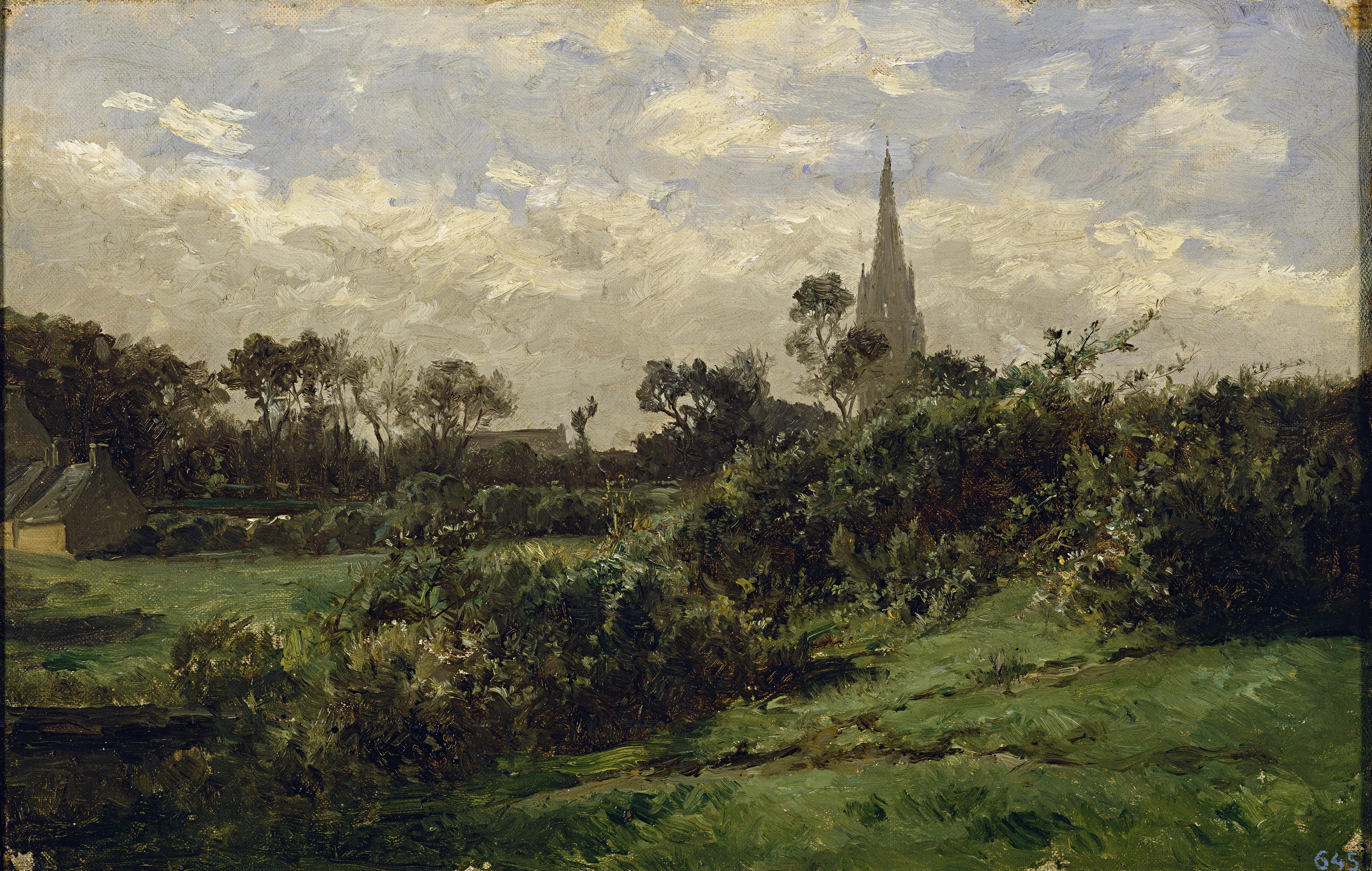
Carlos de Haes (Brussels, 1826-Madrid, 1898) La Torre de Douarnenez (c. 1880) Oil on canvas. 39 by 59 cm. Museo Nacional del Prado, Madrid.
It could be argued that Haes’ one of most important contributions to Spanish painting was with non-landscape painters. Through him, history painters, whose work enjoyed the widest attention at the Exposiciones Nacionales, developed a new appreciation and approach to landscapes, arguably bringing it on par with their figural work. Artists like Francisco Pradilla, José Casado del Alisal, Placenscia Maestro, were required to take Haes’ course at the Academia de San Fernando considered a serious part of their large history paintings, sometimes producing numerous studies devoid of figures.
In particular, Haes brought to Spain an increased emphasis on three aspects of landscape painting: luminosity, porportion and direct observation from nature.

Carlos de Haes (Brussels, 1826-1898) Picos de Europa (c. 1875) Oil on panel. 37 x 59 cm. Museo Nacional del Prado, Madrid.
Traditionally, Spanish artists favored the use of sandy-colored grounds for use in painting. This created a unifying effect in their works, but resulted in the overall dampening of light. While Haes continued to use sand-colored and reddish grounds in his works, he would incorporate large patches of lead white and subdue the quantity of sandy grounds.

Carlos de Haes (Brussels, 1826-Madrid, 1898) Cercanías de Villerville, Normandy (c. 1877) Oil on canvas. 26.2 x 39 cm. Museo Nacional del Prado, Madrid.
Very few of Haes’ works exceed 150 by 200 centimeters. This was at a time when history paintings, often exceeding 6 by 10 meters, were competing for top prizes at Exposiciones Nacionales. Haes’ landscapes, though bold in composition and epic in subject matter, maintained comparatively modest proportions. This set a precedent in landscape painting throughout Spain, which more or less continued throughout the first half of the nineteenth century, even when history paintings became more ambitious in size.
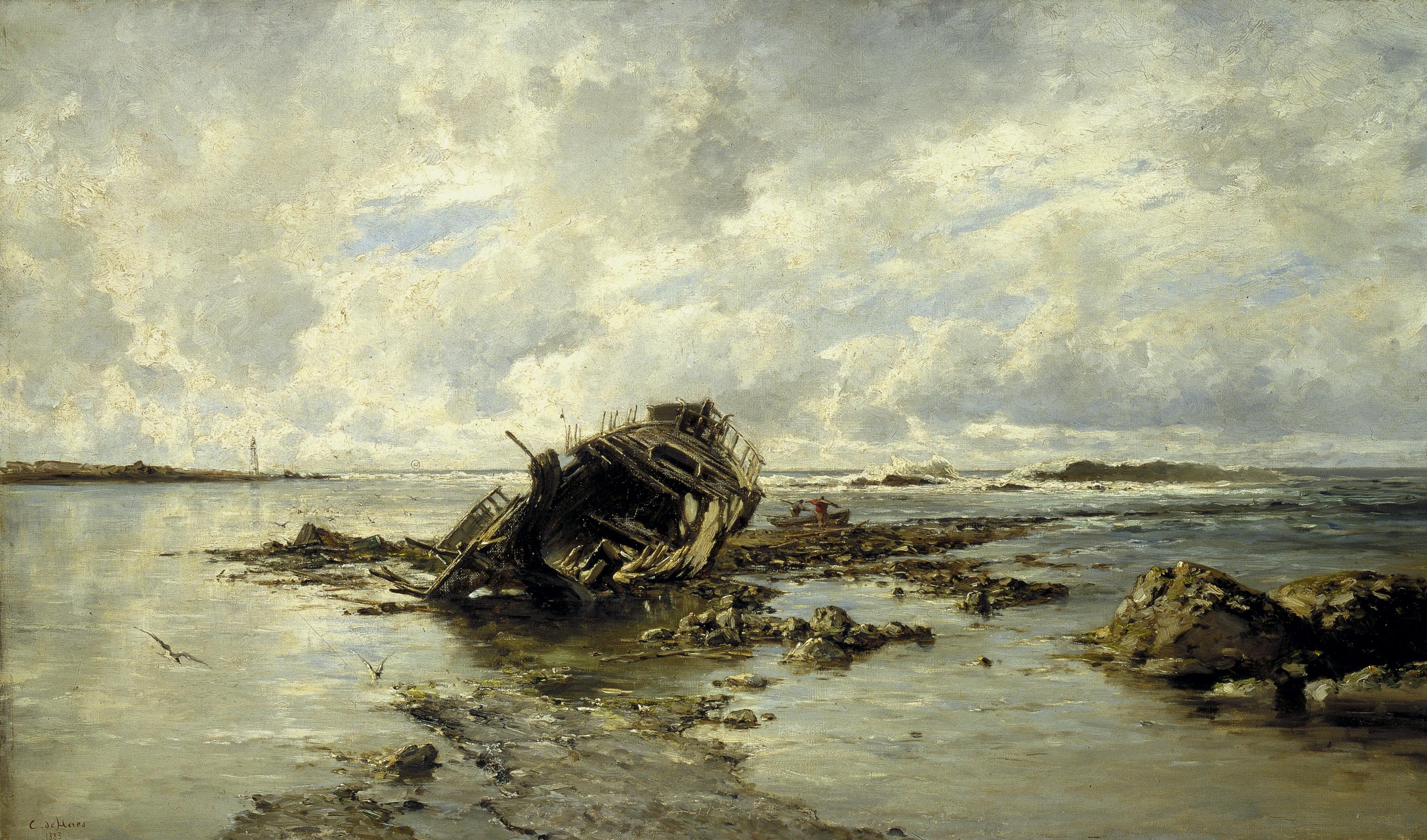
Carlos de Haes (Brussels, 1826-Madrid, 1898) Un bardo naufragado (c. 1883) Oil on canvas. 59 by 101 cm. Museo Nacional del Prado, Madrid.
Finally and perhaps most importantly, Haes was a proponent of direct observation from nature and led several expeditions. This resulted to an almost nationalistic fervor for Spanish landscape painting, that featured Iberian natural wonders.

Carlos de Haes (Brussels, 1826-Madrid, 1898) Desfiladero, Jaraba de Aragón (c. 1872) Oil on canvas. 39 by 60 cm. Museo Nacional del Prado, Madrid.
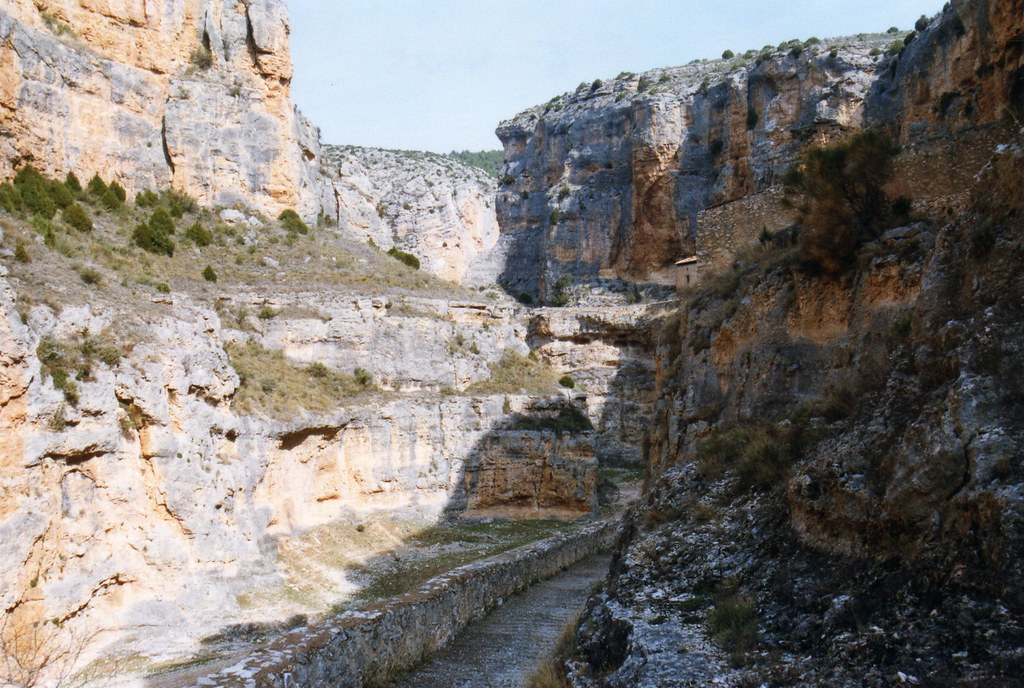
Photograph of Jaraba de Aragón, Spain (2005) by Juan Devis (www.panoramio.com/photo/1599391)
Today, Carlos de Haes’ work can be found in nearly every major Spanish museum. However, the largest body and greatest works from his ouvre are held in the Prado Museum and not currently on display. A new wing of the Prado, dedicated to Spanish nineteenth-century art, is planned to open in 2012.
(Click here for a list of works and biography of Carlos de Haes by the Prado Museum.)
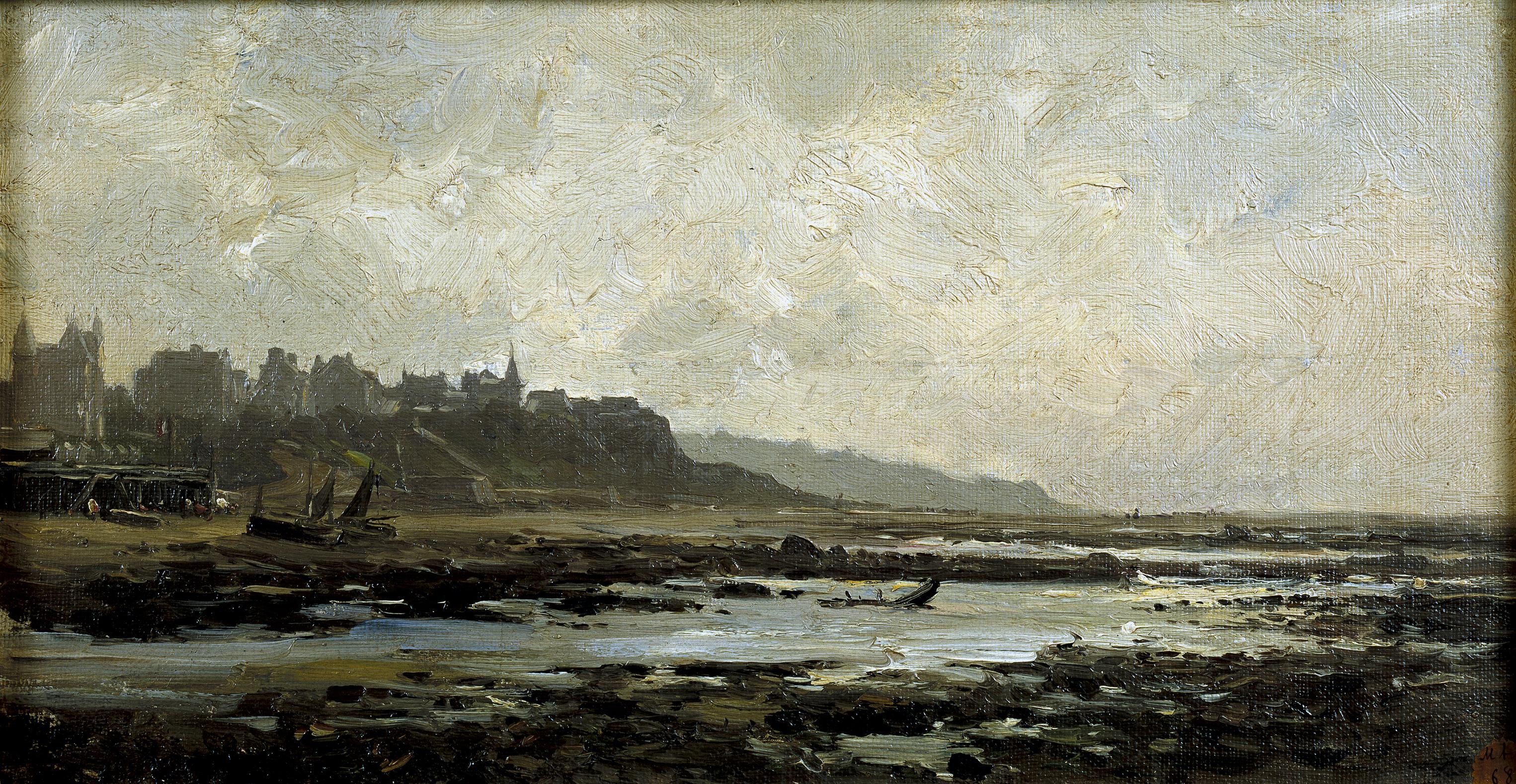
Carlos de Haes (Brussels, 1826-Madrid, 1898) Playa de Villerville, Normandy (c. 1880) Oil on canvas. 22 by 40 cm. Museo Nacional del Prado, Madrid.
Bibliography:
- Carlos de Haes (1826-1898) en el Museo del Prado, cat. exp., Madrid, Museo del Prado, 2002.
- Cid Priego, Carlos, Aportaciones para una monografía del pintor Carlos de Haes, Lérida, Instituto de Estudios Ilerdenses, 1956.
La Academia dei Desidorosi: A Pre-cursor to the Nineteenth-Century Academy
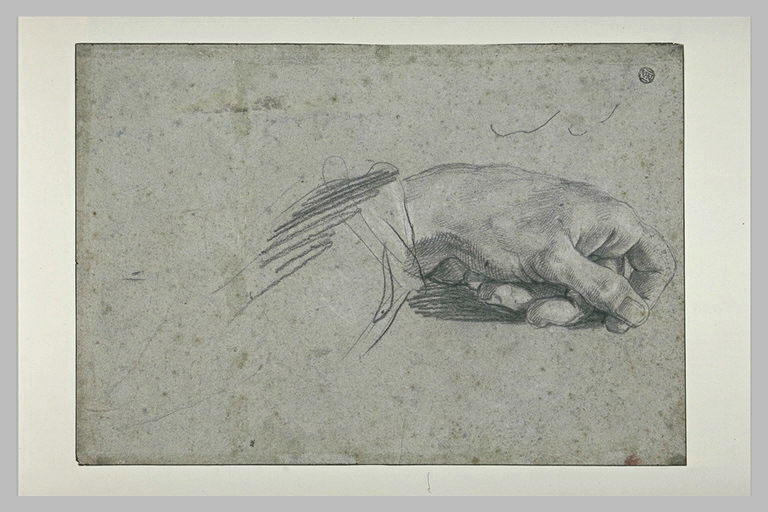
Annibale Carracci (1560-1609) Study of a Left Hand (c. 1575) White and black chalk on blue paper. 27.1 by 39.1 cm. Ecole des Beaux-Arts, Paris.
There is a growing phenomena of painting and sculpting studios working to resurrect models of art education from the past. Some of the schools I am thinking of include the Grand Central Academy of Art in New York, The Florence and Angel Academies of Art in Florence, and the Los Angeles Academy of Figurative Art in California. There are many more. As an enthusiastic supporter, I have come to know some of the artists who have founded and attended some of these schools. In almost every case, these artists refer to a handful of foundational books that have influenced their approach.
The bible of most seems to be the late Albert Boime’s book, The Academy and Painting in the Nineteenth Century. In it, Boime takes bird’s-eye and ground-level views of studio practice in the French Ecole des Beaux-Arts from its foundation in the seventeenth century to its height of influence in the nineteenth century. It is a foundational text and deserves a great deal of attention.
Those who have read Boime’s work may be surprised at how many different classical academic models there were in the nineteenth century and before. Knowing the plurality of approaches and their strengths and weaknesses may help anyone attempting to reinstate aspects of the classical tradition today.
Throughout the next year, I hope to explore various models of classical arts education. Today, I begin with the Academia dei Desidorosi, credited with being the first art academy to include life drawing a regular part of its curriculum.
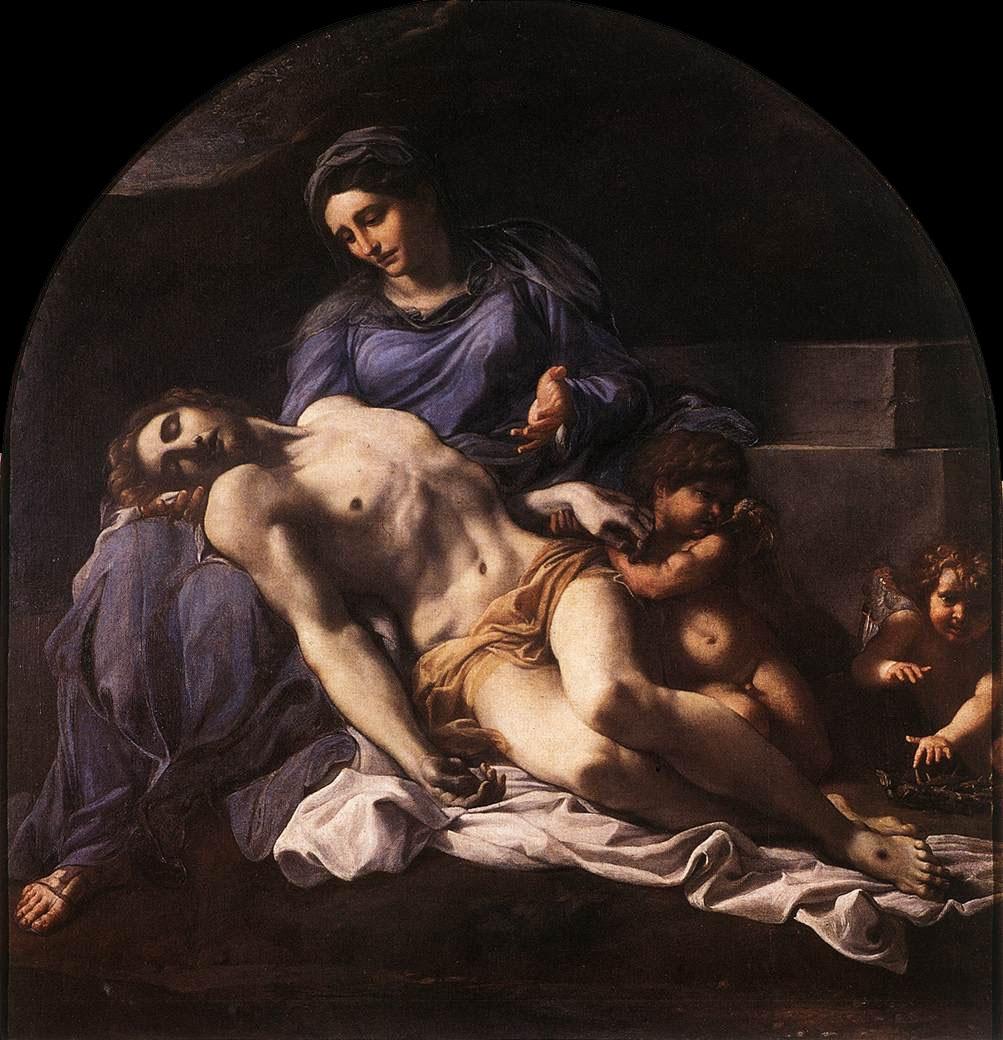
Annibale Carracci (1560-1609) Pieta (c. 1599) Oil on canvas. 155 by 148.2 cm. Museo Nazionale di Capodimonte, Naples.
The Academia dei Desiderosi (roughly translated as “those desiring perfection”) was founded in the Northern Italian city of Bologna by brothers Agostino (1557-1602) and Anibale Carracci (1560-1609) with their cousin Ludovico (1555-1619). From the late-sixteenth to the early seventeenth centuries, the Desiderosi was a training ground for some of the the period’s most influential painters, including Guido Reni (1575-1642) and Francesco Albani (1578-1660). Drawings produced by the Academia and its artists were highly sought after by other academies. In fact, many were collected and used for instruction by the Ecole des Beaux-Arts in Paris.
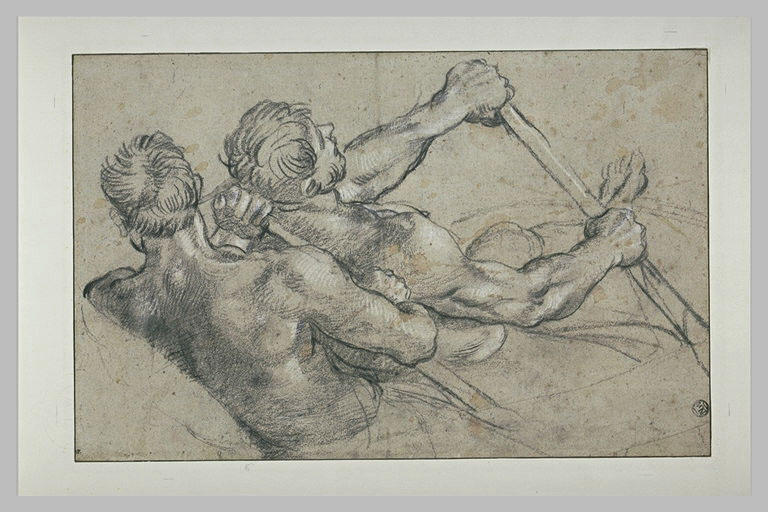
Annibale Carracci (1560-1609) Study of Two Rowers (c. 1600) White and black chalk on grey paper. 24.8 by 38.6 cm. Musée du Louvre, Paris.
At the time, Bologna was small, but influential. A rich agricultural center, it also had one of the oldest universities in Europe. The Carracci brothers were unusually well-educated at a time when most artists were illiterate and considered craftsmen. Both Agostino and Annibale had begun legal training before setting it aside for art. They could read and write and had a good working knowledge of Latin. Agostino, especially, was well regarded for his understanding of philosophy, poetry, mathematics, and, even, mechanics (e.g. clocks and machines).
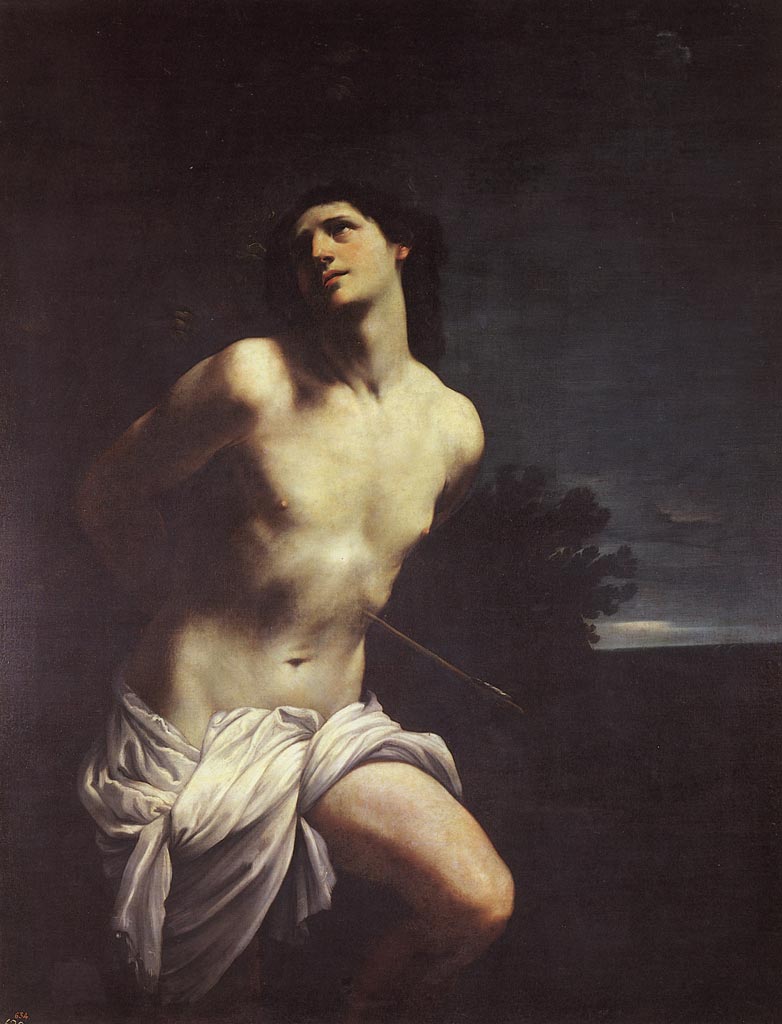
Guido Reni (1575-1542) St Sebastian (c. 1617-1619) Oil on canvas, 170x 133 cm. Museo del Prado, Spain.
The Academia dei Desidorosi claims among its members some of the most important painters of the time, including Guido Reni (1575-1642) and Francesco Albani (1578-1660). Unlike many nineteenth-century academies, the Desidorosi did not draw a distinction between teachers and pupils. Instead, the Carracci considered themselves first among equals and participated in all exercises. The Desidorosi only accepted experienced artists. Most members were in their mid-to-late twenties. This approach differed from most studios and academies of the time like the older, well-established Roman Academia di San Luca, which accepted students as young as eight years old.
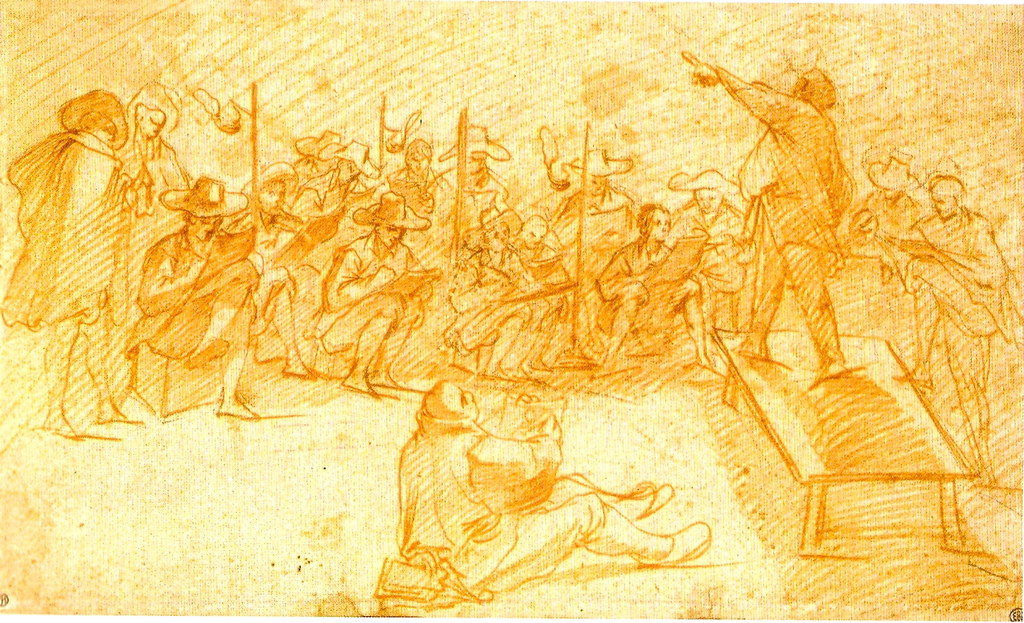
School of the Carracci (Attributed) Artists Drawing a Clothed Male Model. (c. 1590) Red chalk on paper. Ecole des Beaux-Arts, Paris. (Click for high-resolution image.)
The study of the human figure was central to studies at the Academia dei Desidoerosi. Until the nineteenth century, life drawing was almost exclusively done with male models. The use of female models was considered immoral, and in most of Italy, Germany, France, England, and Spain, was illegal. Instead, artists relied on classical statuary, contour drawings of the female figure or simple substitution of the male for the female. (Some attribute the masculinity of of Michelangelo’s women to the lack of female models, believing that he and others simply put breasts and long hair on the male form. Though, I believe this is an oversimplification, it may have some truth.)
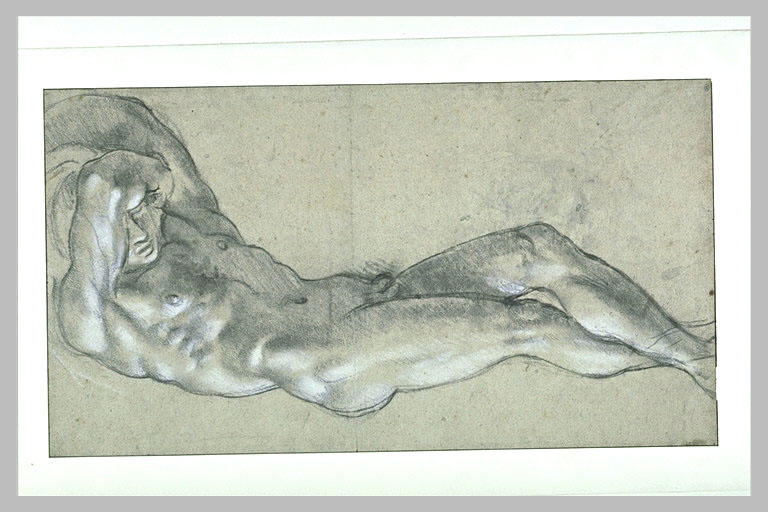
Annibale Carracci (1560-1609), Attrib. Study of Male Model. Black and white chalk on white paper. Ecole des Beaux-Arts, Paris.
Live models were hired. But, also, students posed for one another. In some instances, the Carracci brothers took the then unusual step of inviting a “Dr. Lanzoni”–little is known of his real name or role in the community–to dissect corpses for the benefit of students. (Autopsies of the rich and noble were then common as a way of assuring the cause of death was not foul play.)
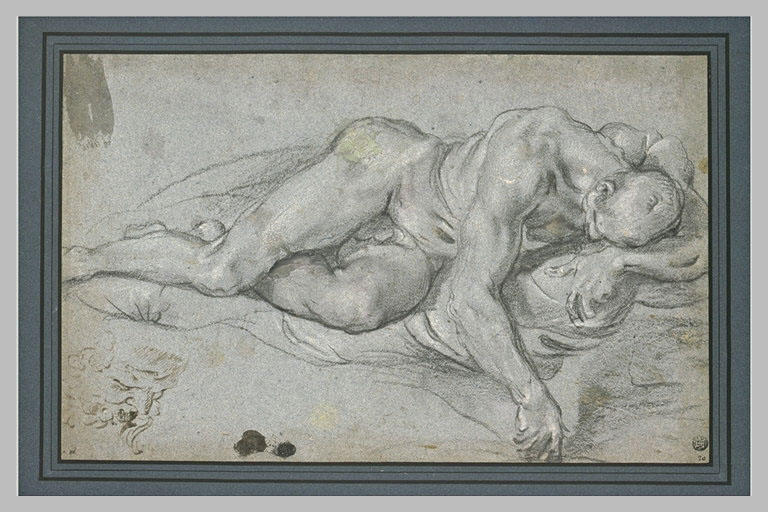
Agostino Carracci (1557-1602). Study of Male Model (c. 1575) Black and white chalk with pen on paper. Musée du Louvre, Paris.
In addition to live models, the Academia used drawing books and examples from the Antique (Greco-Roman statues, reliefs, coins, and architectural drawings). According to Gert-Rudolf Flick:
The Carrracci also relied on the use of drawing-books for instruction, a format that subsequently became fashionable in its own right. Most of these drawing-books were produced by professional artists, and reflected current studio practice and art theory. A drawing-book can be defined as a pedagogical work in which the visual instruction dominated the verbal, and is thus quite different from treatises such as Alberti’s De Pictura or (more obviously) Vasari’s Vite, or even from anatomical texts and books on perspective. The drawing-books in question contain numerous sheets filled with parts of the human body such as ears, noses, legs, and feet, depicted from different points of view: front, three-quarter and rear. (Gert Rudolf-Flick. Masters & Pupils: The Artistic Succession from Perugino to Manet, 1480-1880. London: Hogarth Arts, 2008. p. 106-107)
Agostino Carracci had a large collection of busts, statuettes, Old Master drawings, engravings and contemporary medals that students were allowed to copy and study.
Studies were not focused exclusively on the human figure. The Desidorosi believed that the overall goal was a closeness to nature, which was defined more widely as humans, animals, plants, and the rules of architecture.
Certain hours were set aside for theoretical questions, perspective and architecture, all of which Agostino was especially adept at demonstrating in condensed form in a small number of maxims as can be seen in some of the writings by him that I have in my possession. (Gert Rudolf-Flick. Masters & Pupils: The Artistic Succession from Perugino to Manet, 1480-1880. London: Hogarth Arts, 2008. p. 111)
Regular visits to the countryside where paintings and drawings were made directly from nature. For studies in perspective and architecture, the Carracci relied on Sebastiano Serglio’s Libri di Architectura (a pdf of books three and four can be found online here) and trips to local churches and notable homes, guided by Agostino and local professors.

Annibale Carracci (1560-1609) Figures entourant des médallions de la galerie Farnese. (c. 1597) Pen and chalk on paper. 36.1 by 49.9 cm. Musée du Louvre, Paris.
When in 1595 Annibale and Agostino were commissioned to paint the palace of Cardinal Odoardo Farnese, they left the Academia to the management of their cousin Ludovico. Some information is available on the Academia during this period, and it is evident that the brothers were the main force of Desidorosi and, without them, it did not have the same energy or longevity. The academy, while carried on by Ludovico and, then other students, never again attracted the same attention or produced the same quality of artists.
Picasso in London: “Not a Slave to the Canon”
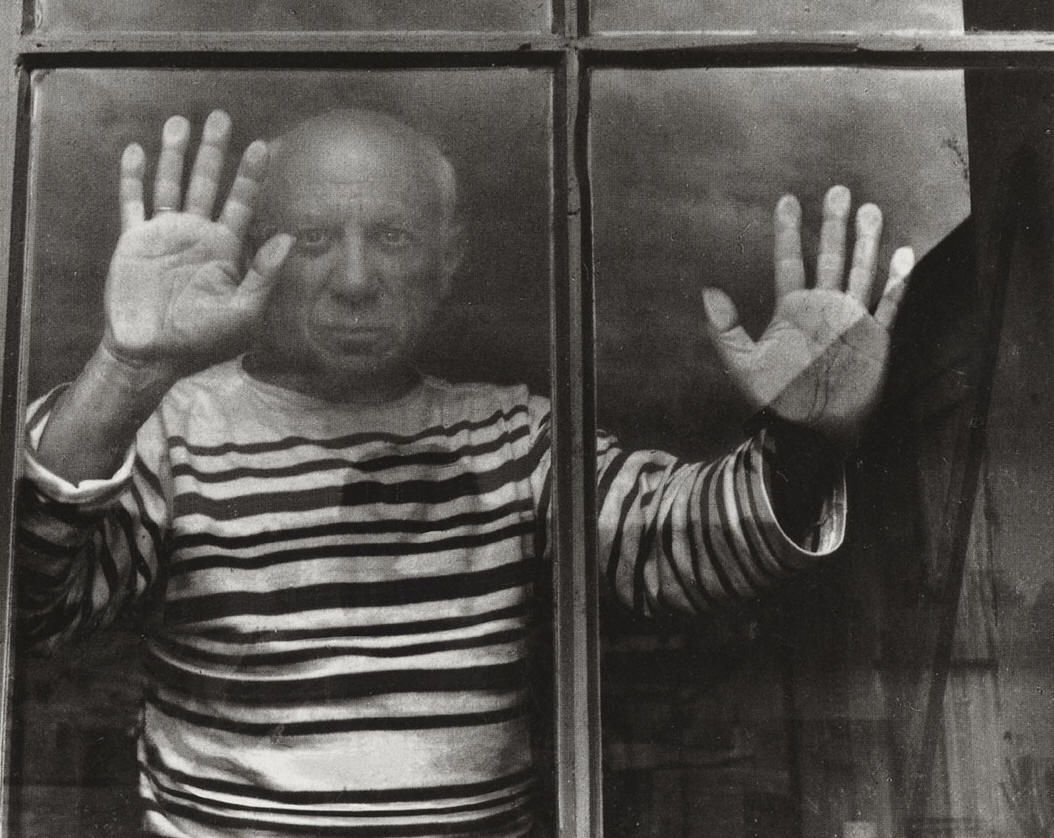
Photograph of Pablo Picasso (c. 1955)
After seeing The Raft of the Medusa by Eugène Delacroix (French, 1798-1863) Théodore Géricault (French, 1791-1824), a friend recorded Picasso saying: “That bastard! He was good.”
The exhibition, Picasso: Challenging the Past, currently on show at the National Gallery in London, is a well-documented testament to the artist’s admiration for artists that he made posthumous collaborators in his work, among them Goya, Velázquez, Poussin, Ingres, and El Greco.
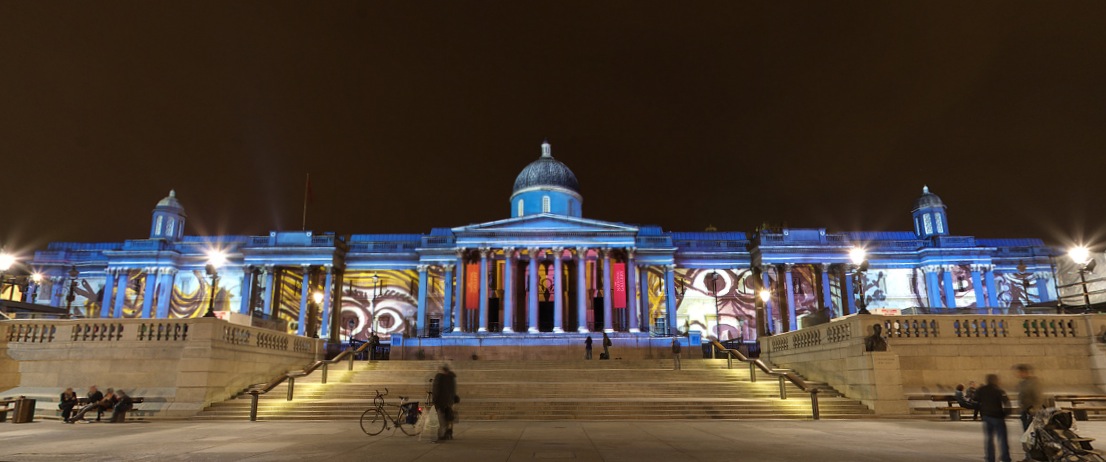
Tom Mills. Picasso: Challenging the Past at the National Gallery. (February 2009) From a 360-degree photograph. Click photograph to go to original on www.360cities.net.
Lest visitors think that Pablo Picasso (Spanish, 1881-1973) had betrayed or diluted his innovative impulses, the introductory paragraph to the exhibition–boldly written on the wall near the entry–states “he certainly was not a slave to the canon.” Thus, a confusing tone was set, turning up throughout the exhibition, that simultaneously attempted to admire Picasso’s admiration for “traditional” artists while, in some cases, denying them admiration.
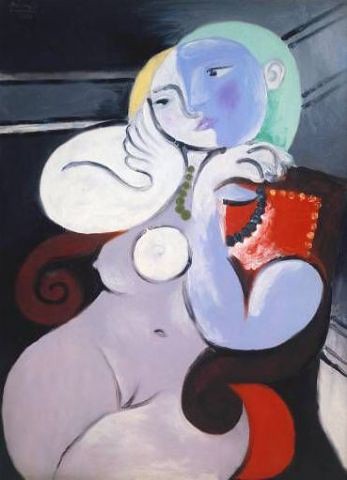
Pablo Picasso (Spanish, 1881-1973) Nude Woman in a Red Armchair (1932) Oil on Canvas. 130 by 97 cm. Tate Museum, UK.
An example was the exhibition’s treatment of Ingres. Making a comparison between the National Gallery’s Portrait of Madame Paul-Sigisbert Moitessier by Jean Auguste Dominique Ingres (French, 1780-1867) to Picasso’s Nude Woman in a Red Armchair, the exhibition claimed that Ingres, like Picasso “idealized eroticism,” and that “the more one looks at Ingres, the less plausible his work seems.” According to the film accompanying the exhibition, Ingres’ arms and fingers appear to have no bones, and figures seem dramatically out of distortion, as if they were anticipating Picasso’s work. It seemed like revisionism. (See my previous post on Ingres’ careful attention to the human figure.) It was as though Ingres could not be appreciated on his own terms, but only on Picasso’s.

Jean August Dominique Ingres (French, 1780-1867) Portrait of Madame Paul-Sigisbert Moitessier (1856) Oil on canvas. 120 by 92.1 cm. National Gallery, London
Seeing Picasso’s works, I don’t necessarily think that he would have shared this perspective. There is no denying the copious amounts of time he spent reworking Diego Velázquez’s (Spanish, 1599-1660) Las Meninas or the Rape of the Sabines by Nicolas Poussin (French, 1594-1665). This is what makes Picasso great: his simultaneous departure from and use of classical themes. As I walked through the exhibition I was remineded of F. Scott Fitzgerald’s comment: “The test of a first-rate intelligence is the ability to hold two opposed ideas in the mind at the same time, and still retain the ability to function.” Despite the startling variety of his output–one piece reflects his classical training, another is nearly completely abstract, a work full of color, and another nearly void of spectrum–Picasso confidently comes across in each painting.
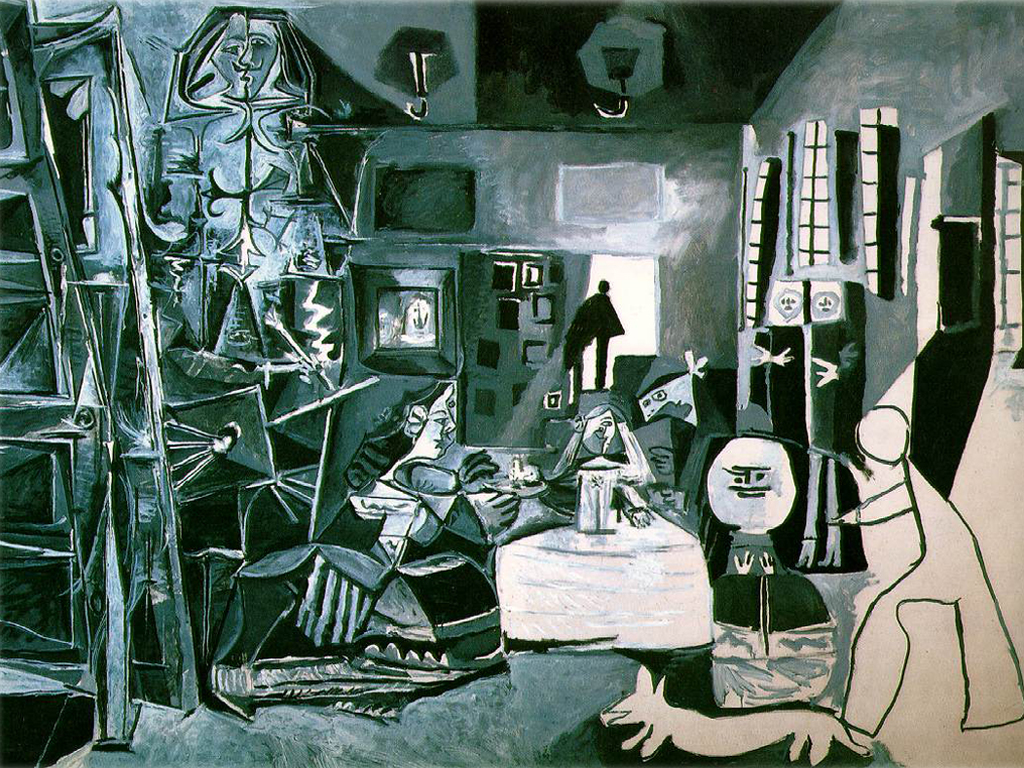
Pablo Picasso (Spanish, 1881-1973) Las Meninas, after Diego Velázquez (1957) Oil on canvas. Picasso Museum, Spain.
The exhibition seemed organized for those who already love and acknowledge Picasso as part of the canon. As such, it was, at first, difficult for me–someone who still struggles to relate to his works–to approach. However, the more I looked directly at the works, the more approachable they became. Despite the exhibition’s sometimes revisionist treatment of “the canon,” it was an ideal primer to his oeuvre. Deciphering Picasso’s translation of Las Meninas by Velázquez, for example, kept me occupied for at least 30 minutes and provided numerous insights into Picasso’s pictoral devices. It was a Rosetta Stone for Picasso.
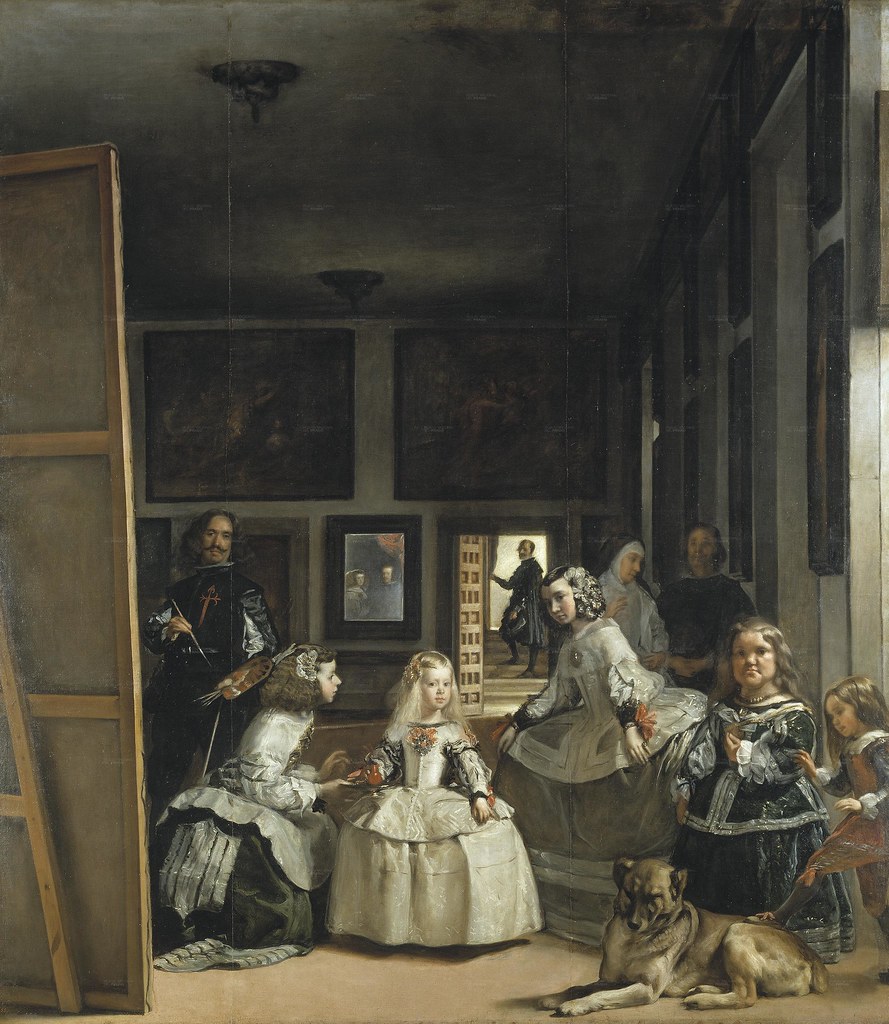
Diego Velázquez (Spanish, 1599-1660) Las Meninas (The Maids of Honor) or the Royal Family (1656-57) Oil on canvas. Museo del Prado, Madrid, Spain
A mentor of mine is fond of saying that “art is very personal.” Personally, Picasso is a shock to my natural inclinations. However, I admire his genius and, with the help of this exhibition, found myself thinking: “That bastard! He was good.”
Léon Bonnat (French, 1833-1922): The First Classical Realist?
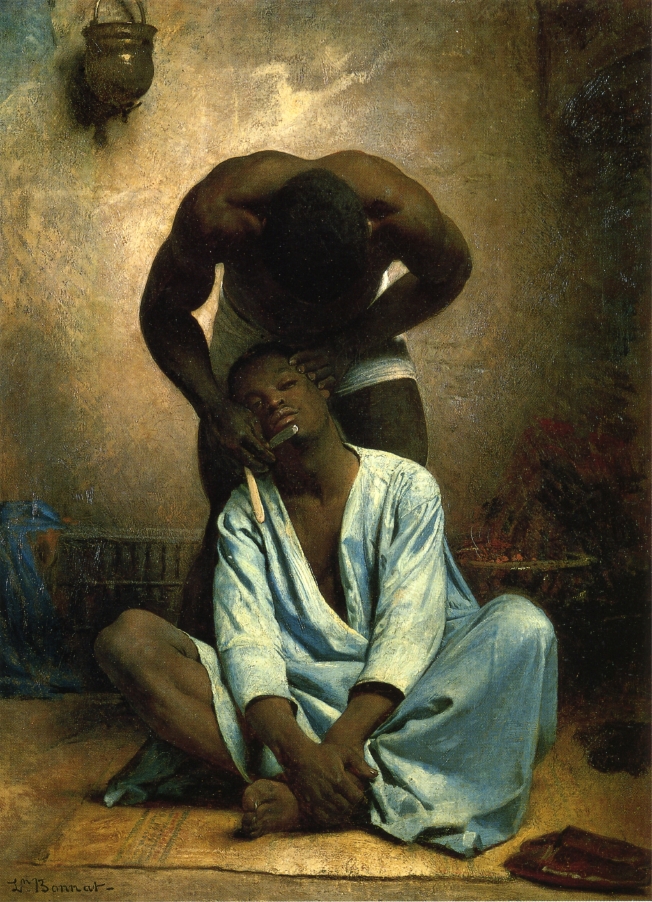
Léon Bonnat (French, 1833-1922) The Barber of Suez (1876) 80 by 58.42 cm. Oil on canvas. Private collection.
During the last quarter of the nineteenth century, few French painters have been as influential and forgotten as Léon Bonnat (1833-1922). He was trained in the Academic tradition and eventually became Director of the Ecole des Beaux-Arts in Paris, yet he was a champion of controversial painters, such as Gustave Courbet, and a lifelong friend of Edgar Degas, who was closely associated with the anti-academic Impressionist movement. Trained in Madrid and Paris, he was a bridge between two artistic cultures, which he combined in his own work and his mentoring of a generation of painters that included Thomas Eakins and John Singer Sargent. His relationship with Spanish art would have far-reaching implications for nineteenth-century painting by legitimizing Spanish Masters, particularly Velázquez and Ribera, whose work had a great deal in common with French Realism in its depiction of the human figure.
Because he destroyed all his own personal correspondence, what we know about Bonnat is usually gleaned from his students and the public records. In his wonderful book, The Revenge of Thomas Eakins, Sidney Kirkpatrick writes:
Bonnat went to great effort to capture the realism of this model, sometimes requiring his subjects to sit fifty or more times before completing portraits. The essential words to describe Bonnat’s paintings, as well as his reaching style–as more of his students reported–were “truth and logic.” . . . Bonnat’s personal struggles as an artist also resonated with Eakins. Writing to his father, Eakins related how Bonnat, as a young art student, had been deeply troubled by his teacher’s wanting him to paint the same way he did. Bonnat couldn’t oblige. “He was better than his teacher, although he [Bonnat] was doing such bad work [at the time],” Eakins went on. “His teacher told him he would have to stop painting, and then he went to [another teacher who] . . . told him to go and be a shoemaker, that was all he was fit for. A few years more and he was as big as the biggest of them.”
Bonnat was born to a middle-class family in Bayonne. In the border region near Spain, the city is in traditional Basque territory. Bonnat’s family, in particular, was comfortable enough with Spain to make a move to Madrid in 1847, where his father opened a modest book store.
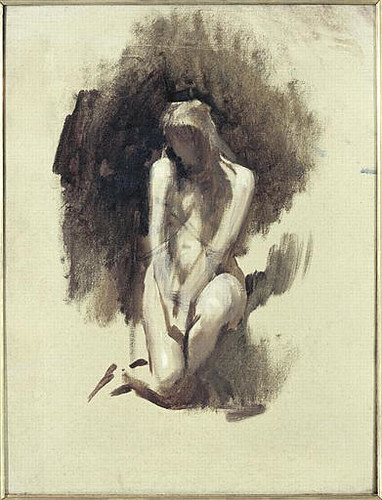
Léon Bonnat (French, 1833-1922) Study of female nude. Musée d'Orsay
In 1837, the Prado Museum was opened to the general public and, later, enlarged as part of major redevelopment of the Madrid. Regular visits to the museum were compulsory for students of the nearby Academia de Bellas Artes de San Fernando. There students were required to study Italian, Flemish, and Spanish Old Master works. Above all, and in order of importance, Velázquez, Murillo, Ribera and Zurburán–all well represented in the Prado’s collection–were considered models for nineteenth-century Spanish students.

Léon Bonnat (French, 1833-1922) Job. Oil on canvas.
Sometime between 1847 and 1855, Léon Bonnat was accepted and studied at the Academia. There he worked first under the instruction of José de Madrazo y Agudo (1781-1859), a student of Jacques Louis David (French, 1748-1825) and, then, his son, Federico de Madrazo y Kuntz (1815-1894), who had a life-long relationship with Jacques Auguste Dominique Ingres (French, 1780-1867). These painters were commanded enormous respect and influence in nineteenth-century Spanish art.
In 1853, Bonnat’s father died, prematurely ending his studies and requiring his family to return to Bayonne. There Bonnat quickly secured a 1,500-franc scholarship from the local Municipality to study at the Ecole des Beaux-Arts. Within a year, at at the age of 20 he had moved to Paris and entered the studio of Léon Cogniet (1794-1880).
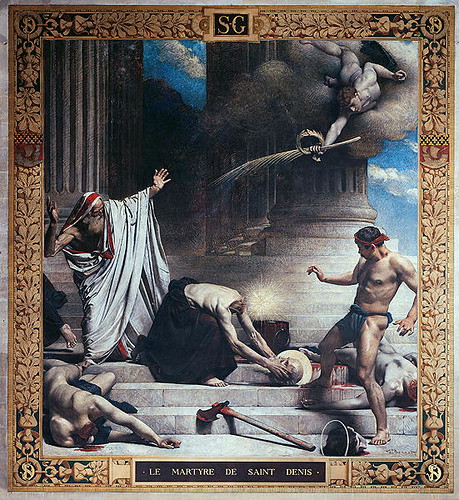
Léon Bonnat (French, 1833-1922) The Martyrdom of Saint Denis (c. 1880) Fresco. Parisian Parthenon, France.
By 1857 Bonnat had submitted three portraits to the annual Salon, all of which were accepted and initiated a life-long career of portraiture, which ensured a steady paycheck and a stream of important clients that included Victor Hugo, Alexandre Dumas, the Empress Eugene, and the official images of four successive French presidents. Also in 1857, Bonnat competed for and won second place in the coveted Prix de Rome. Despite having lost state patronage to study in Rome, he was accepted to the French School in Rome and paid his own way. Studying there from 1858-1861, he produced three large-scale history paintings, Le Bon Samaritain (1859), Adam et Eve découvrant le corps d’Abel (1860) and Le martyre de Saint-André (1861), which were each sent to and accepted in the annual Paris Salon.
Almost immediately upon his return from Rome, Bonnat was welcomed into the French Academy and the upper echelon of respectable French art culture. In 1863 and 1864, two of his works are acquired by Princess Mathilde and Empress Eugénie, respectively. He was awarded the Légion d’Honneur (1867), made a member of the Salon jury (1869)–a position he would hold until his death–a member of the Institute de France (1881), a professor of at the Ecole des Beaux-Arts in Paris (1888), awarded the Grand Croix (1900), and made Director of the Ecole des Beaux-Arts (1905).
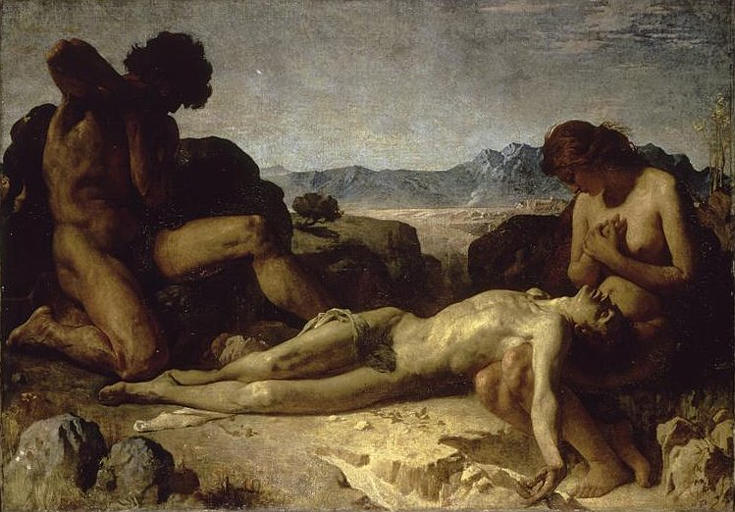
Léon Bonnat (French, 1833-1922) Adam and Eve Mourning the Death of Abel (c. 1860) Oil on canvas.
Despite having accrued significant and real recognition from the Academy, Bonnat courted controversy. As a young painter in 1863, he supported new reforms in the Ecole des Beaux-Arts that opened the very conservative school to, among other things, allow students to be instructed in oil painting. Beginning in 1869 as a member of the Salon Jury, Bonnat became a proponent for the controversial work of Eduoard Manet and Gustave Courbet. He was also a lifelong friend of Edgar Degas.
As I did research for this post, it occurred to me that, like Bonnat, many contemporary artists are struggling with the combination of the Classical Tradition and Realism in their work. The former emphasizes the ideal and the latter the real, often with particular emphasis on imperfection. I think that so-called “Classical Realists” would do well to look at the work of Bonnat, who combined a love of Ingres with a reverence for Ribera. They would benefit more looking at his paintings than from William-Adolphe Bouguereau (French, 1825-1905), for example, who was a strict Classicist.
Nineteenth-Century Meddling: St. Mark by Frans Hals
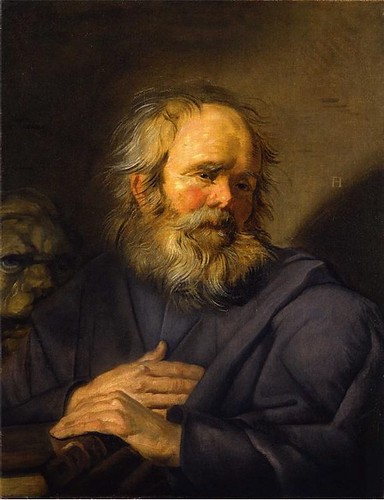
Frans Hals (Flemish, 1580-1666) St. Mark. Oil on canvas. 27 by 20 3/4 in. (68.5 by 52.5 cm). Colnaghi Gallery, Munich.
Most of the people who read this blog have a positive opinion of nineteenth-century art culture. They might be surprised to know that, in many cases, the nineteenth century was not kind to Old Master paintings. It was common for collectors to “improve” paintings by hiring painters to update or adjust them. Many paintings didn’t survive the century and others were transformed.
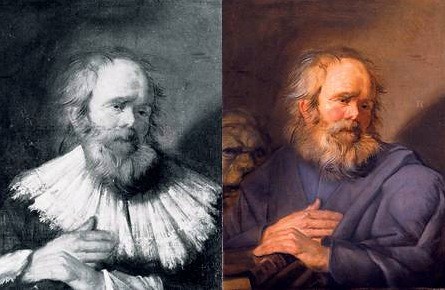
Frans Hals (Flemish, 1580-1666) St. Mark. Oil on canvas. 27 by 20 3/4 in. (68.5 by 52.5 cm). Colnaghi Gallery, Munich. Previous to restoration (Left) and after restoration (Right).
That was the case with St. Mark by Frans Hals (Flemish, 1580-1666), which is currently on sale and view at the Barnheimer Fine Old Master Gallery in Munich. (Asking price is $7.7 million.) In 1972, the painting failed to sale at a Christie’s auction were it was atributed to Luca Giorando (a bizarre assumption). In 1973, the painting was sent to a restorer, who removed a small patch of paint and discovered Hals’ signature. It was a surprise because Hals, who is best known for his portraits, rarely painted religious scenes.
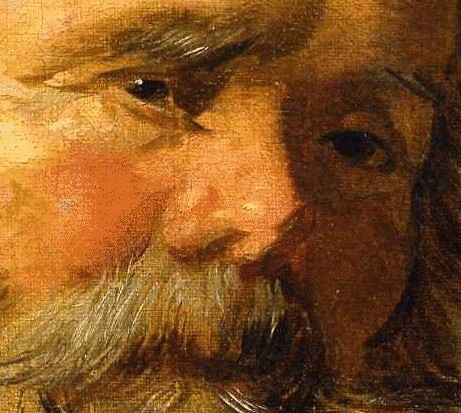
Frans Hals (Flemish, 1580-1666) St. Mark. Oil on canvas. 27 by 20 3/4 in. (68.5 by 52.5 cm). Colnaghi Gallery, Munich. (Detail)
Sometime in the nineteenth century, a collector thought the painting would be better were it to look more like other Hals’ portraits. Thus, a painter was hired to add lace collars and cuffs, which covered the apostolic robes and the lion, a traditional symbol for St. Mark.