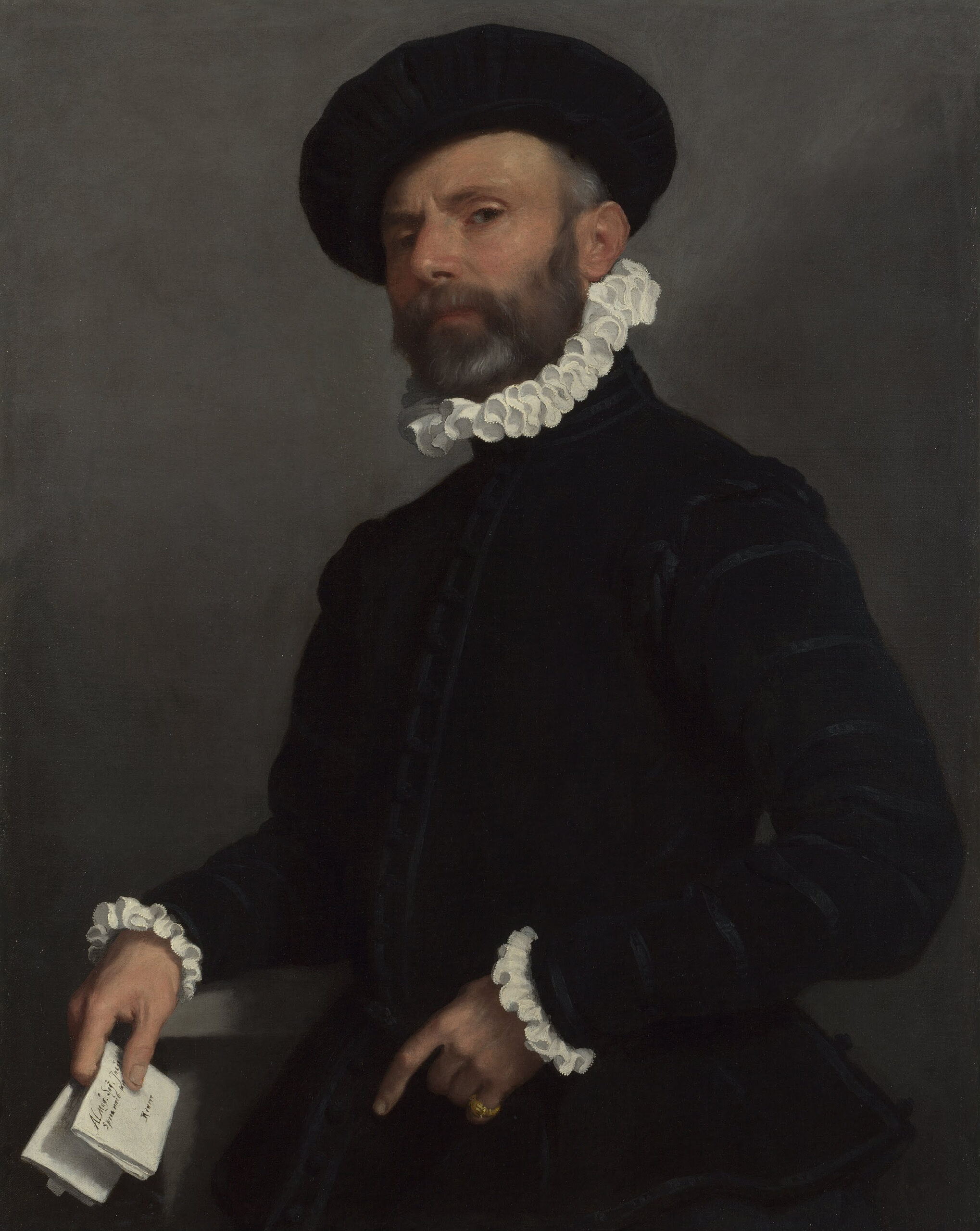
The History of Portraiture, Part 1: Ghirlandaio to Batoni
I bit off more than I could possibly chew. A few months ago, I was asked the Portrait Society of America to do an onstage interview with Jeff Hein, my long-time friend, world-renowned painter, and host of the podcast The Undraped Artist. It was essentially an in-person version of the podcast, which usually features interviews with living, breathing artists. Over the past few years, Jeff has had me on regularly to discuss the dead, historic ones. The result if a free-wheeling combination of contemporary artistic practices and my limited art historical knowledge. (Usually, I don’t embarrass myself too much, sticking to artistic practices to what is definitely known; avoiding speculation.) We wanted to do something different for the Portrait Society. So, I proposed doing a survey of Portraiture from Raphael to Joaquín Sorolla. We only had an hour, for a discussion that could be turned into a multi-day event. But, it went fairly well. You can watch the discussion on the Portrait Society website. (It is behind a pay wall.)
Jeff and I decided to expand that hour into a longer discussion, and post it as a two-part episode for his podcast. This is part one, going from Domenico Ghirlandaio (1448 – 1494) to the Grand-Tour portraiture of Pompeo Batoni (1708 – 1787). Warning: this is not a super scholarly discussion. Think of it more like a conversation between two art-loving friends.
It includes topics like: the introduction of oil painting, the adoption of canvas in addition to panels as supports, Royal portraiture, Dutch tronies, the invention of new pigments, and Grand-Tour portraiture. It is a lot to cover. Part two will come in a couple of weeks. And, in the meantime, I am seriously considering making this a more scholarly project.
I’m a long time fan and this one didn’t disappoint. I am particularly amazed by the sculpture that has detachable armor. Looking forward to the second part. I am pretty sure I will come back to this one again as well.
Thanks for sharing your knowledge with us.
Thank you, Yigit!