Eight Works from the 102nd Spring Salon
Each year since 1924, the Springville Museum of Art (Springville, Utah) has hosted a contemporary art competition called the Spring Salon. Artists from around the country, including John Carlsen, Norman Rockwell, Emile Gruppe, and Maynard Dixon have participated. The contest still receives submissions from all over; but, the majority are from the unusually artistically dense Intermountain West (i.e. Idaho, Wyoming, Utah, and Arizona). There is no barrier to entry. Everything submitted — regardless of medium, style, size, or subject — is considered by (usually) two professionals, usually taken from different disciplines. (This year, the judges were the art administrator and scholar Felicia Baca, currently serving as the Executive Director of the Salt Lake City Arts Council, and Bryan Mark Taylor, the world-renown painter and inventor.) The result is one of the most consistently dynamic contests I have seen anywhere.
What follows is not an exhaustive review of the Spring Salon. (That would be a monumental task.) Instead, I have eight works which stayed with me well after leaving the Museum.
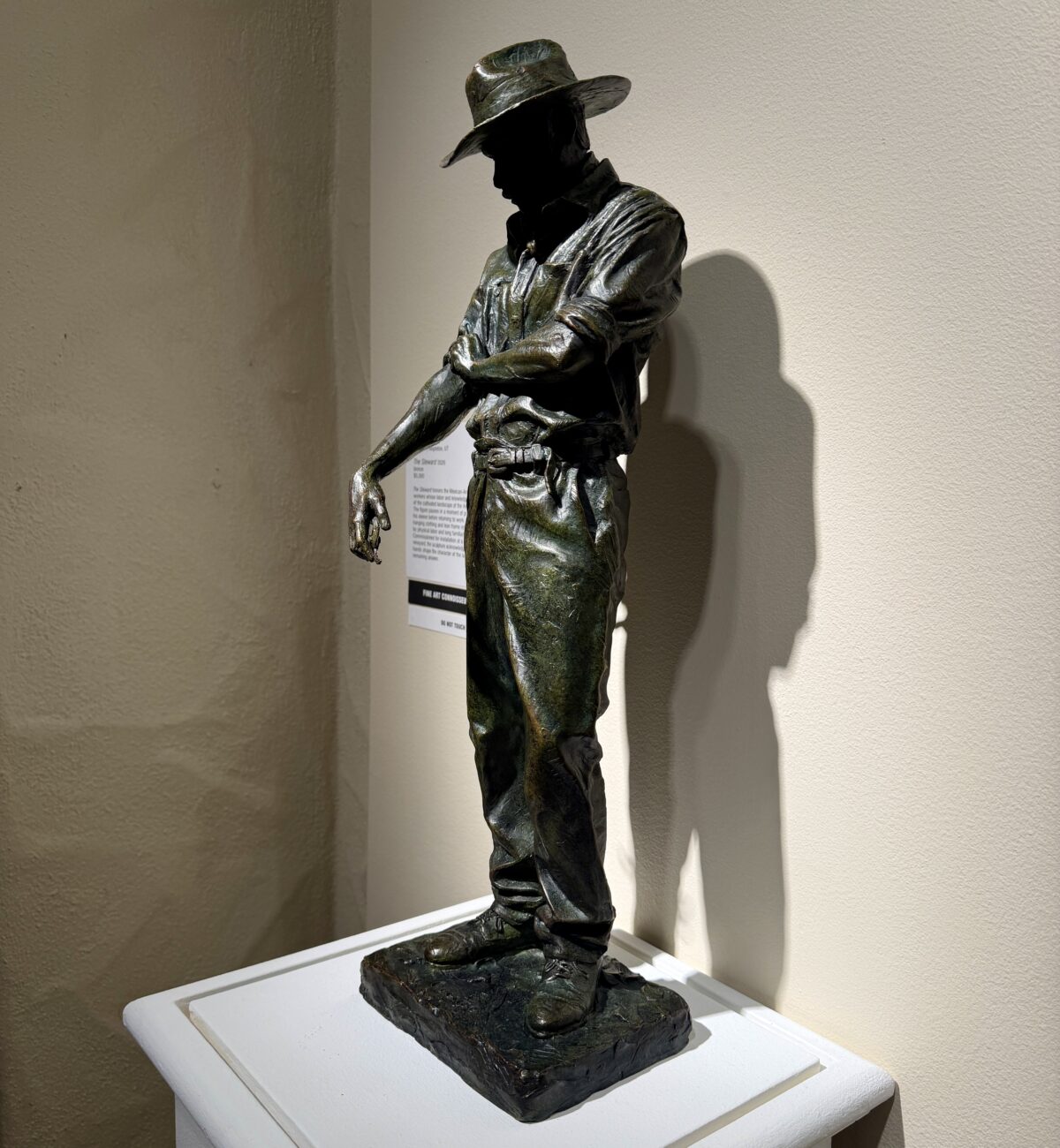
Eric Overton’s The Steward (2026) was commissioned for a Northern California vineyard to honor the contributions of Mexican-American farmworkers. Overton came to sculpture as a physician and photographer, which speaks to his understanding of anatomy. The downward gaze and obscuring hat create an anonymity that make this figure an effective everyman. It is reminiscent of Paul Dalou’s Grand Paysan (c. 1899), even down to the gesture of the rolled up sleeve. Despite the similarities, Overton has created something original in its stance and gesture that conjure a sense of strength that made the sculpture feel almost monumental in scale, despite being less than three feet high. More than that, it projects a dignity and humanity that is a true honor to its subject.
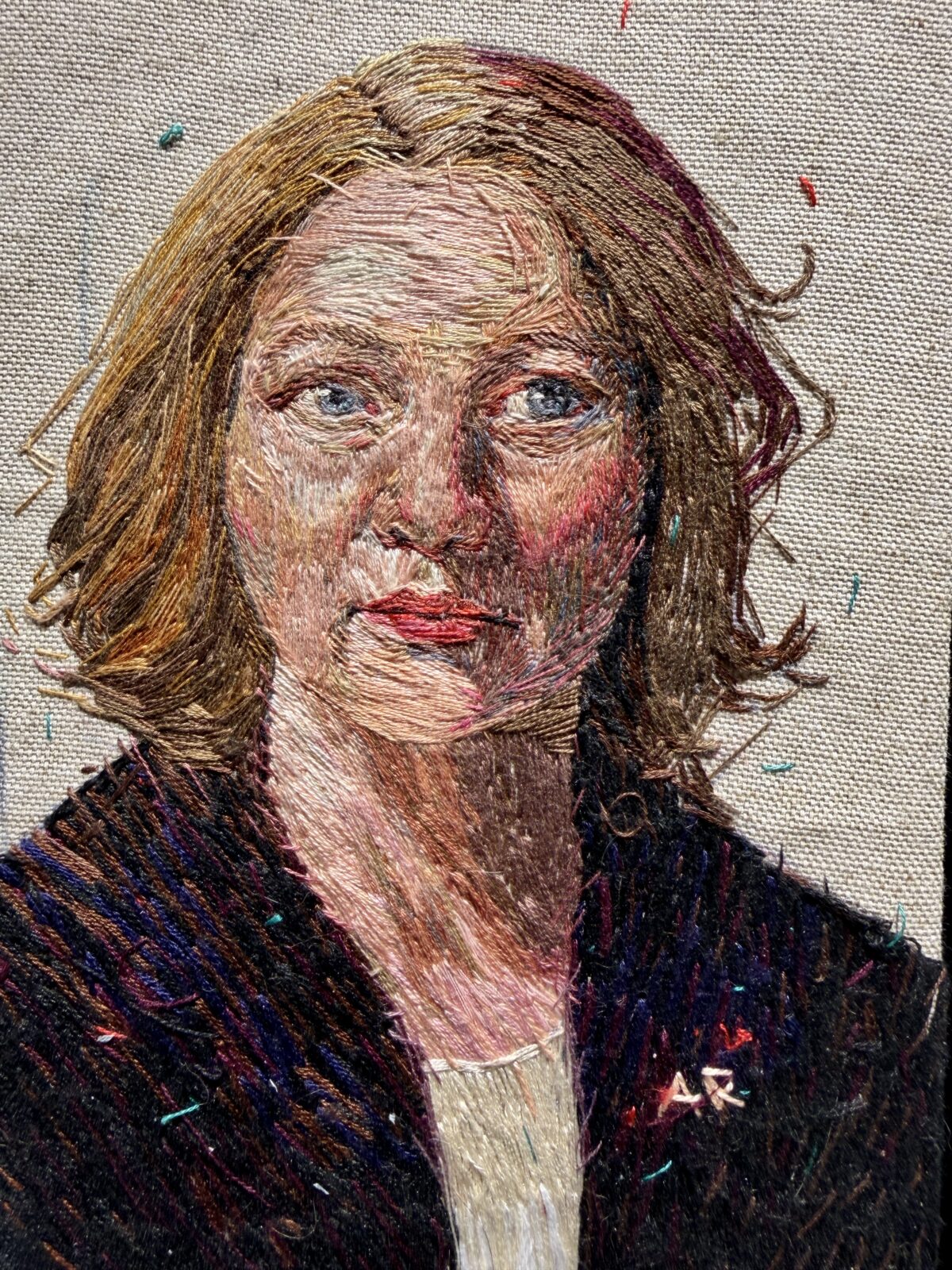
Azalea Rees works in a dizzying array of media. This diminutive self portrait — the product of what must have been countless hours of embroidery — is unlike anything I have ever seen. It transforms the medium into something new and expressive.
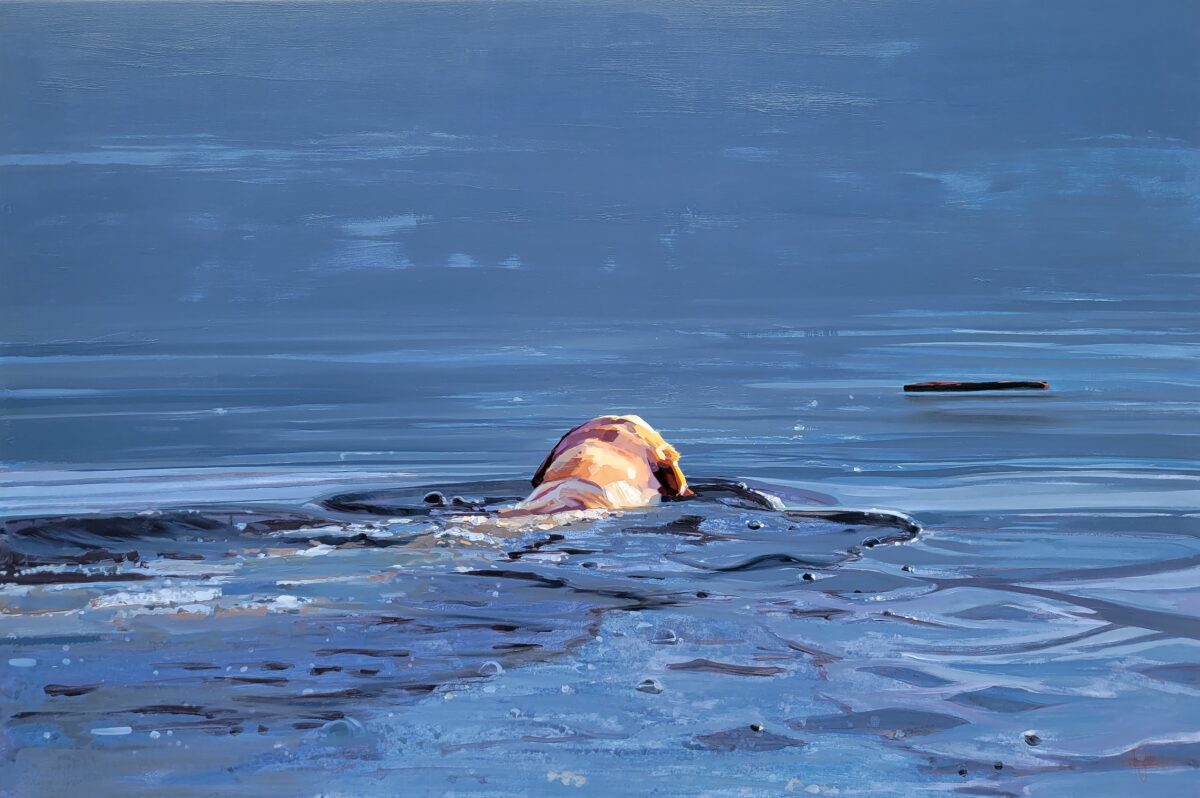
In seventeenth-century Holland, a group of artists known as a the Haarlem Tonalists dedicated themselves to painting their native, overcast landscape in a palette of colors so restricted that sometimes their works only had two or their colors. Consistently one of the greatest magicians of oil painting I know, here Cristall Harper takes her formidable arsenal of skills to a level that could rival Jan van Goyen. Whereas van Goyen works were limited to value transitions on (mostly) a single plane, Harper has established a deep field of vision with the subtlest control of stroke, value, and saturation. Wow.
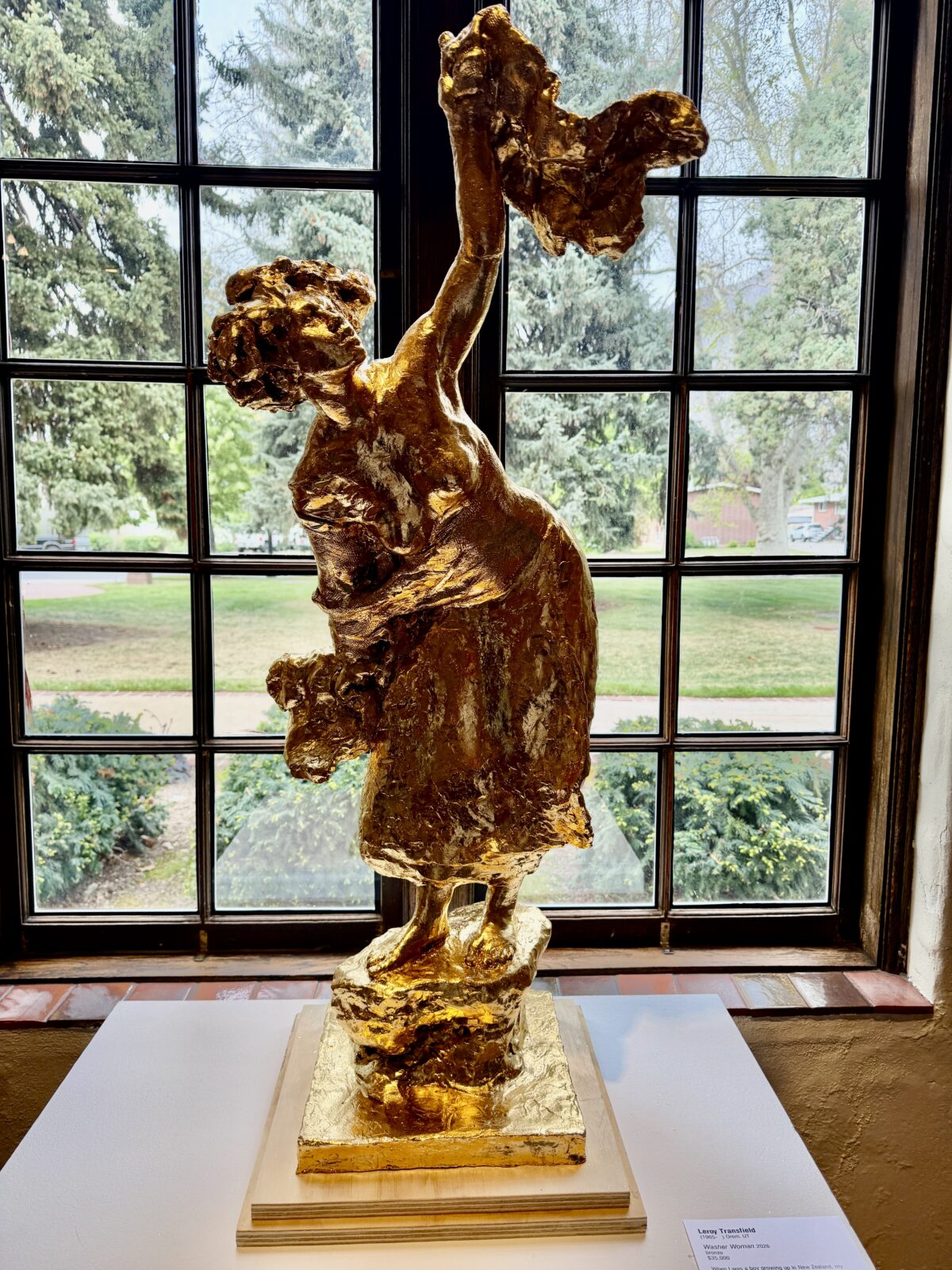
Leroy Transfield has been one of the most consistently surprising sculptors in a region saturated with them. Classically trained, Transfield retains in his sculptures a discipline of anatomy and gravity that cannot be attained without deep knowledge of the human form. Yet, his composition and gesture are never staid, but always fresh and tailored to the narrative of his work, which he details here:
“When I was a boy growing up in New Zealand, my mum and every other household hung their washing on a line. This simple task of hanging out clothes to be dried and cleaned is a banner of every mothers’ hope for her family.” —Leroy Transfield
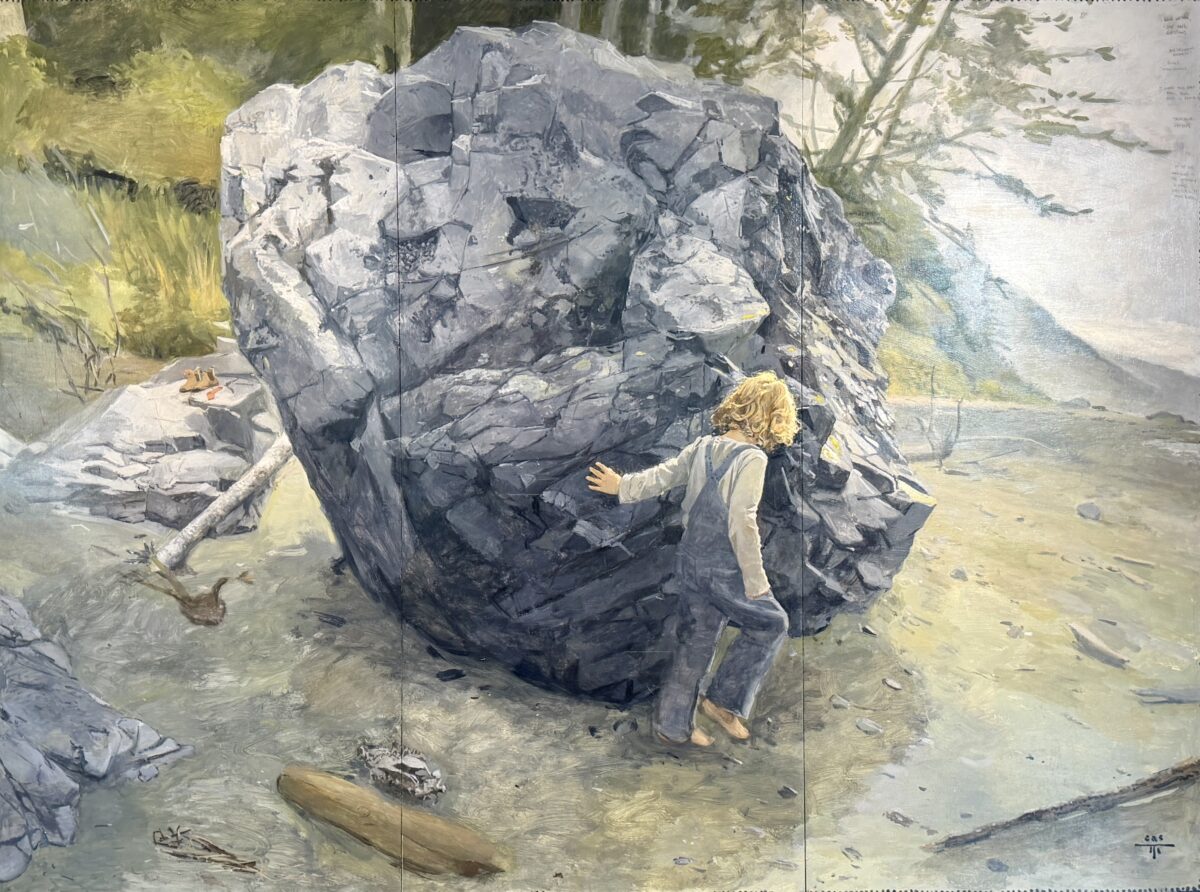
My photo of Finding the Way Around (2025) by Colby Sanford does little communicate the monumental scale of this three-panel work. Years ago, I remember a professor of mine distinguishing German and Italian opera by saying “One is about the battles between gods and men, the other is about everyday life — both about the epic struggles of good and evil.” Over the years, Sanford has become increasingly ambitious in mining his personal life to make beautiful, heroic images of everyday life. Despite the intensely personal nature of his works, Sanford’s images feel universal.
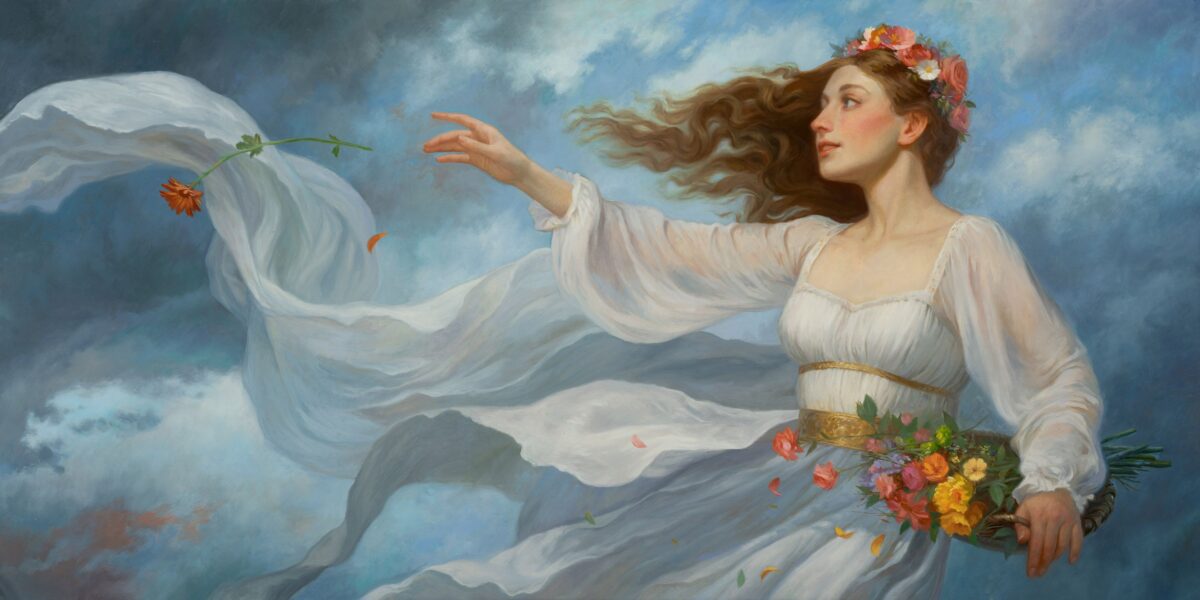
Howard Lyon is one of the few regional artists with a truly international reputation. That career has been made of many kinds of genres, including photography, illustration, fantasy, and religious painting; but always informed his study of Old Masters. A few years, ago Howard Lyon won the Salon’s top prize for his remarkable painting After the Dance. That painting seemed to trigger a new direction, where Lyon is making increasingly sophisticated works that are based in mythology and draw on the aesthetics of artists like Frederic Leighton, Albert Moore, Lawrence Alma-Tadema, and John William Waterhouse. This work, Zephyr Flirting with Flora (2025) is catnip for an art historian like me. A painting of the God of the West Wind playfully tossing about the clothing of the Goddess of Flowers
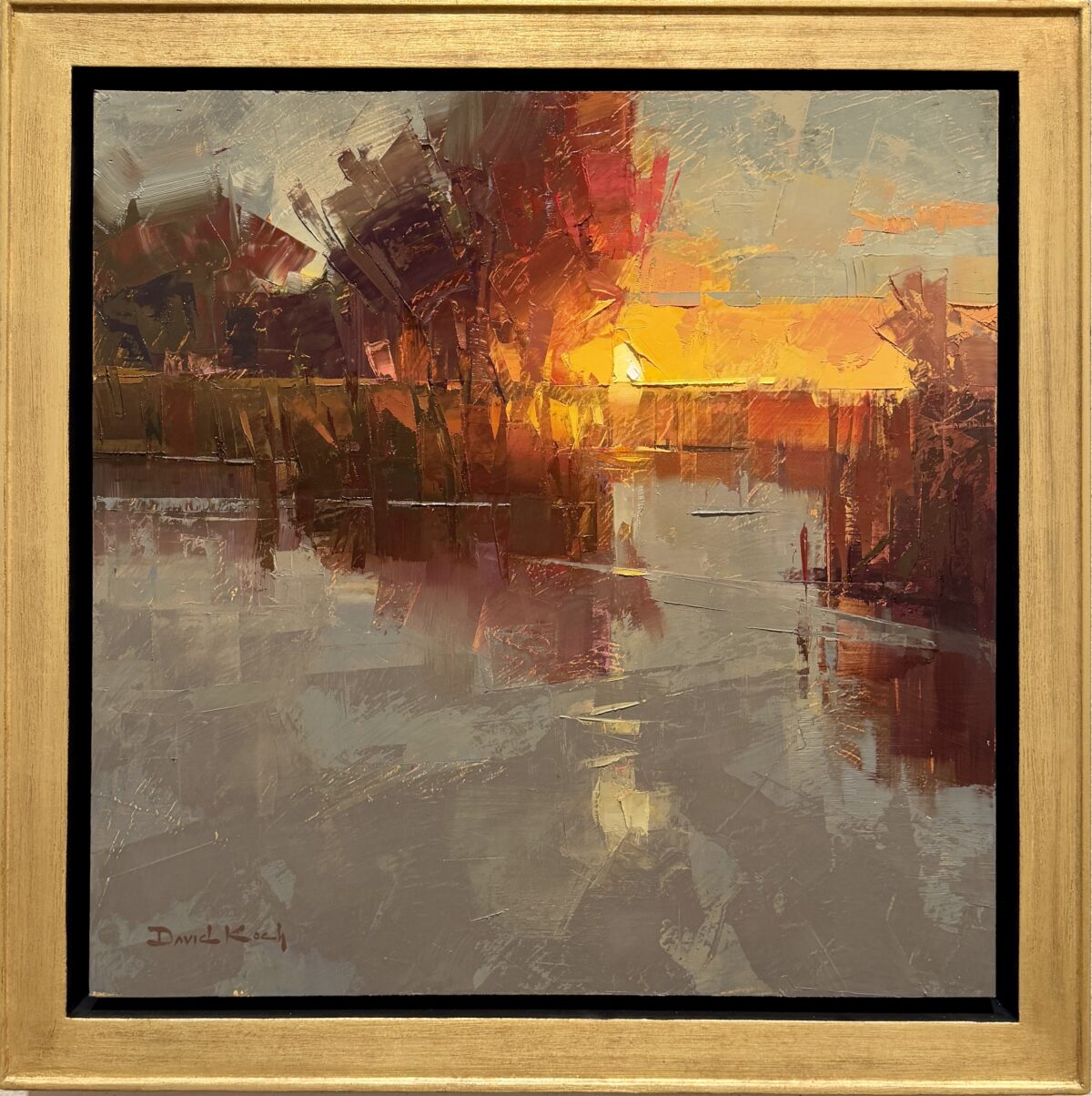
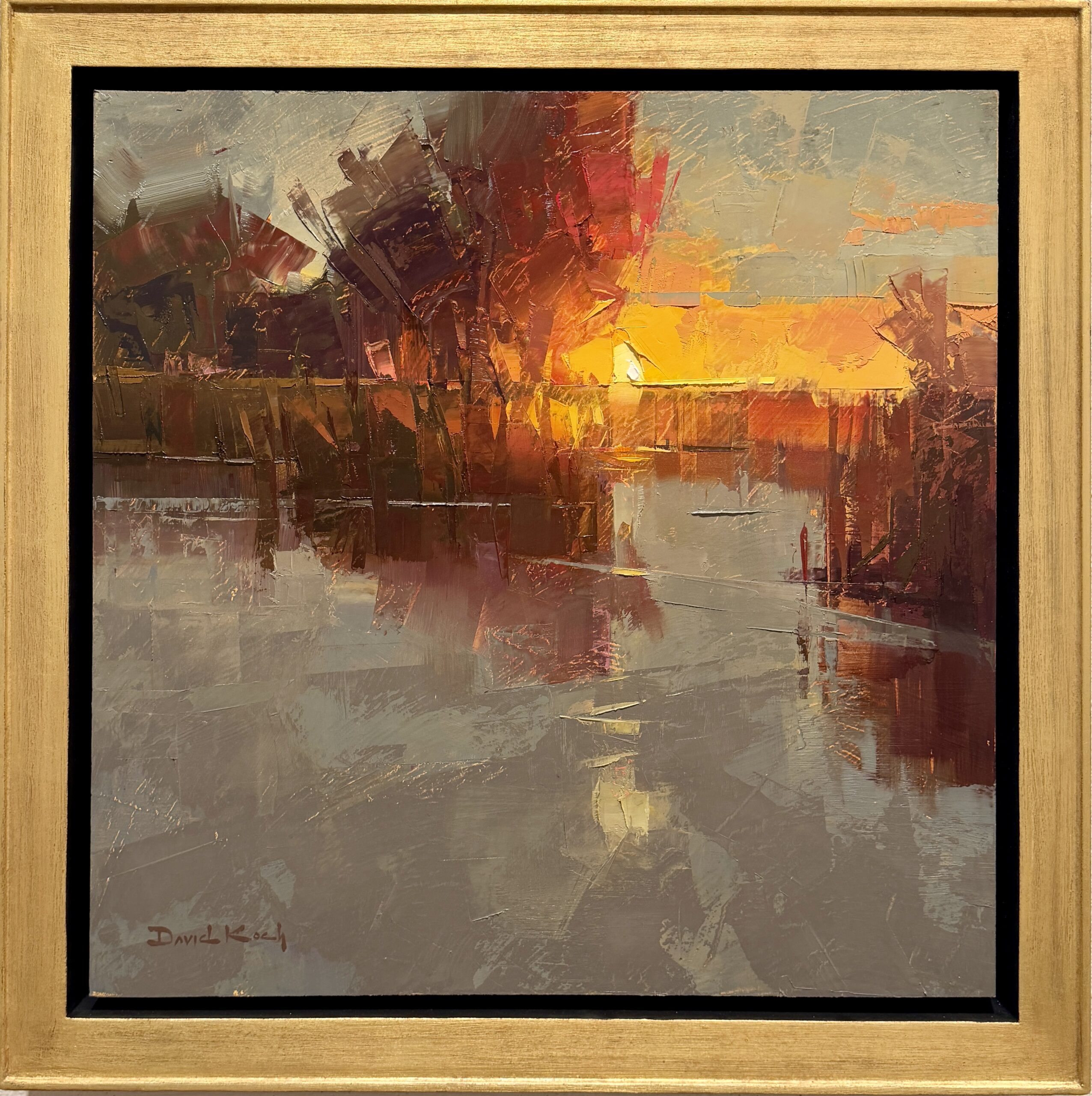
For me, this small painting hung at waist level down a Museum hall, is one of the great revelations of the entire contest. (I’m not throwing shade on the Museum, which has the herculean task of hanging hundreds of artists’ works and attempting to make all of them happy; an impossible task.) In 2007 the economics scholar David Galenson published the book Old Masters and Young Geniuses, where he theorized that artists fall into two general categories: those who spend a lifetime developing a mature and effective skillset and young innovators that often hit on a new approaches that, despite their inexperience, have lasting effects on art. (Personally, I think that there are plenty of artists that can be both young and skilled, and mature and innovative.) I mention this because contests tend to celebrate “the new” and not always recognize the iterative, long-term accomplishments of experienced artists whose work we are accustomed to see. David Koch is a perennial participant and multiple award winner of the Spring Salon. This work shows Koch’s skills honed to an extraordinary level: the application of paint conjuring both the ever-changing water’s surface and a series of diagonals that draw the eye from the bottom left to to the setting sun, the very limited palette that nevertheless creates a beautiful contrast of light effects, and the overall balance of abstraction and naturalism…I am in love with this work. In a region teeming with world-class landscape painters, David Koch is one of the great and consistent masters.
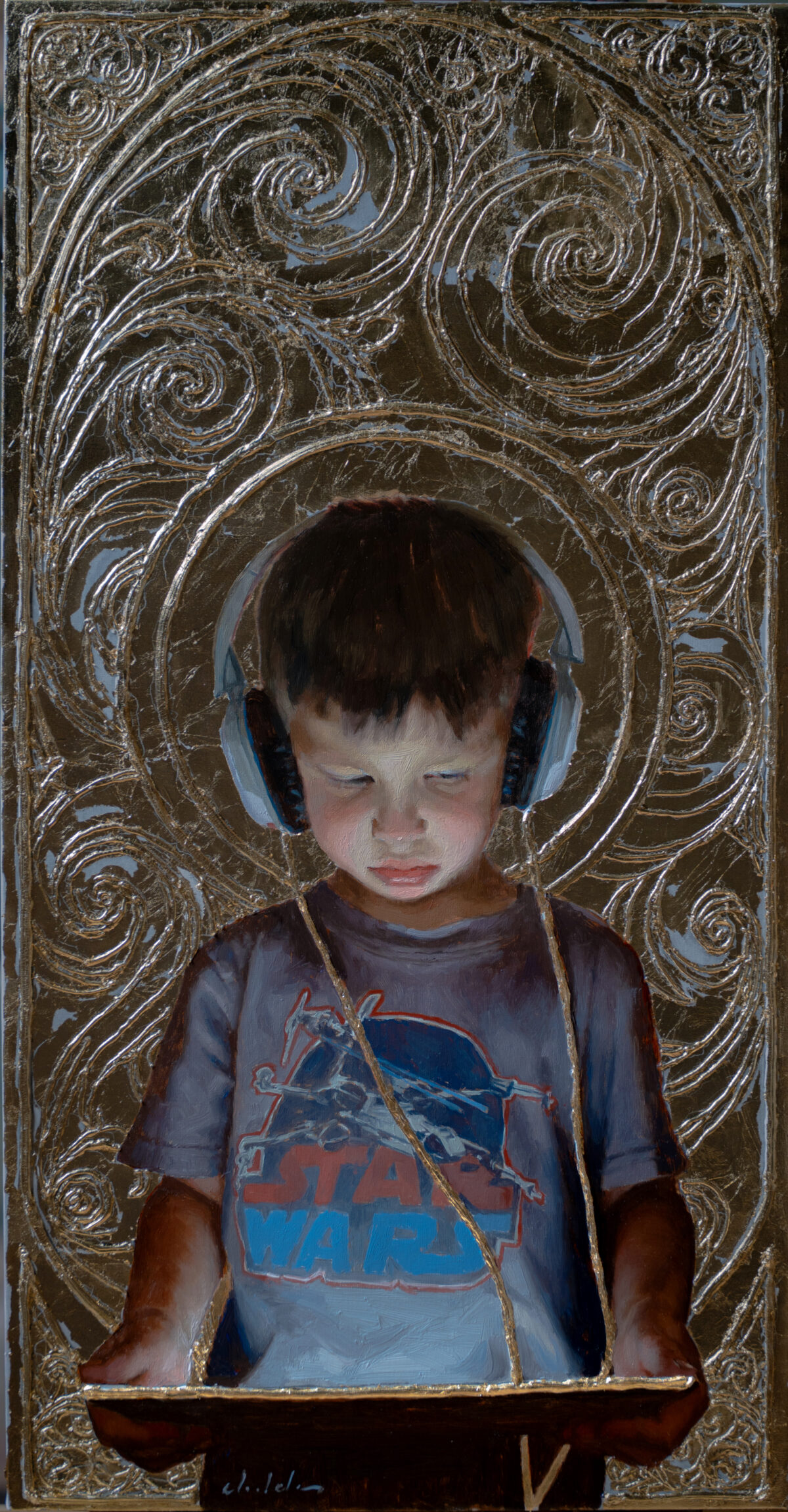
Who else, other than Casey Childs, could take a parent’s nightmare of children on screens and turn it into a hallowed moment?! Of the painting, he wrote:
“The title Young Padawan, inspired by Star Wards, frames this moment as part of a larger idea of learning and becoming. Like a student training in the ways of the Force, he is focused, curious, and completed immersed. The gold patterns surrounding him echo a sense of reverence elevating this everyday experience into something timeless.” —Casey Childs
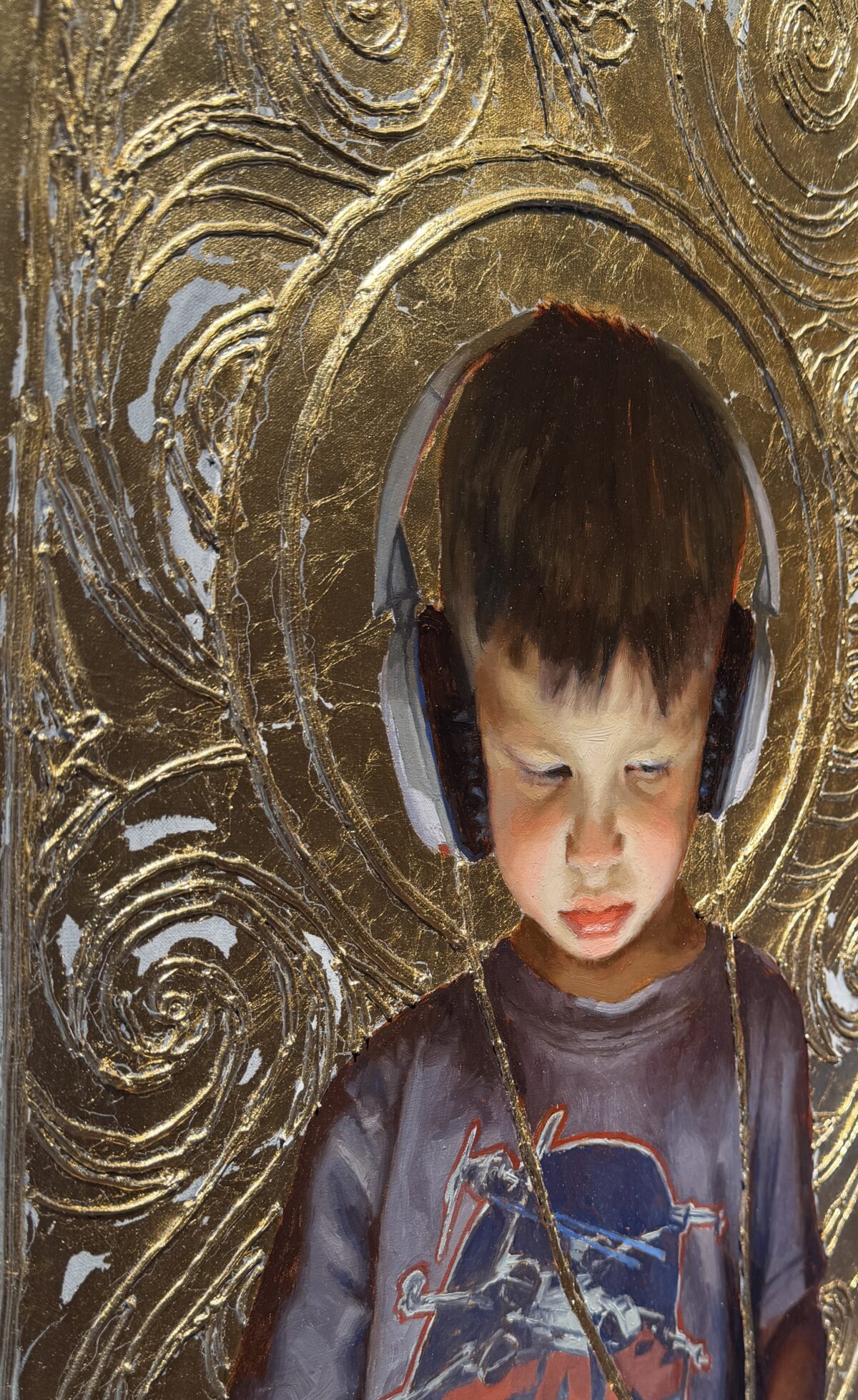
Part of what makes this work special, is a the raised surface of the work that reflects the light in unpredictable ways. Personally, I would love to see this work hung like an icon and lit by flickering candlelight.
It is this kind of inventiveness, meaningful insight, and sensitive observation, which go beyond just painting what is in front of the artist, that has made Casey Childs one of the world’s most admired portrait painters.
Thank you for your thoughts. From what I’ve seen here and on Instagram, I can see that this year’s Salon is the highest echelon of our region and I’m excited to see the show for myself. I hope to get a piece selected in the coming years – but this year, my work will be at the Rejects Show 🙂