Posts By Micah Christensen
Restoring a Masterpiece: CSI for the Art World, Only Happier
Artwork is not often built to last or to move, yet we insist on both. Some time ago, I worked with a collector of eighteenth-century French paintings who regularly shipped works to his home in Utah. Moving paintings from a relatively humid Western Europe to the American desert compounded other problems associated with older works of art. Paint decays over time, causing colors to lose their original hues. Glazes age, darken colors and yellowing the overall work. But, perhaps more dangerous that all of these is the lack of–or dramatic increase in–humidity. Works on panel (i.e. wood), in particular, tend to crack, buckle or completely detiorate. Solving these problems can cause collectors to recruit a CSI-like team of experts to stabalize restore and conserve a work.
(Dim your computer screen to emulate CSI filming.)
In trying to explain this to another collector, I was very happy to find this video, published by the Indianapolis Museum of Art on the restoration and conservation of a major work in its collection: Madonna and Child with St. Nicolas of Babi and St. Justina by Sebastiano Mainardi (San Gimignano, 1460-1513). Painted with oil on wood, the altarpiece was moved to the US in the early twentieth century. At the time, in order to stablized the large panel of wood it was painted on, a complex lattice of wood–called a “cradle”–was fastened to the back. Cradles were a typical solution to stabalizing wood panels throughout the nineteenth century. Though well intentioned, they prevent wood from breathing and cause it to buckle and crack, which then leads to problems with the paint on its surface. The solution, as demonstrated by the video, can stretch the capabilities of modern technology.
The Most Wanted Painting (The Flemish Were Not Far Off)
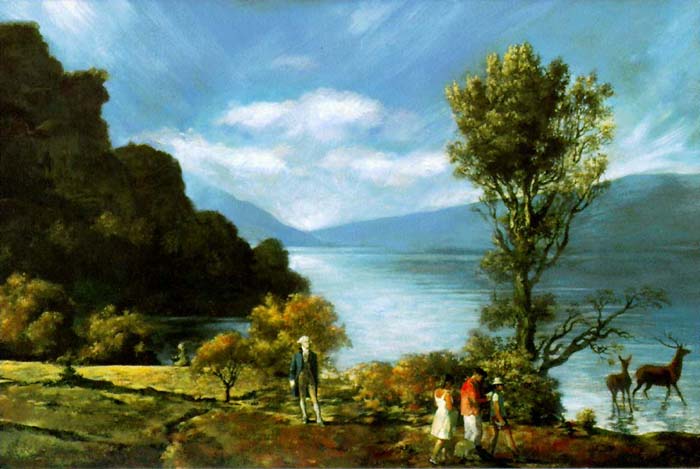
Vitaly Komar and Alex Melamid. Most Wanted Painting, America. (1995) Digital composite image.Vitaly Komar and Alex Melamid. Most Wanted Painting, America. (1995) Digital composite image. (Note George Washington in the center of the work.)
What if we made art according to surveys? What if artists, like many politicians, relied on polls? This week, the public radio show This American Life features an interview with two digital artists, Vitaly Komar and Alex Melamid, who received a grant from Chase Manhattan Bank to determine the attributes of the most and least wanted painting. To do this, Komar and Melamid conducted a number of online surveys allowing participants to choose their favorite elements from famous works. The result has been called the “most wanted” painting.
Having read through study, it is difficult to determine the level of professionalism in its methods. The results were only published online and were never peer reviewed. Regardless of its integrity, it is an interesting exercise.

Vitaly Komar and Alex Melamid. Most Wanted Painting, France. (1995) Digital composite image.
Of the dozen countries represented in the study, all of them, with the exception of Holland, preferred realistic landscapes. The Dutch, for reasons unexplained in the study, value abstract art, which, for most other countries, is the “least preferred” type of painting. The contents of the “most wanted” are surprisingly uniform:
- landscape
- mountain on the left
- tree on the right
- wild animals
- gathering of people
- famous political figure
- strong blues
The elements read like a description of any number of sixteenth-century Flemish paintings.
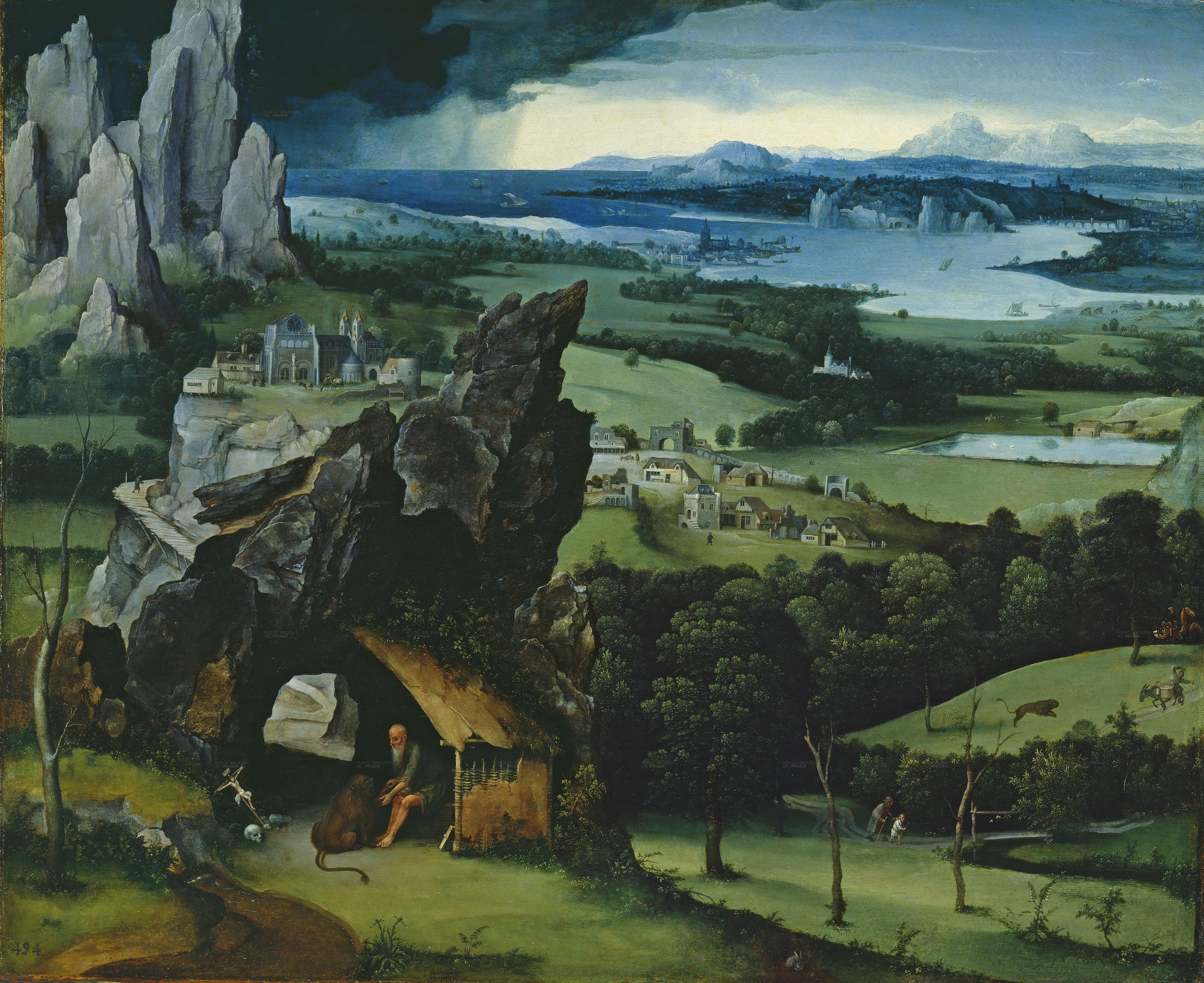
JOACHIM PATINIR (Flemish, 1480-1524) Landscape with Saint Jerome (c. 1516-1517) Oil on board. 74 BY 91 cm. Prado Museum, Madrid.
Several years ago, I had a conversation with one of London’s foremost dealers of Old Masters paintings. He told me that, of all paintings, landscapes were the most popular in his gallery. When asked “Why?” he responded: “I suppose it is because they are the least controversial. They can be enjoyed without taxing the viewer. And, they do not make any overt political or value statements that need to be defended.”
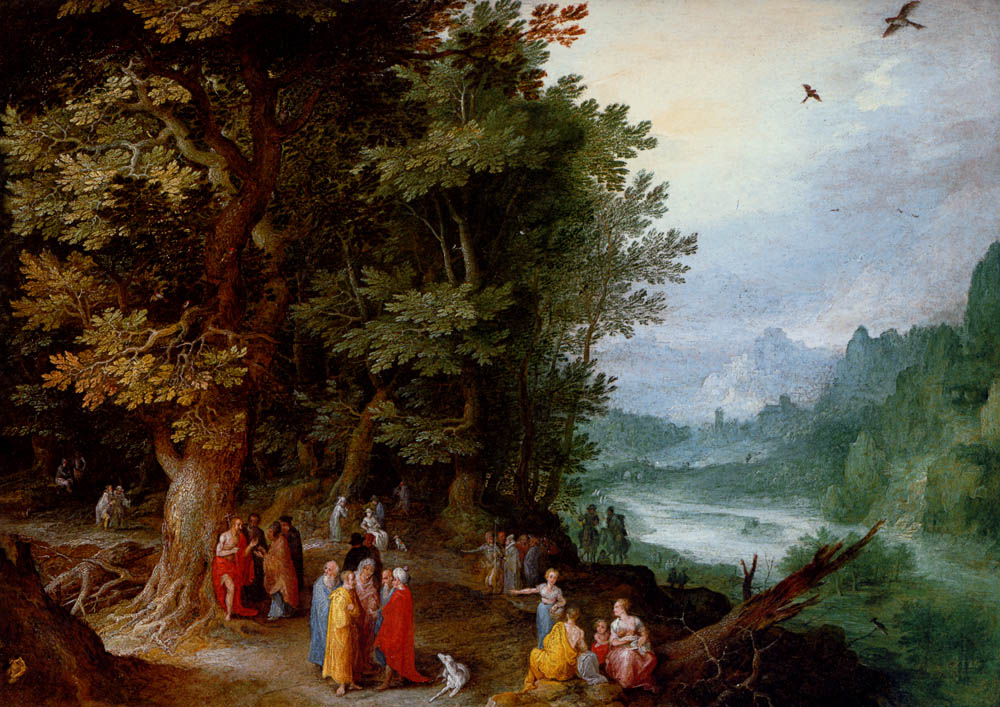
JAN BREUGHEL, THE ELDER (1568-1625) Saint John preaching in the wilderness (c. 1615) Oil on copper 25.5 BY 35 cm.
No doubt there are many reasons to love these paintings that have little to do with political correctness. Personally, I love works by Patinir and Jan Breughel. They were often small and, rather than hung on a wall, meant to be looked at while holding them on a lap with with a magnifying glass. The paintings are full of rich detail, distant views, and multiple paths. These are works that can be looked at again and again, each time with a new discovery.
The idea that painting could be put together by committee flies in the face of our belief in the lone genius painter. However, in their public radio interview the authors of “The Most Wanted Painting” study are quick to point out that the notion that our ideas about a creative genius are just as clichéed and inaccurate as our judgment that painting by polls are somehow unable to create good art. Though I am not suggesting art should be created by polling, I would suggest an adjustment to anyone attempting to repeat and improve upon the “most wanted” painting.
Several years ago, Malcolm Gladwell, author of many books and a writer for the New Yorker, gave a lecture on “What we can learn from spaghetti sauce.” In it, he profiles a food scientist that found that instead of trying to satisfy the American palette with one perfect spaghetti sauce–the unreachable Holy Grail for food production industry-we should be looking for the perfect sauces. According to taste testings, Americans fell into one of three categories of spaghetti sauce. The same proved true for coffee and a number of other foods. As a result, most companies produce a limited variety of each category of food to meet the needs of each general group’s taste.
If I were a gambling man, I would bet that the same would be true for the “most wanted” painting. Perhaps someone reading this would be able to convince Chase Manhattan Bank for a second grant.
Three Paintings by Anthony Van Dyck (Flemish, 1599-1641) for Christmas
When Anthony Van Dyck (Flemish, 1599-1641) made these three paintings, he was between 19 and 20 years old. All three were owned by Peter Paul Rubens (Flemish, 1577-1640), and were bought from his collection by the Spanish royal family after Rubens’ death. That Rubens had them in his private collection says a great deal about his admiration for Van Dyck. Rubens was 12 years older than Van Dyck and had hired him to work as his chief assistant in his studio. “Assistant” doesn’t do enough justice to Van Dyck, who was young but extremely competent. Even today, scholars have a difficult time distinguishing between the two artists’ work during the period they worked together.

Anthony Van Dyck (Flemish, 1599-1641) The Capture of Christ or Judas' Kiss (c. 1618-1620) Oil on canvas. 344 cm x 249 cm. Prado Museum, Madrid.
In this first work, Christ is betrayed by Judas, who leads a crowd of Suducees and Pharisees (i.e. member of the ruling Jewish priesthood) to take Christ into custody. Christ had just offered his interceding prayer in the Garden of Gethsemane, while three faithful apostles (Peter, James and John) had fallen asleep keeping watch.
Van Dyck brilliantly creates a torrent of action swooping in towards Christ, the only figure with two feet on the ground, effectively stopping the large crowd by himself. The contrasting patches of dark and light, red and black create an emotional upheaval. It’s an unsettling painting, and, with figures at almost real-life proportions, imposing.
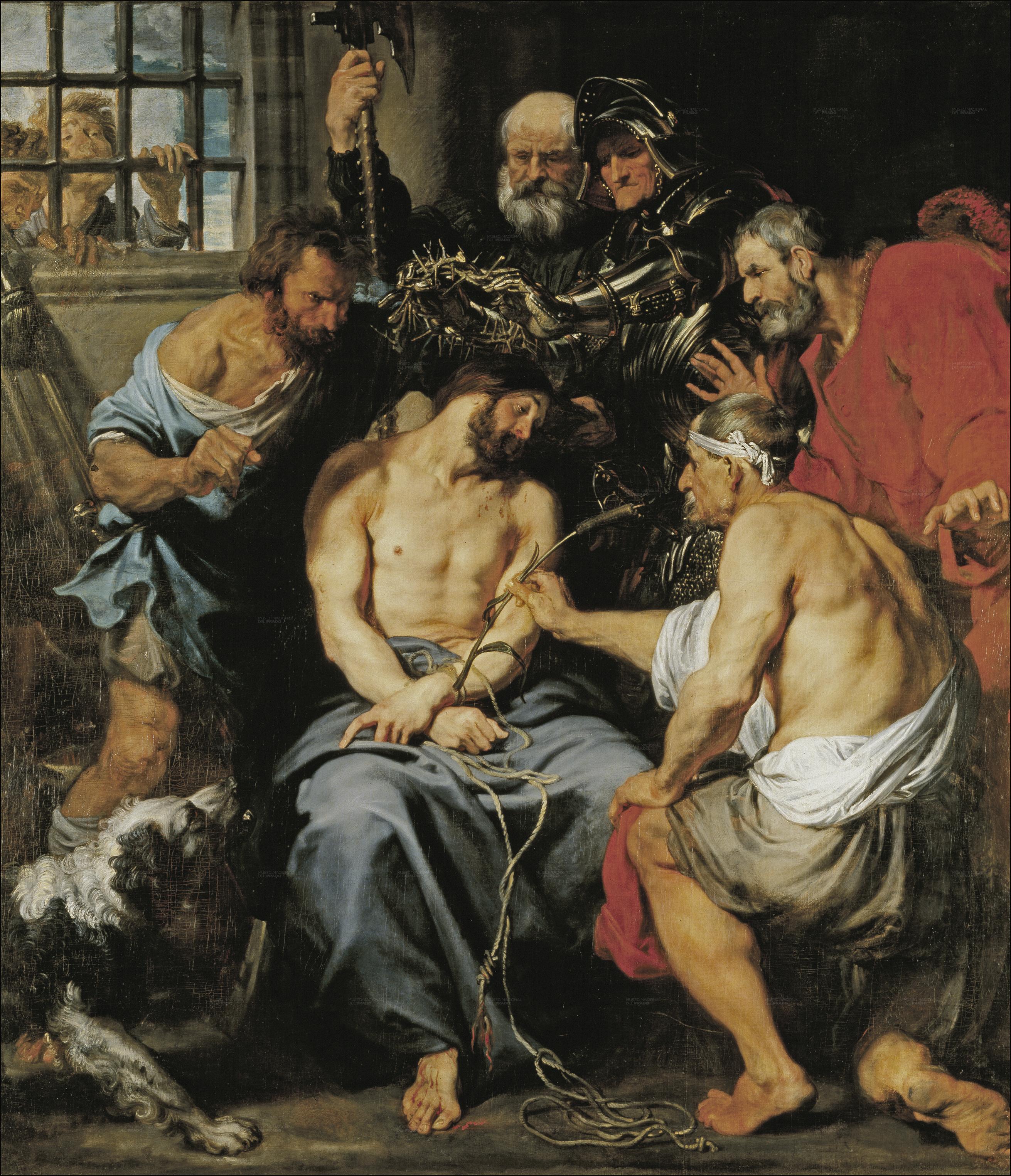
Anthony Van Dyck (Flemish, 1599-1641) Crowning Christ with Thorns (c. 1618-1620) Oil on canvas. 224 cm x 197 cm. Prado Museum, Madrid.
Looking at this painting, its hard to know whether you are in the prison, and therefore an accomplice, or, like the figures in the top left of the painting, looking through a window. In either case, you have a front-and-center view of the scene. Christ is being crowned with thorns by Roman soldiers.
Van Dyck uses an astounding arsenal–especially given his young age–for his cast of characters. Armor, dog fur, the weakened, pale skin of Christ, the young, healthy skin of the Roman soldiers, wood, sky, rope . . . up close (click on the image for a much larger version) and in person, the brushwork is incredibely varied and the pallet rich.
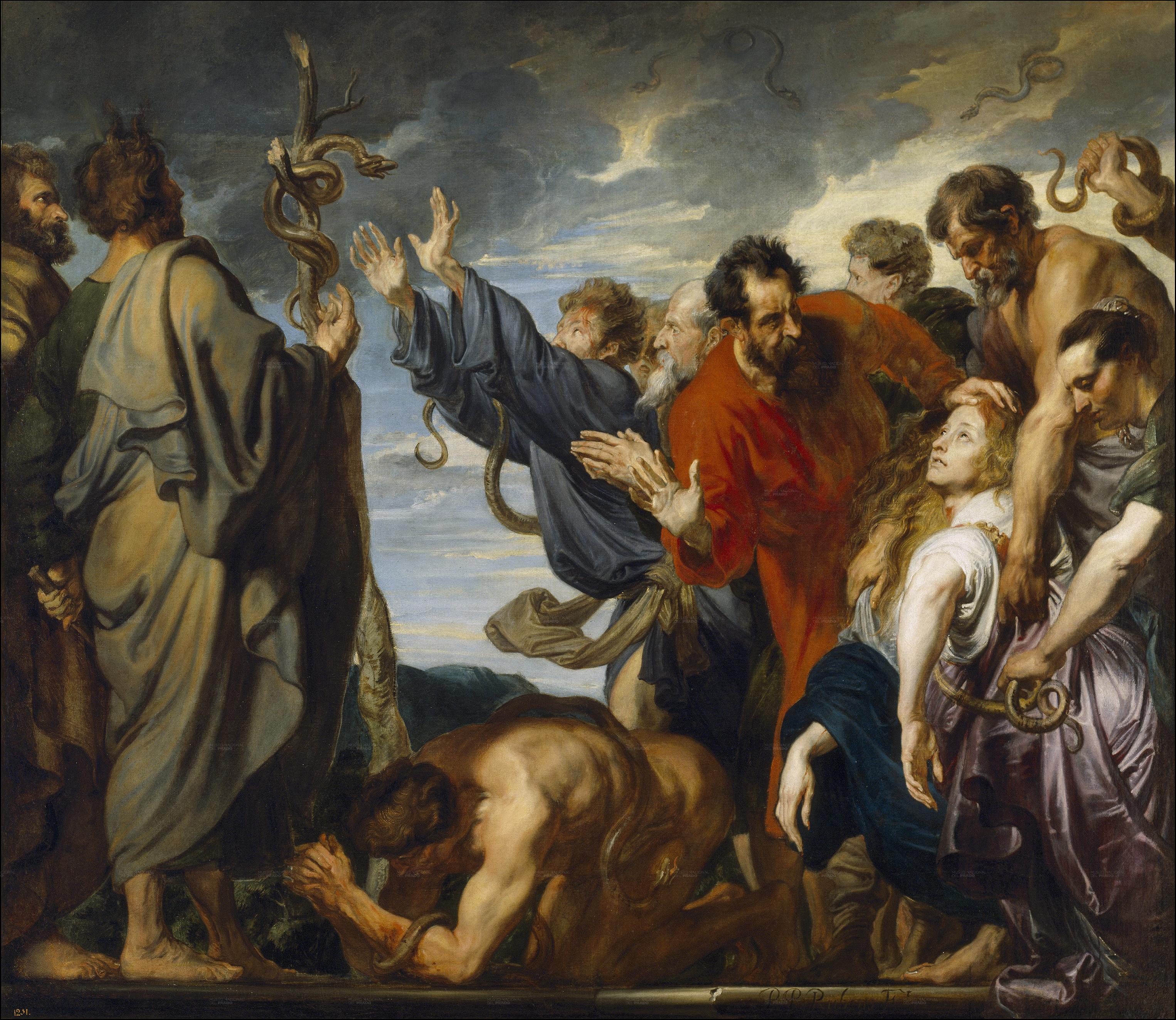
Anthony Van Dyck (Flemish, 1599-1641) The Brass Serpents (c. 1618-120) Oil on canvas. 205 cm x 235 cm . Prado Museum, Madrid.
Though not overtly Christian to us today, this painting would have been an obvious reference to Christ’s saving role. It depicts a story from Number chapter 21 in the Bible. Jehovah sent poisonous sepents among the Israelites, and many were bitten. He then commanded Moses to create a brass serpent and put it on a pole. Any person who would look at the brass serpent would be instantly healed. Many did not look, and died. According to the book of John chapter 3 verse 14: “And as Moses lifted up the serpent in the wilderness, even so must the Son of Man be lifted up.”
Van Dyck painted this for a very Bible-literate audience that would have understood the reference to Christ. All three of these paintings hang in the same room, but separately, at the Prado Museum, but I don’t know if there were meant to hang together. Sometimes I wish The Brass Serpents were hung to the right of the The Capture of Christ. The symmetry and dates of the three makes me wonder if they were meant to be together, perhaps with the Crowning of Christ with Thorns in between.
In any case, have a wonderful Christmas.
Eve After the Fall by Eugène Delaplanche (French, 1831-1892)
Lately, I have been looking at my collection of images by theme, grouping Biblical and mythological subjects in categories. (It becomes helpful to have these groupings, which would normally not be seen in museums, when giving lectures or teaching children.) It was while piecing together my images of Eve that I found several photos I had taken of Eugène Delaplanche’s (French, 1831-1892) work Eve After the Fall (1869).
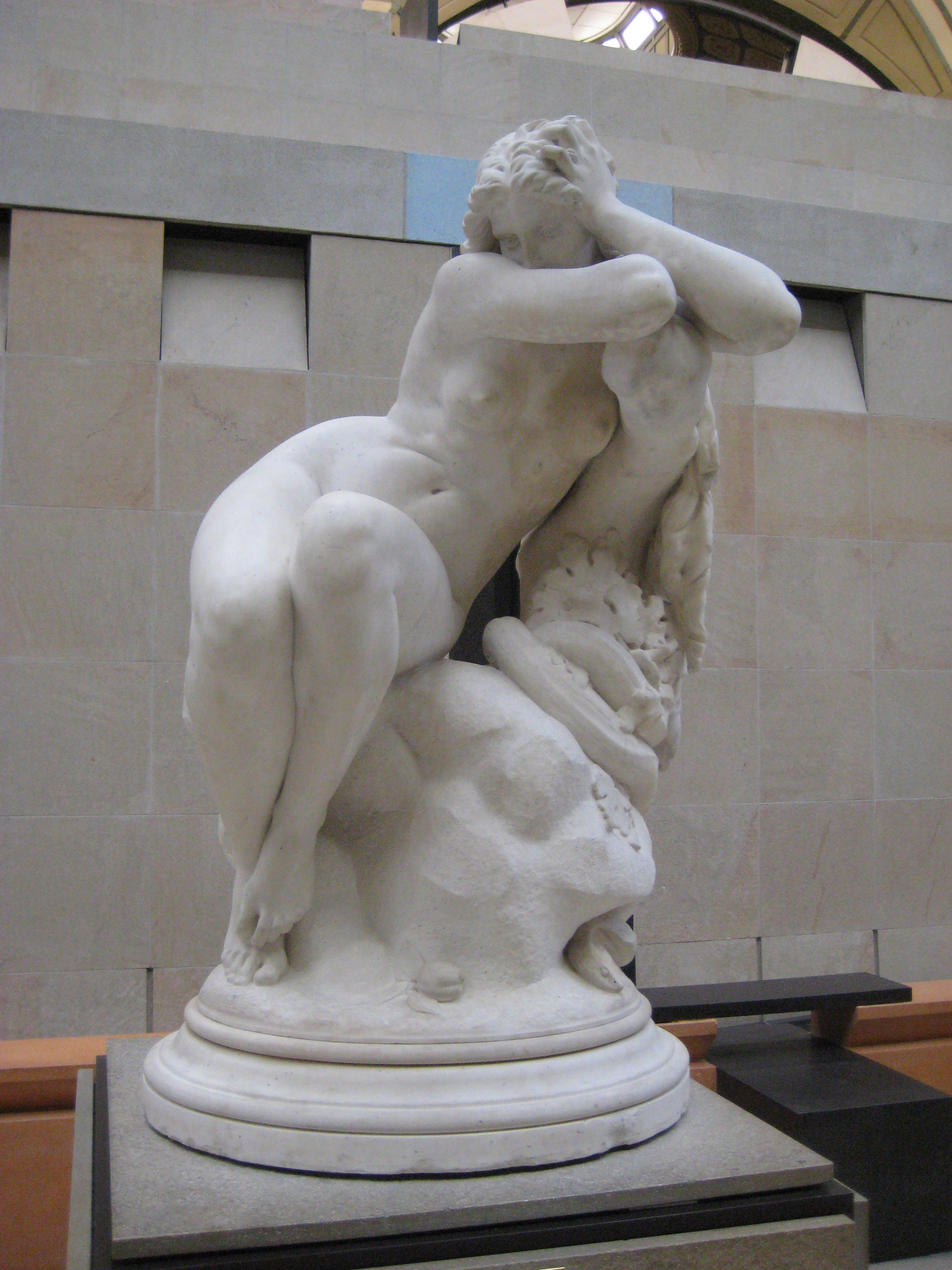
Eugène Delaplanche (French, 1831-1892) Eve After the Fall (1869) Marble. Musée d'Orsay, Paris.
I will never forget the first time I saw it, years ago, at the Musée d’Orsay. Although I was familiar with Eve’s eating of the forbidden fruit and her subsequent expulsion from Eden, I had never considered her feelings and, especially, the moment of realization she must have had after eating the Forbidden Fruit. The sculpture filled me with sympathy for Eve and remorse for my own bad decisions in life. Only great art can do that.
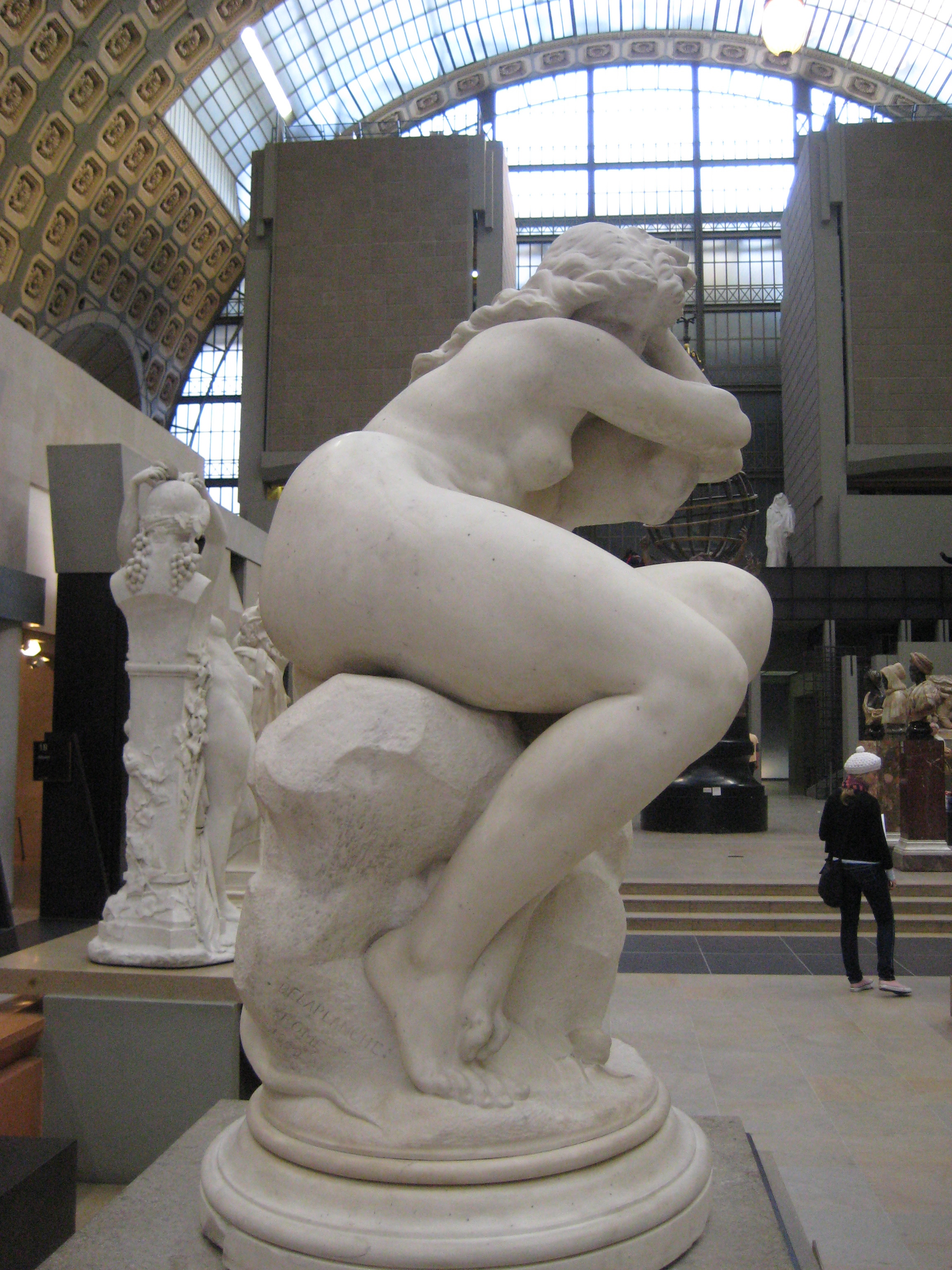
Eugène Delaplanche (French, 1831-1892) Eve After the Fall (1869) Marble. Musée d'Orsay, Paris (Side View)
Delaplanche studied under the neoclassical sculptor Francisque Joseph Duret (French, 1804-1865) . In 1864, Delaplanche was awarded the Prix de Rome and, subsequently, went to Italy where he studied Greco-Roman works and the sculptures of Michaelangelo and Bernini. He returned to Paris with an approach his work that combined classical idealism with natural forms. The result in Eve After the Fall (1869), done shortly after returning from Rome, is almost Hellenistic, but much larger in scale than most Greek statues.

Eugène Delaplanche (French, 1831-1892) Eve After the Fall (1869) Marble. Musée d'Orsay, Paris. (From Behind)
Eve is beautiful, yet forceful. Her features are idealized, yet her figure, almost drawn into a fetal position from horror, is sinuous, organic.
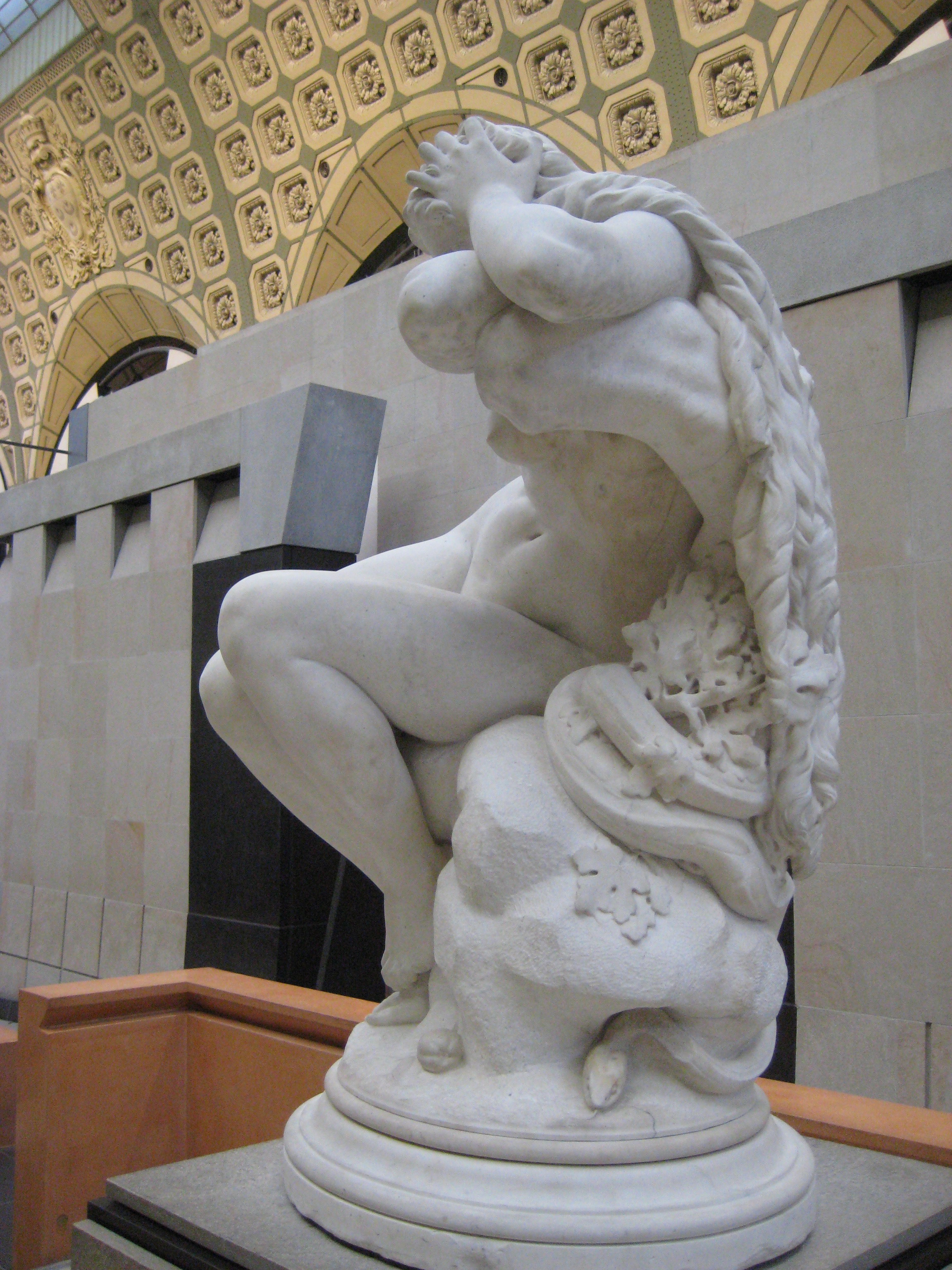
Eugène Delaplanche (French, 1831-1892) Eve After the Fall (1869) Marble. Musée d'Orsay, Paris (Side View)
All of the elements of the story are here: the discarded, bitten fruit from the Tree o Life, the serpent coiled around the tree, and Eve, full of horror and realization of her transgression.
Eugène Delaplanche (French, 1831-1892) Eve After the Fall (1869) Marble. Musée d'Orsay, Paris (Detail of Eyes)
Delaplanche went on to do a number of works and recieved a number of prizes. Unfortunately, like many of his contemporary sculptors and unlike many contemporary painters, little has been written about his work and life.
Drawing Is Not the Only Way to Paint (e.g. Velázquez)
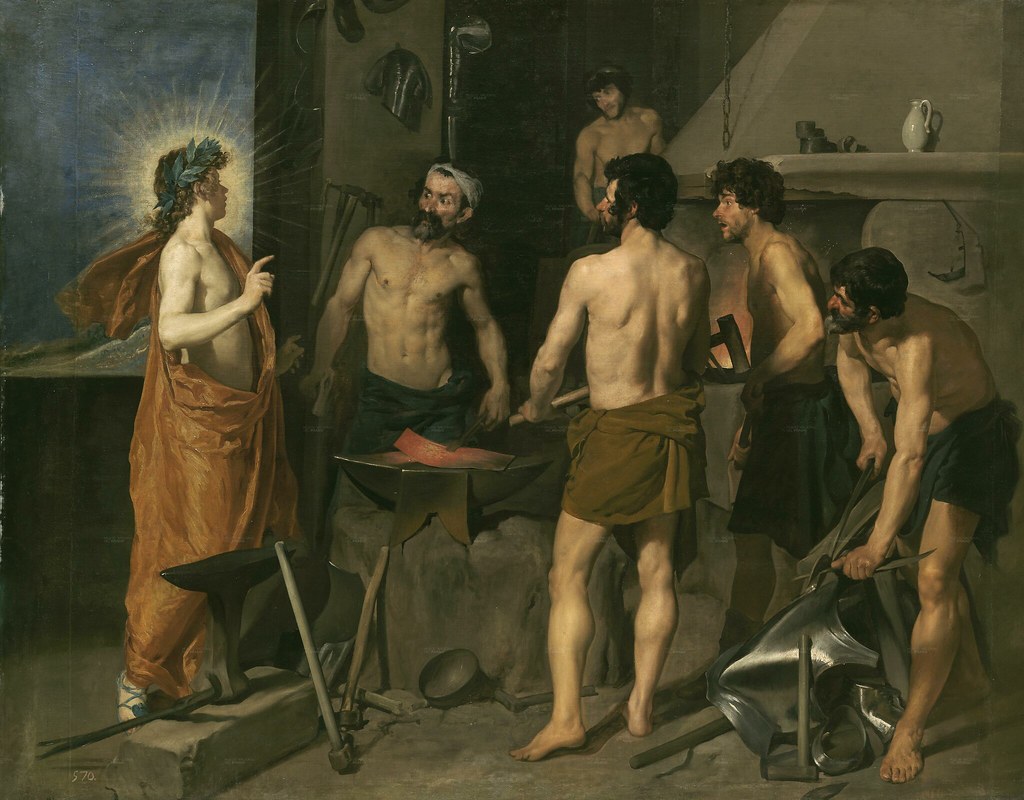
Diego Rodríguez de Silva y Velázquez (Spanish, 1599-1660) The Forge of Vulcan (1630) Oil on canvas. 230 BY 290CM. Prado Museum, Madrid. (Click image for larger version)
In several of my posts, I have pressed the importance of drawing. But it is important to know that not all the greats drew. One artist, in particular, who did not was Diego Rodríguez de Silva y Velázquez (Spanish, 1599-1660). Simply known as “Velázquez,” he was the greatest painter in the history of Spain and admired everywhere by academic and non-academic painters alike.
As mentioned in a previous post, Leon Bonnat, who became Director of the Ecole des Beaux Arts, regularly sent his students to Mardrid to study Velázquez’s works. Thomas Eakins said he was the “greatest painter who ever lived.” Painters as diverse as Millet, Manet, Sargent, Degas, Courbet, and Whistler admired and studied Velázquez’s paintings. They alll may have been surprised to learn what modern technology has taught us about Velázquez’s working method.
We know of only about 100 paintings by Veláquez, 45 of which are kept in the Prado Museum in Madrid. There, they have undergone chemical analysis of his pigments and a barrage of tests to show what lies under the paint. In the book Velázquez: The Technique of a Genius, Jonathan Brown and Carmen Garrido publish some of these findings.
Velázquez does not seem to have started with a fixed idea for a composition, but rather preferred to see what happened as he worked, making adjustments as he painted . . . The contours of figures overlap as their position in the composition changes or as elements are added or subtracted. Even within the forms of individual figures changes can be observed. The positions of hands and sleeves are adjusted, collars and lace are shifted, as are other parts of costume.
Landscape and neutral interior backgrounds were added, generally speaking, after the contours of the figures had been established.
(Jonathan Broan and Carmen Garrido, Velazquez: Technique of a Genius. (New Haven and London: Yale University Press, 1998), p. 18.)
One of my favorite paintings by Velázquez, The Forge of Vulcan, is a good example of this improvisational approach. Originally, the head of Vulcan, the older man in the left-hand side of the painting, was turned away from Apollo.
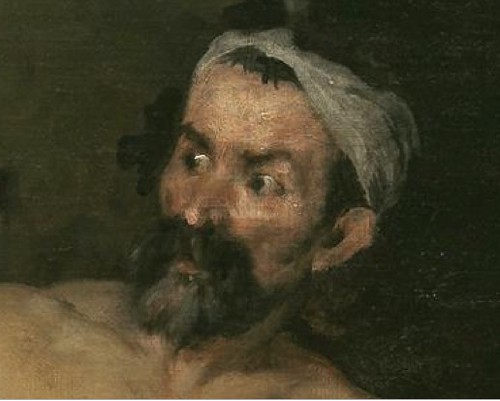
Diego Rodríguez de Silva y Velázquez (Spanish, 1599-1660) The Forge of Vulcan, detail. (1630) Oil on canvas. 230 BY 290CM. Prado Museum, Madrid.
To the left of Vulcan’s head, we can see a dark patch of brown paint where the back of his head used to be. In addition to this change, Velázquez enlarged the canvas. Over time, the pieces that were glued on became separated from the original piece and lines on the left and right of the canvas have become visible (See the first image.)
Not having drawn out the composition before hand, Velázquez created more work for himself. At the same time, it allowed him to go where his creativity led.
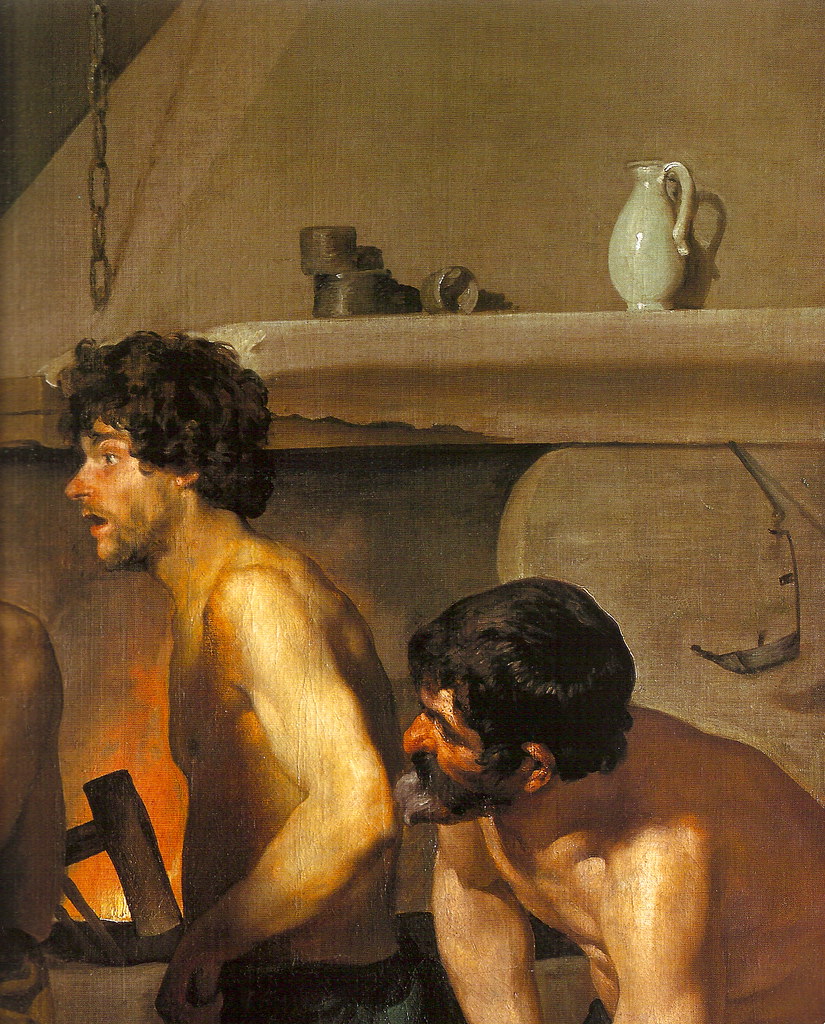
Diego Rodríguez de Silva y Velázquez (Spanish, 1599-1660) The Forge of Vulcan, detail. (1630) Oil on canvas. 230 BY 290CM. Prado Museum, Madrid. (Click image for larger version)
The results are stunning.
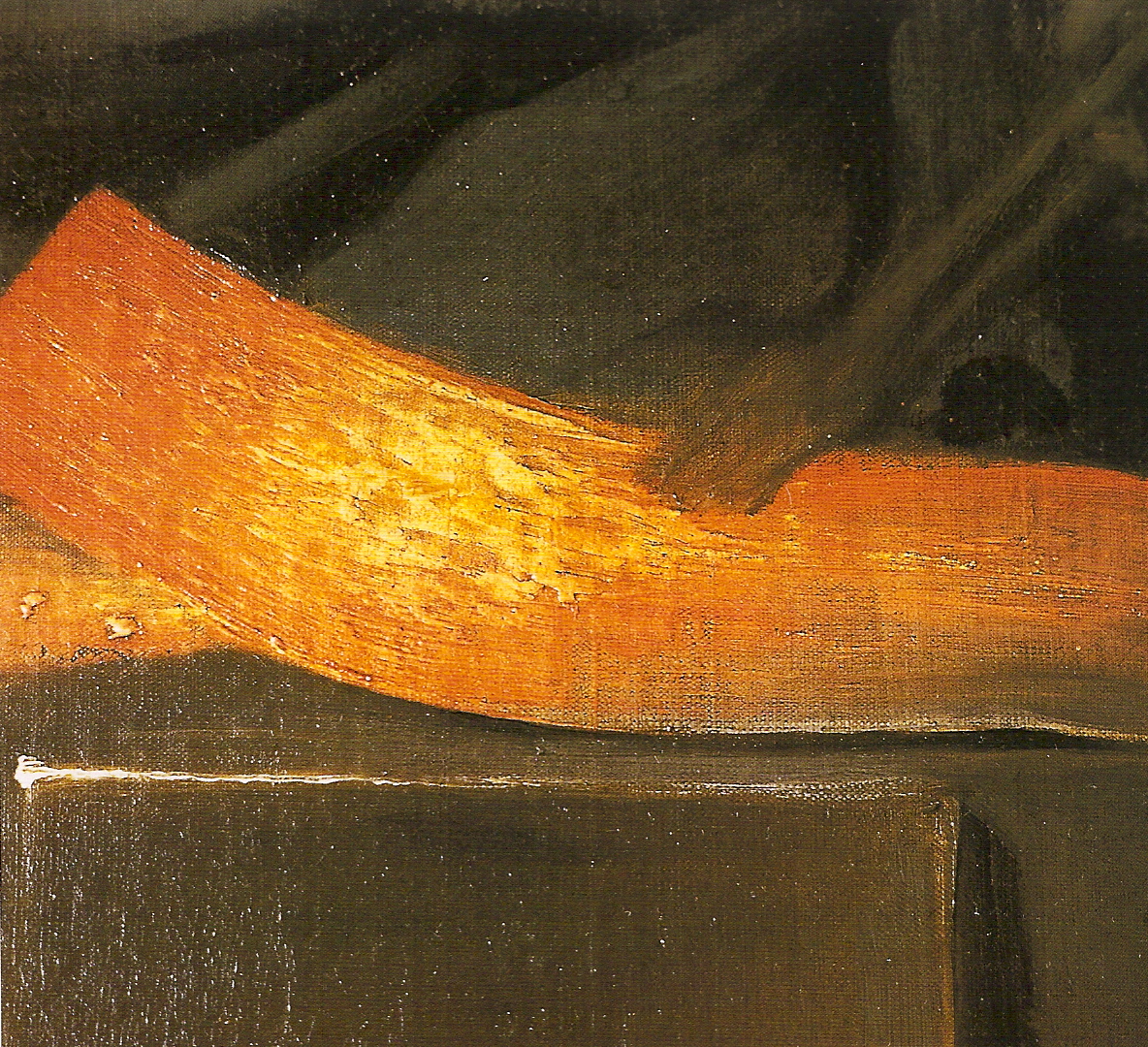
Diego Rodríguez de Silva y Velázquez (Spanish, 1599-1660) The Forge of Vulcan, detail. (1630) Oil on canvas. 230 BY 290CM. Prado Museum, Madrid. (Click image for larger version)
Obviously, drawing isn’t everything.
A Rediscovered Archive of Spanish Drawings: The Academia de San Fernando de Bellas Artes in Madrid
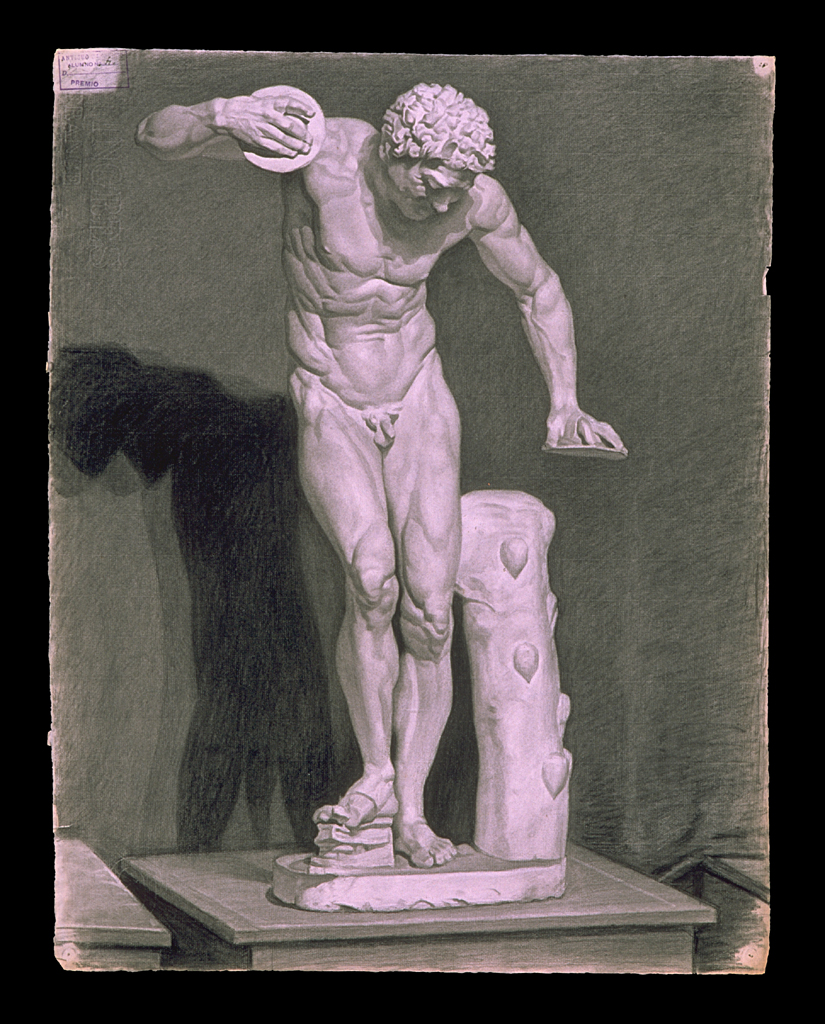
Anonymous (Spanish, c. 1870) Satyr with his cymbals or Sátiro tocando los platillos. Graphite on paper. 61.6 BY 48.3CM. Colección de Bellas Artes, Universidad Complutense, Madrid.
(All of the drawings in this post are by eighteenth and nineteenth-century students of the Academia de San Fernando. I am extemely grateful for the help of the brilliant Angeles Vian Herrero, Director of the Library of the Facultad de Bellas Artes of the Universidad Cumplutense in Madrid. These and many more drawings are available at a new website she has created for them. For larger versions of each image in this post, please click each work.)
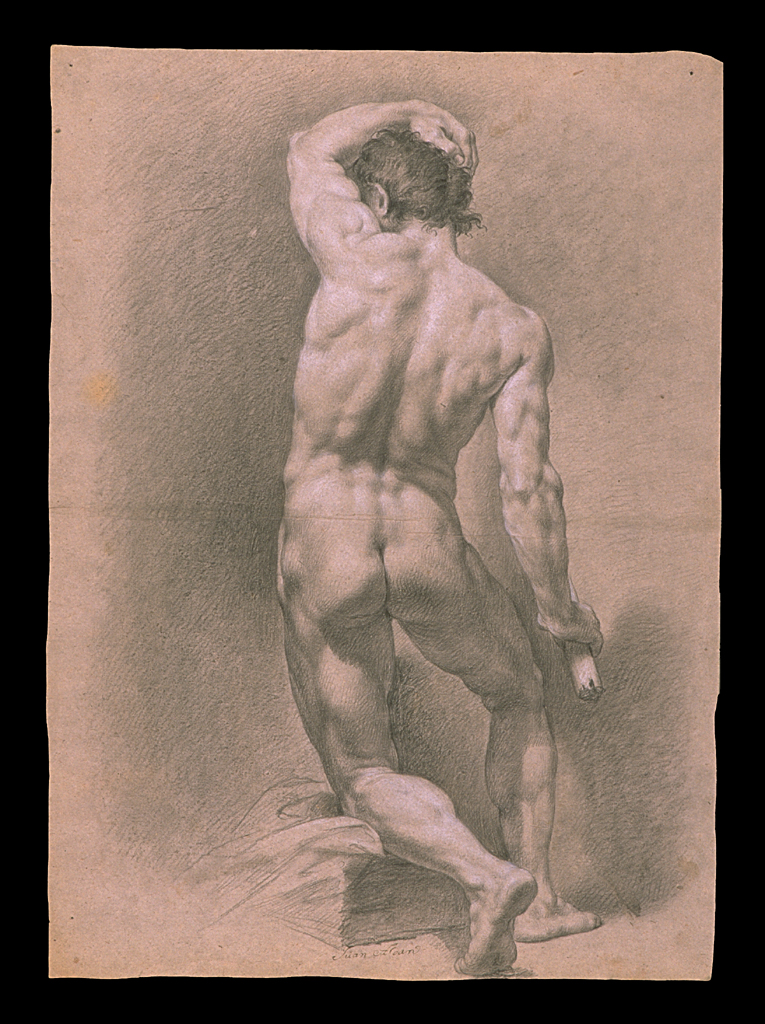
Juan Adán Morlán (Spanish) Desnudo masculino de espaldas con una pierna apoyada en un escalón. (a. 1741-1816) Pencil and pastel on paper, 54.4 BY 39.3CM. Colección de Bellas Artes, Universidad Complutense, Madrid.
Anonymous (Spanish). Colección de Bellas Artes, Universidad Complutense, Madrid.
Nineteenth-century art academies all over Europe used drawing as the foundation for art education. As I have noted before on this blog, Jean-Dominique Auguste Ingres (French, 1780-1867), once said “Over three quarters of what constitutes painting is comprised of drawing. If I had to put a sign above my door I would write: ‘School of drawing,’ and I’m sure that I would produce painters.” (It was not until the mid-1860s that oil painting was taught at the Ecole des Beaux-Arts, where Ingres had been the director from 1825-1841. His approach to artist training was adopted in Spain’s most important school for artists, the Academia de San Fernando de Bellas Artes in Madrid.
Anonymous (Spanish). Colección de Bellas Artes, Universidad Complutense, Madrid.
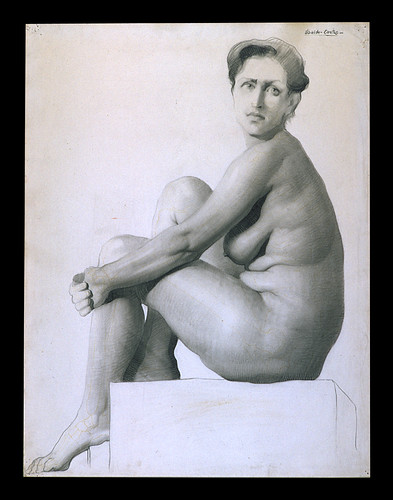
Anonymous (Spanish, c. 1850) Study of nude female. Graphite on paper. Colección de Bellas Artes, Universidad Complutense, Madrid.
The Academia de San Fernando de Bellas Artes was founded in 1752. Based in Madrid, it was one of several art academies in Spain (other cities with academies included Barcelona, Valencia, Zaragosa, and Seville). By the mid-nineteenth century, the Academia de San Fernando had become the dominant art academy in Spain and the model for art education throughout the country.
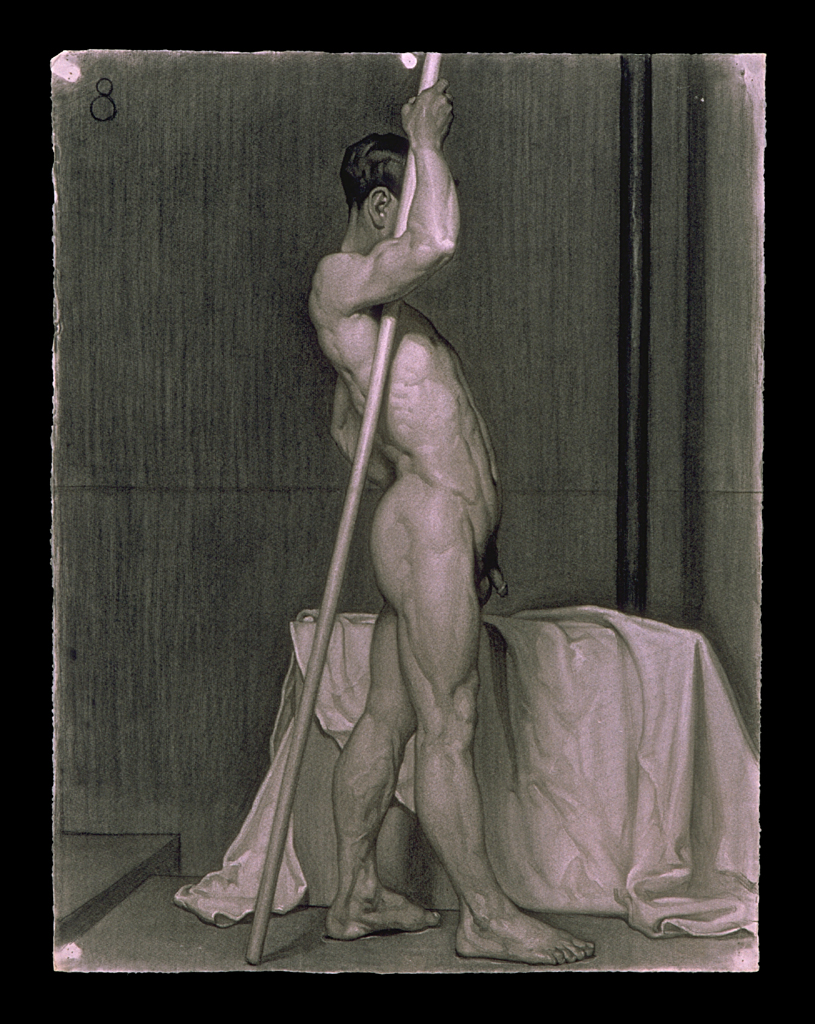
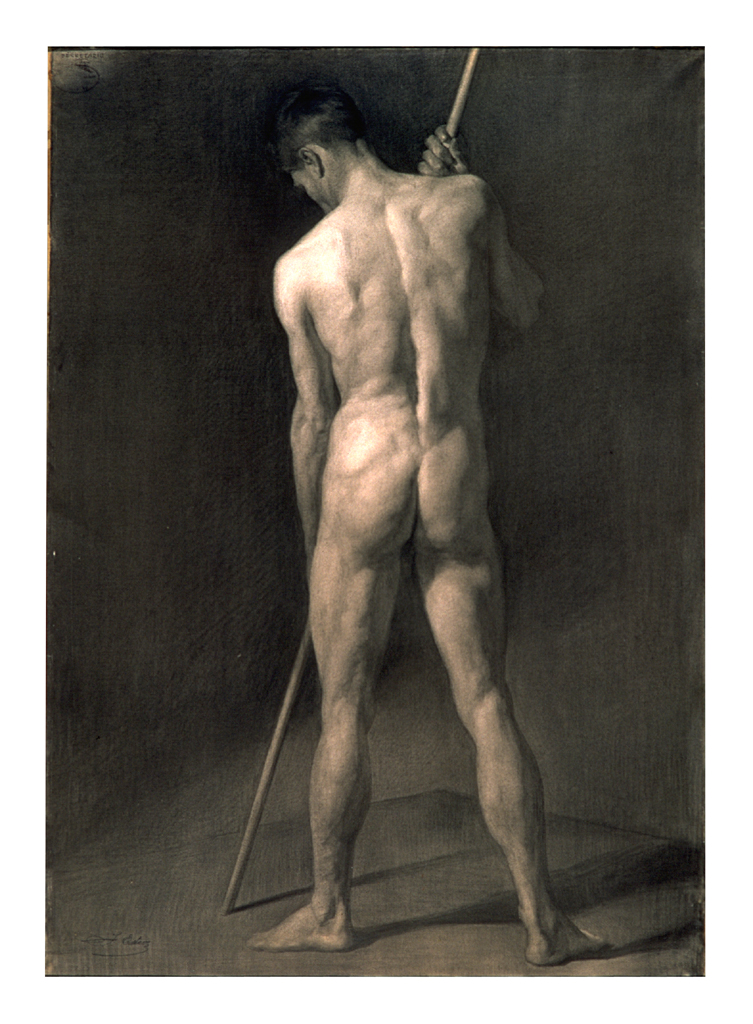
Anonymous (Spanish, c. 1890) Desnudo masculino en pie y de perfil apoyado en una vara. Graphite and pastel on paper. 61.9 BY 47.9CM. Colección de Bellas Artes, Universidad Complutense, Madrid.
The Academia de San Fernando, founded in 1751, was heavily influenced by French-trained artists. One family in particular, the Madrazos, dominated the Academia de San Fernando for most of the nineteenth century. José de Madrazo (Spanish, 1781-1859), court painter for Ferdinand VII, was sent to Paris to study with Jacques-Louis David (French, 1748-1825). José’s son, Francisco de Madrazo y Kuntz (Sapnish, 1815-1894) was trained by Jean-August Dominique Ingres (French, 1780-1867) in Rome, and would serve as the Academia de San Fernando’s director from 1866 to 1894. José’s other son, Pedro (Spanish, 1816-1898), was the director of the Prado Museum, as well as a prominent art critic. All three were influential in setting standards and tastes for the Academia.
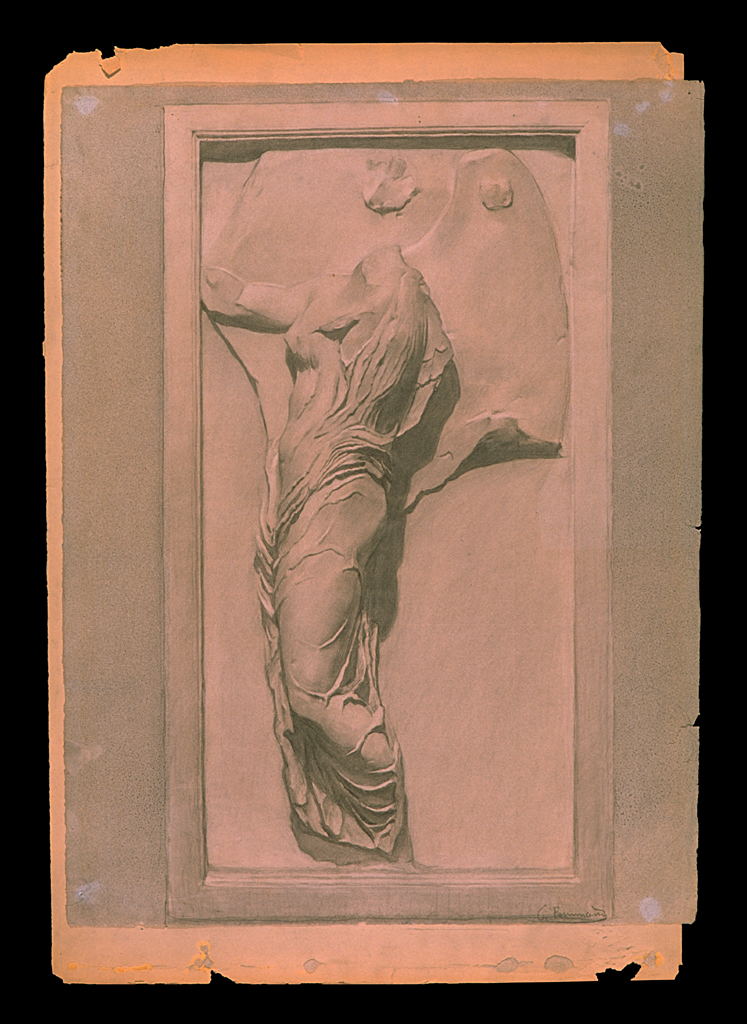
G. Ponman (Spanish) Female figure from a Greek Relief Sculpture or Figura femenina (copia de un relieve griego). Pencil and pastel on paper. 62.9 BY 47.7CM. Colección de Bellas Artes, Universidad Complutense, Madrid.
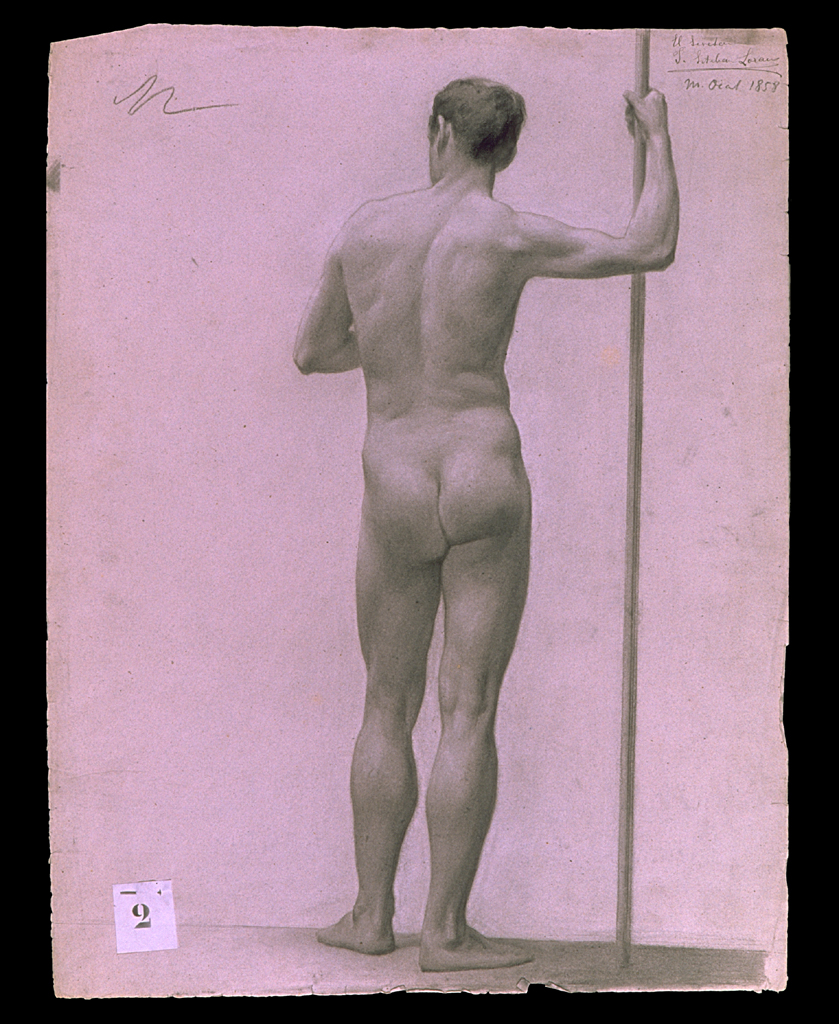
Miguel Ocal (Spanish) Desnudo masculino de espladas y en pie apoyado en una vara (1858) Graphite on paper. 61.4 BY 47.4CM. Colección de Bellas Artes, Universidad Complutense, Madrid.
As in Paris, students in Madrid’s arts academy studied, on average, for four years. Some went on to receive scholarships and study at the Spanish School in Rome. (Established in 1873, the Spanish sent winners of an annual competition on the equivalent of the French Prix de Rome.) Students at the Academia began by drawing from castes of isolated portions of statues. Then, they were allowed to study from full statues of classical origins, either from castes made of the Spanish Royal collection or from collections in Rome or Paris. Advanced students, were allowed to study from live models, who were often placed in the poses of classical statuary or from scenes in Old Master paintings. As the century progressed, classical poses increasingly gave way to more natural poses and depictions of the human figure.

Anonymous (Spanish). Colección de Bellas Artes, Universidad Complutense, Madrid.

Miguel González de La Peña (Spanish) Desnudo masculino sentado sobre volúmenes en forma piramidal con la cara hundida entre las manos. Graphite on paper. 62.2 BY 48CM. Colección de Bellas Artes, Universidad Complutense, Madrid.
The majority of the works featured here are of nude men. This is because, in nineteenth-century Spain, there were strong cultural taboos against female nudity, even classical nudes. As a result, Spanish artists privately hired female models for their studio work as opposed to using them in official schools.

Anonymous (Spanish). Colección de Bellas Artes, Universidad Complutense, Madrid.
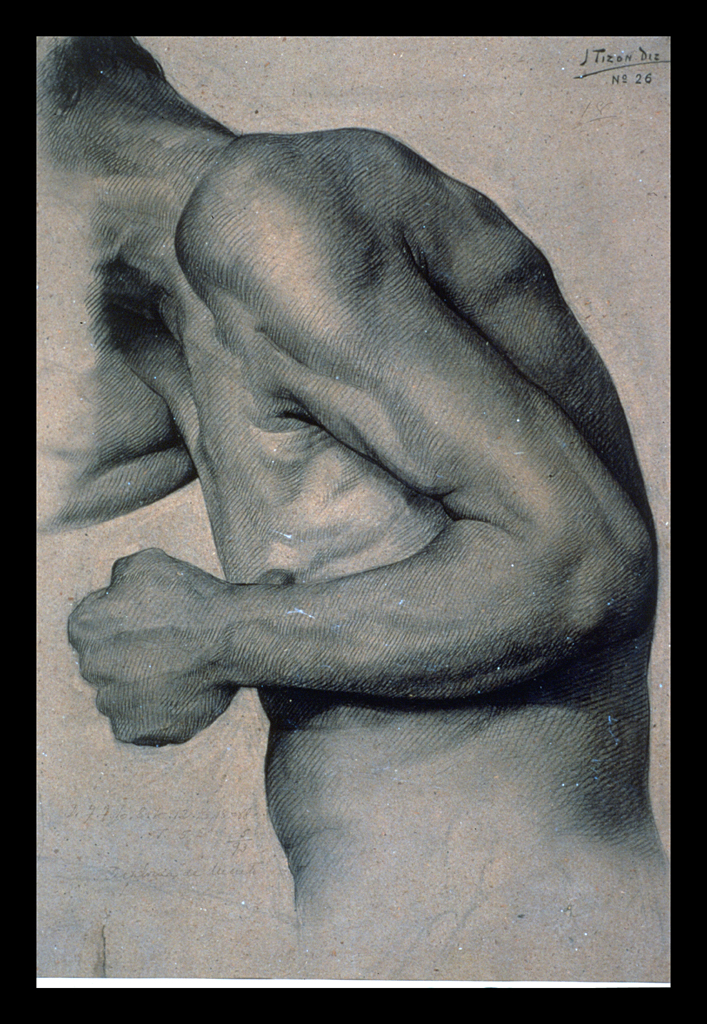
Some of the works perserved in archives are anatomy studies. Many of theses seem to be copied from books while other appear to be made from looking at live models and perceiving underlying muscle and bone structure. This is interesting because models were expensive. Using them for anatomical studies shows how important the Academia considered these studies.
Consider a Contrast: Young Contemporary British Artist versus Nineteenth-Century Academic Student
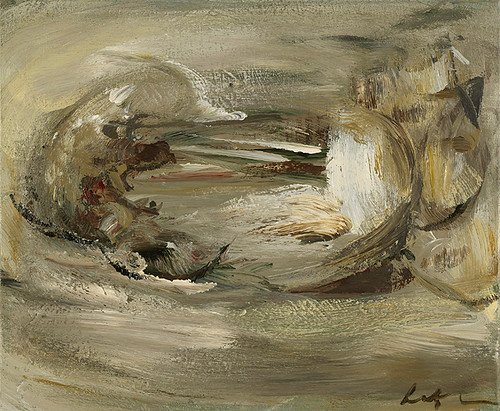
Katy Moran (British, 1975) Volestere (2007) Oil on canvas. Currently on view at the Andrea Rosen Gallery, London.
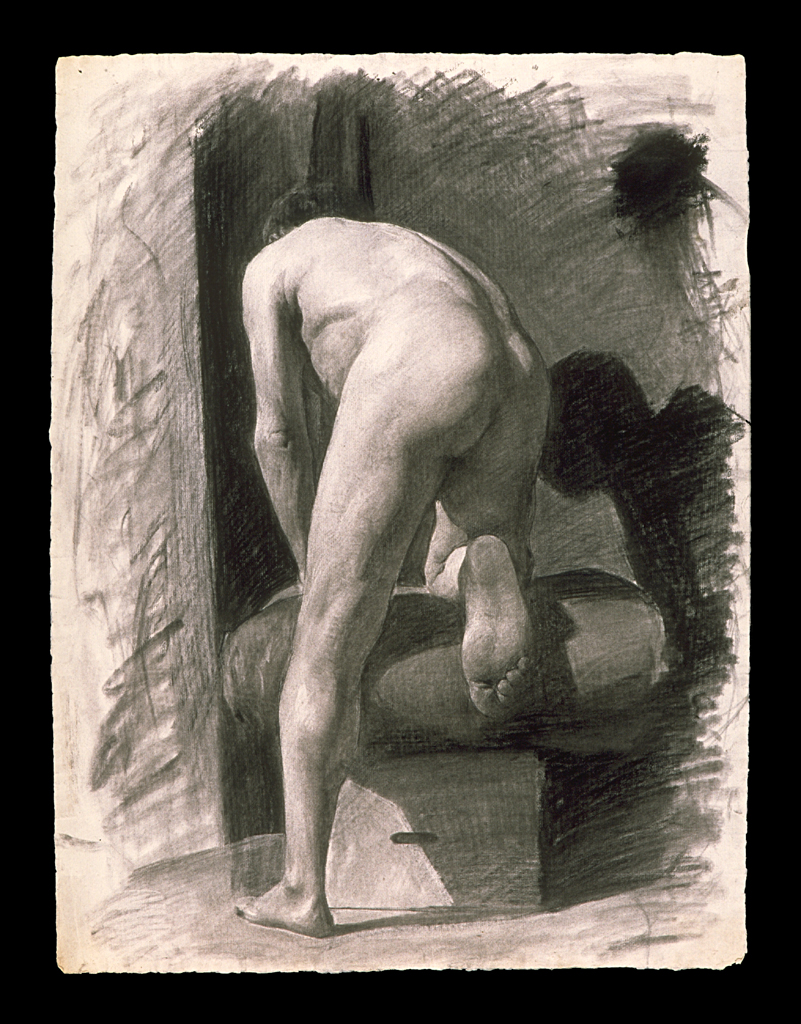
Anonymous (Spanish, c. 1890) Study of an Adult Male. Chalk on paper. La Facultad de Bellas Artes, Universidad Complutense, Madrid. Created as part of student exercises at the Spanish School in Rome.
Today, I was looking through a collection of nineteenth-century Spanish Academic drawings–which I will explore at greater length in my next post–when I decided to take a break and read today’s Financial Times. In its “Collecting” section, the newspaper features the work of two “prodigious young British artists who capture the fractured experience of comtemporary life.” The contrast between the two sets of artists, nineteenth-century Spanish students and young contemporary British artists, could not be greater.
In her article “The P-Word,” critic Jackie Wullschlager writes about the painting Strange Solutions by Katy Moran (British, 1975), saying: “Vestiges of landscape or portrait forms persist alluringly. I detected a thick, snowy avenue . . . which briefly reminded me of Monet, and a human figure is suggested in deft gestural outline at the heart of the rococo brushwork . . .”
If art is a medium of communication and the artist is the communicator, then we are either playing a very poor game of telephone with Moran or the artist hopes that, like Navajo codebreakers, critics will interpret what they mean. For her part, Wullschlager will not commit to any ideas or feelings inspired by the work; not even being sure as to whether or not the works are portraits or landscapes. Instead she says it “reminds” or “suggests” something. I could go on, but my point, unlike the artists’ intent, is clear: this does not communicate, it confuses.
By comparison, the skills being taught to the Spanish student who created the “Study of an Adult Male,” are steeped in a tradition of clear communication. The artist is learning the vocabulary of the human figure, its structure and its range of motion. As a result, this artist will be able to place the figure in a wide array of narratives.
Much has been written about nineteenth-century academic training. For the most part, Modern to Contemporary artists and art historians dismissed the Academy and its strict teaching as oppressive to creative abilities and limited in its ability to communicate. As a result, they regularly discuss the Academy as if it were Goliath and the Impressionsists were David. All who followed David’s example of opposing the Academy were numbered among the Chosen People and all others were, by comparison, Philistines. But, I ask, is this evident in the fruits of either philosophy? Which generation of young artist seems more limited in its ability to communicate?
As my father often says, “Art is personal.” Personally, I am more stimulated and provoked to deeper thought and feeling by clear communication than by vague suggestions.
Feriarte 2008: Visiting Spain’s Largest Annual Art Fair
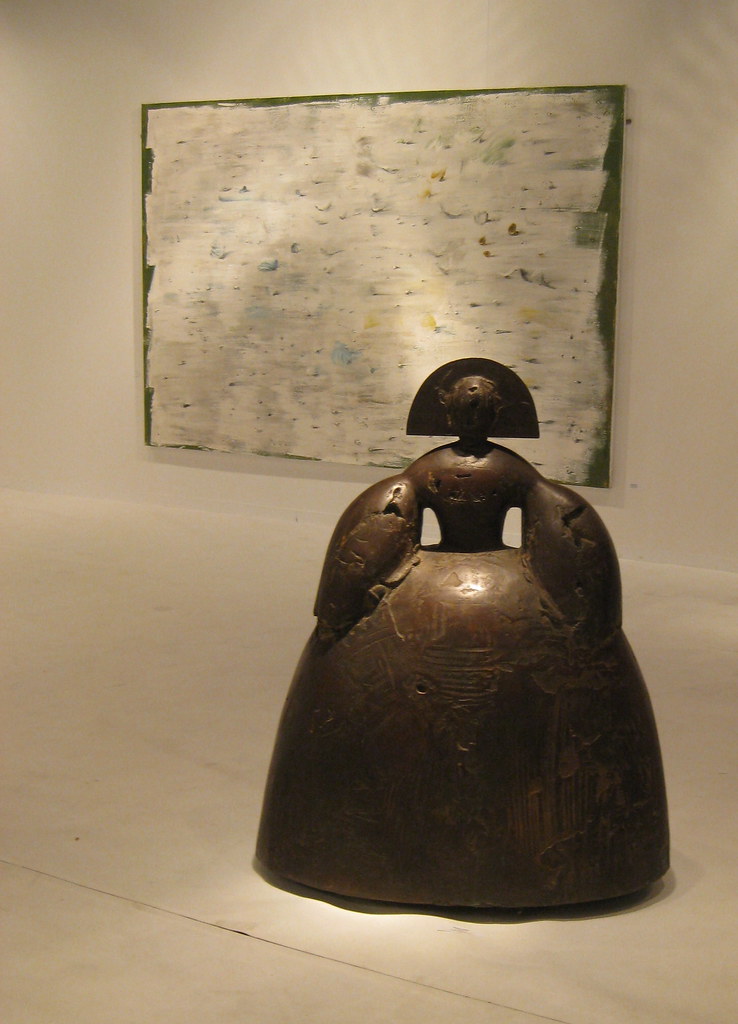
Manolo Valdés (Spanish, 1942) Infanta Margarita (2002) Bronze. 123 BY 100 BY 70 CM. Dealer: Francesc Llopis, Barcelona. In this work, Valdés quotes from a portrait of Infanta Margarit by the seventeenth-century Spanish painter Diego Velázquez.
According to Victor Bardia, Feriarte is Europe’s largest annual Fine & Decorative Art fair. Bardia is one of the event’s principal organizers. I met him and his son, David Bardia, at their gallery, Victor I Fills, during my last trip to Madrid. At that time, Bardia extended an invitation for me to return for the Fair. I’m grateful he did.
I’ve been to a number of fairs over the years and was skeptical Spain’s fair could be larger than others. If it was, I assumed, it must be of lesser quality. Having walked at a casual pace for three hours, I thought I had seen all there was only to pass through a door that revealed another space, filled with more exhibitors and larger than the last. In total, I spent nearly eight hours on my feet, talking with dealers and collectors. For the most part, I was impressed by the quality of pieces, which were at least comparable, and often superior, to those of other fairs like Olympia or BADA in London.
Each dealer I met, with the exception of one–a German gallery that specialized in Russian and German turn-of-the-century art–was based in Spain. The majority of exhibitors had galleries in Madrid, Barcelona or both. Works at the fair, which ran from November 15 to 23, were overwhelmingly Spanish, or from former Spanish territories (e.g. The Netherlands, Naples) with small but impressive selection of works by Italian artists. There was a surprising dearth of Latin American and other foreign works of art, perhaps reflecting a lack of foreign buyers at this year’s fair.
More than one dealer told me that compared to previous years, visitors were down by one half or two thirds. These are difficult times for art fairs and dealers. In other words, it was a buyers market. I was often surprised by low prices for objects and paintings that, less than a year ago, I had seen at much higher prices in the same galleries. For the occasion, dealers were bringing out their best pieces. The quantity of works was astounding–an art historian’s dream.

Pere Borrell del Caso (Italian, 1835-1910) Two Laughing Girls (1880) Oil on canvas. 69 BY 69CM. Dealer: Gothsland, Barcelona.
Two Laughing Girls by Borrell is a wonderful example of the kind of academic painting taught and practiced in late-nineteenth century Rome. Though Paris was undeniably the center of the art world a number of painters work and studied in the Eternal City.
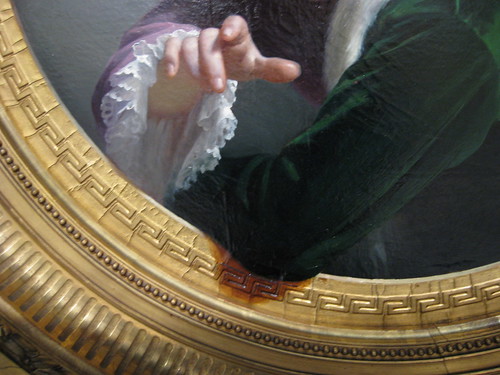
Pere Borrell del Caso (Italian, 1835-1910) Two Laughing Girls (1880) Oil on canvas. 69 BY 69CM. Dealer: Gothsland, Barcelona. DETAIL.
Borrell brilliantly draws the girls into our space by incorporating ornamentation from the neoclassical frame into the painting. The last two centimeters of the canvas are a combination of gesso and gold leaf over which he has painted one the two girls leaning her elbow on a Greek key patterned frieze. Seeing the piece, I wondered if Borrell had seen works by Dutch painters like Gerrit Dou, a contemporary of Rembrandt, who played similar visual tricks with his canvases.
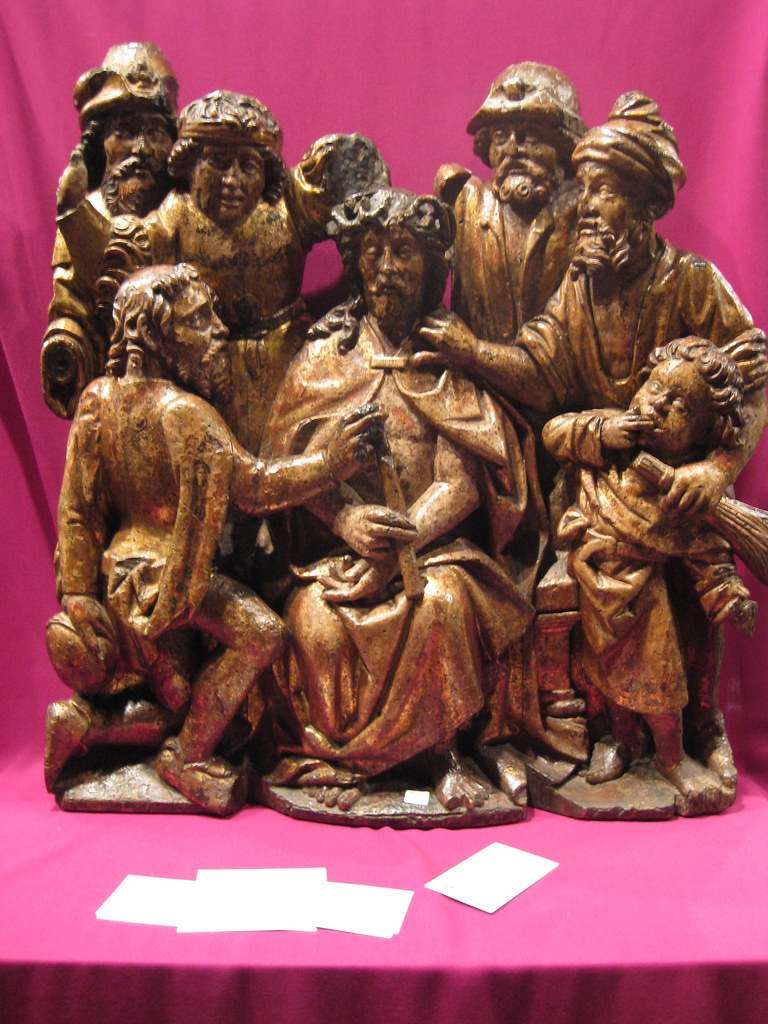
Christ crowned with thorns (Spanish, Sixteenth Century) Pine with gesso and gold. Dealer: Alcora Antiguedades, Madrid.
With so many religious works, at times the fair seemed like a destination for pilgrims. God, the Virgin, and Saints were everywhere, covered in gesso, gold and pastel-colored oil paints. A number of the exhibitor’s stall were set up as small houses of worship, with some even burning incense.
Spanish pieces like Christ crowned with thorns reflect skills brought the country by workmen from the Netherlands. Through the fifteenth and sixteenth centuries, The Netherlands were Spanish territory. A number of Netherlandish artists moved to Spain, infusing a northern realism–as opposed to classical idealism–into Spanish sculpture and painting.
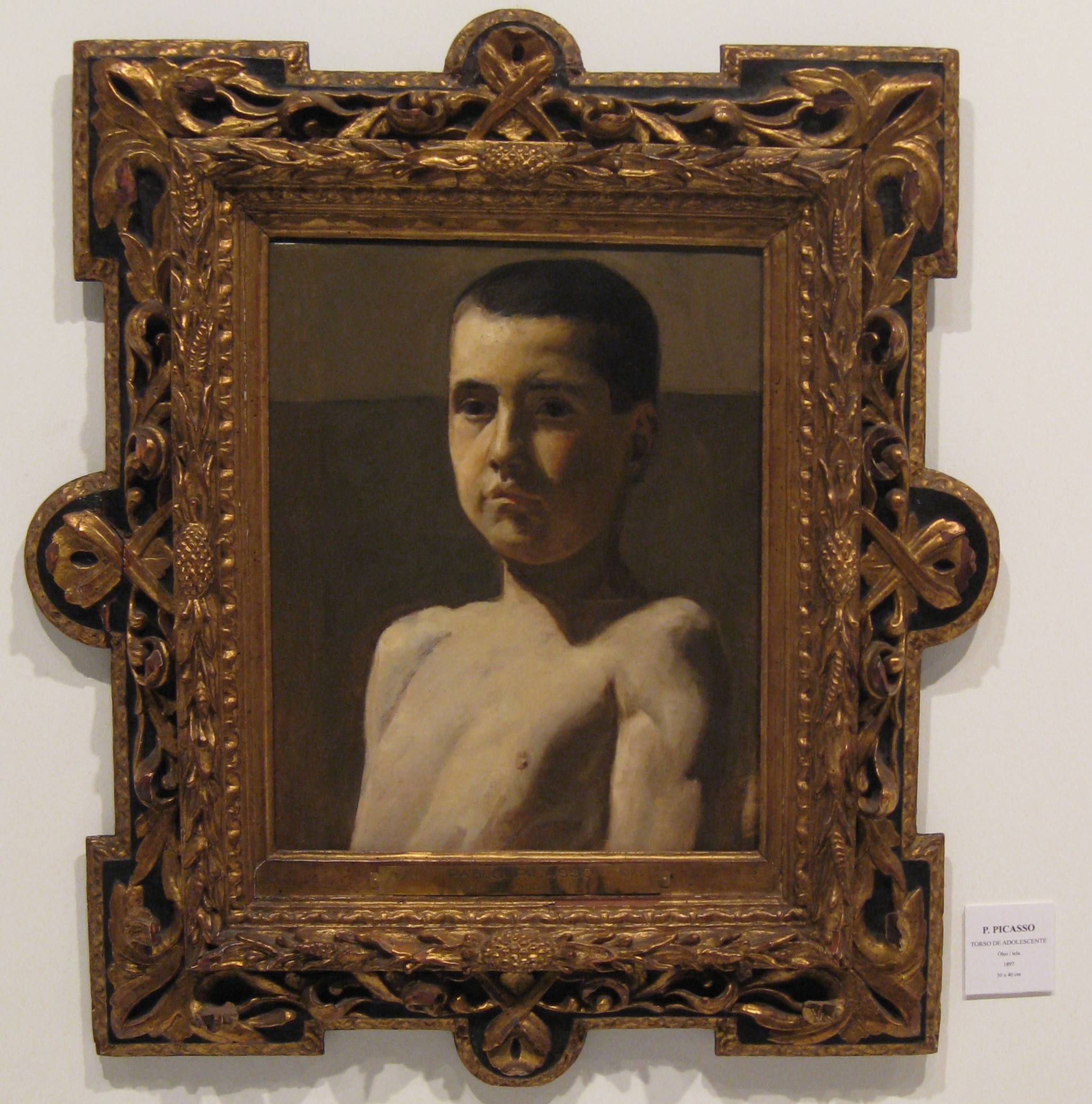
Pablo Picasso (Spanish, 1881-1973 ) Torso of a Young Man (1897) Oil on canvas. 50 BY 40CM. Dealer: Gomez Turu Gallery, Barcelona.
Having made his name in abstract painting and Cubism, some people are surprised to learn that Picasso was trained as an Academic painter. He studeid at the academy in Barcelona, where he produced a number of figure studies in charcoal and a few oil paintings. Some can be seen as the Picasso Museum, installed in his former home in Barcelona. His ability to accurately render the human figure, especially in chalk, is impressive.
I was surprised to see one of his academic oils available at the fair. The work is evidence of his early propensity towards breaking down objects into basic forms. The shadows in Torso of a Young Man are sharp, clearly delineating muscles and separating the figure from its background. To me, the head and the body appear to belong to different figures, which is, perhaps, a choice or, more likely, a reflection of his inexperience. (He was only sixteen when it was painted.)

A Roman Youth (Rome, First Century AD) White Marble.
Once overseen by Julius Caesar and the birthplace of the Emperor Hadrian, Spain was one of of Rome’s most important provinces. Besides the obvious inheritance of a Latin language, Spain retained a number of Roman works of art and architecture. A few Feriarte stalls were dedicated exclusively to ancient sculpture and architectural pieces (e.g. fountains, doorways).
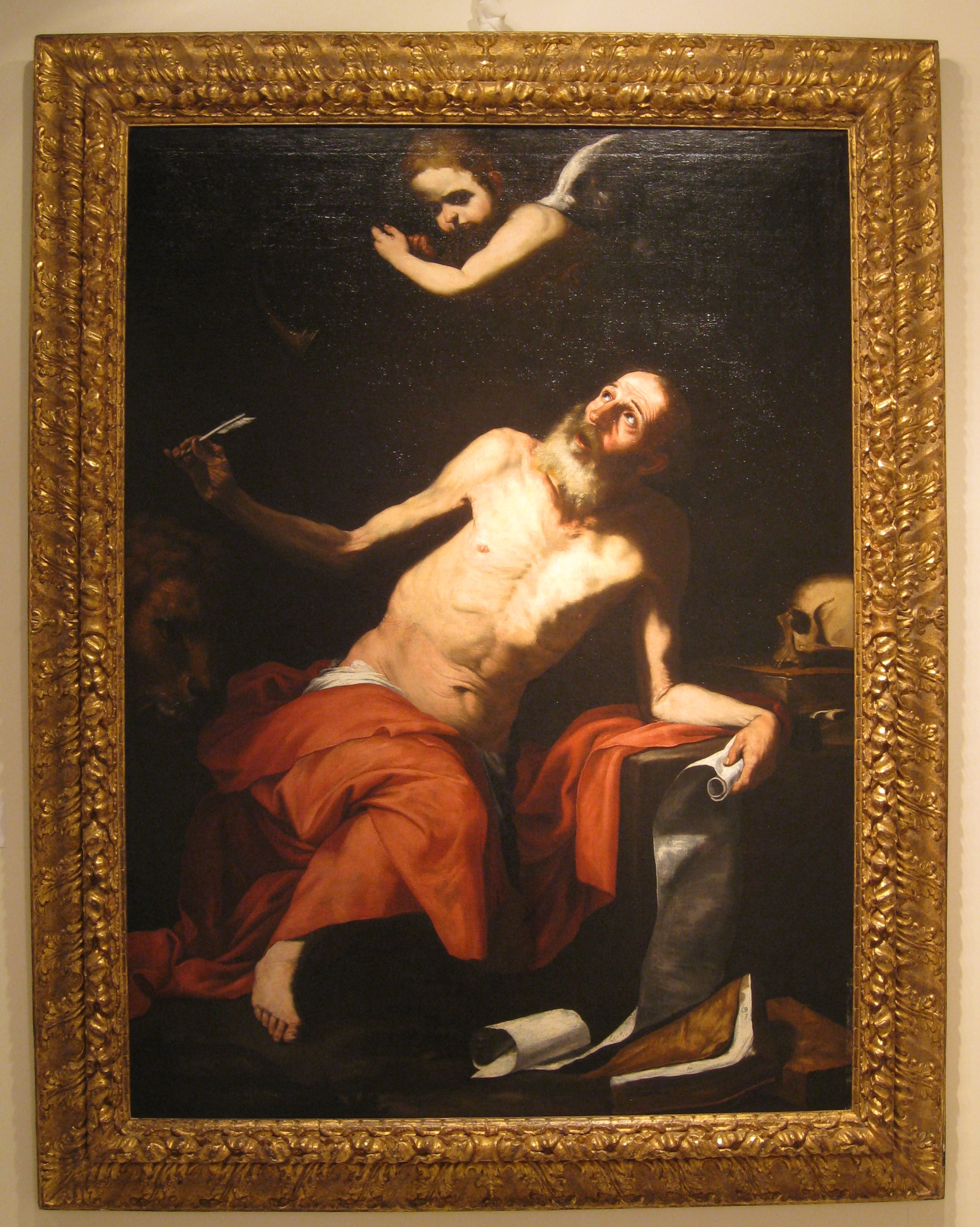
José de Ribera (Spanish, 1591-1656) Saint Jerome hearing the trumpet of the Final Judgement (c. 1630) Oil on canvas. 176.5 BY 129.5CM. Dealder: Artemisia, Madrid.
It’s not every day that a Ribera could be yours. Considered one of Spain’s greatest painters, Ribera’s oeuvre is represented in nearly every major European museum. Ribera was born in Valencia but moved to Naples, which was a Spanish territory at the time. Naples was home to a number of influence painters, such as Giordano and Caravaggio, who established a taste for religious paintings with earthy, realistic people.
Many of Ribera’s works are contemplative with figures deep in thought or asleep. In this, he has captured a fleeting moment, when the Saint receives his assurance of a place in heaven. Saint Jerome, a fifth-century compiler of the Bible, was a favorite subject of Ribera. (Maybe it would be more accurate to say Ribera’s patrons loved the way he painted Jerome, making it a regular request.) I’ve seen perhaps eight versions of Saint Jerome by the painter. I was particularly taken by the brilliant light in this one. The arrival of the angel above Jerome’s head brings light on the elderly man’s torso. Up close, his chest and belly are a soup of oily paint that, despite their fluidity, are convincincly skin like.
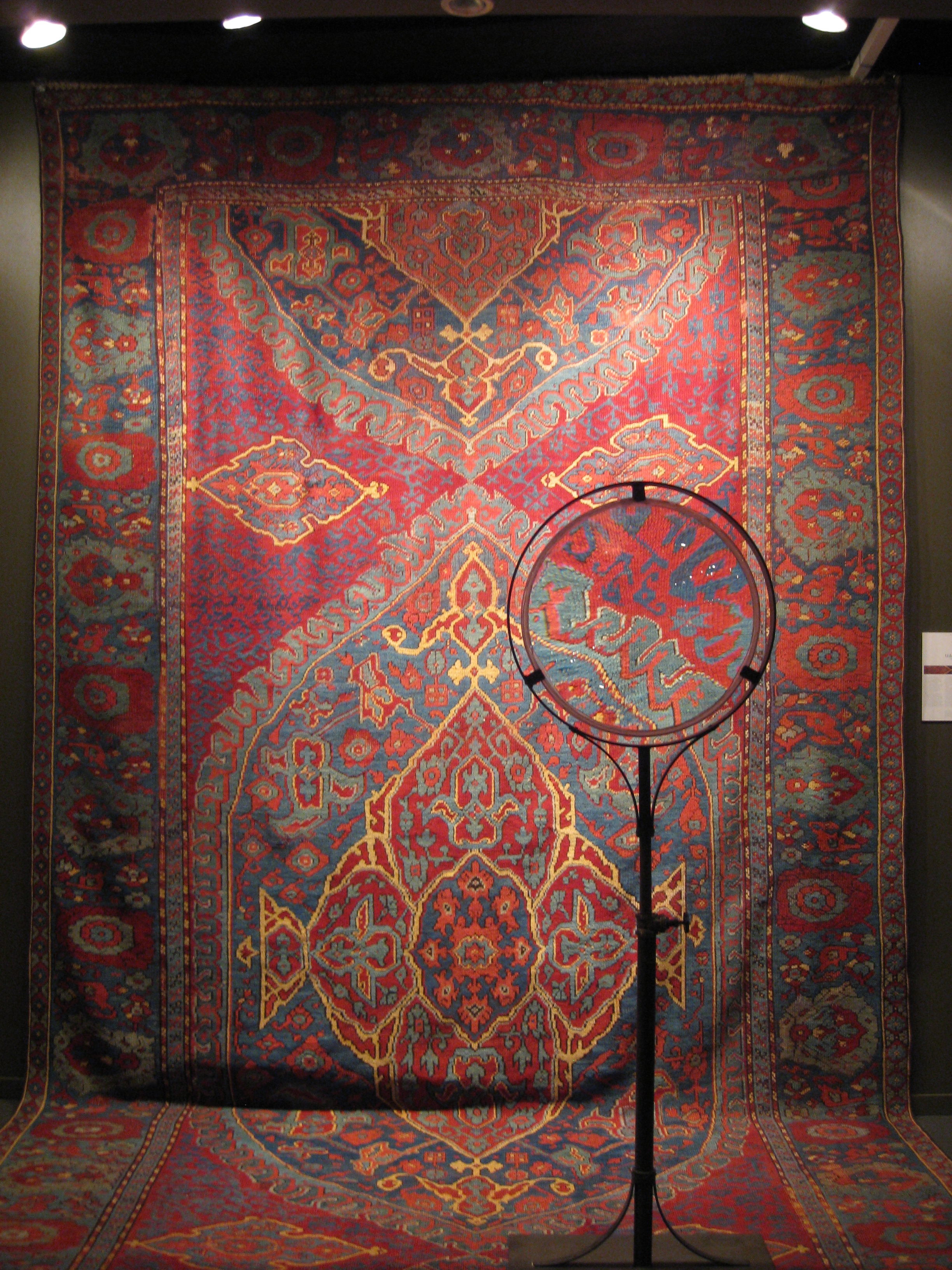
Rug (Turkish, Sixteenth Century) Dealer: Rica Basagoiti, Madrid.
Both this and the image from the previous post of a tree trunk in front of a rug were on display in the stall of Rica Basagoiti from Madrid. Once rugs were considered the most luxurious items in a collection. In the sixteenth and seventeenth centuries, the Spanish and Dutch put rugs like these on their tables, rather than on the ground. Walking on them would have been considered the height of conspicuous consumption.
The display of these rugs by Rica Basagoiti seemed to return these rugs to a level of prestige that was appropriate to their era. In the above image, a large magnifying glass is placed several feet from the rug, making the richly-preserved colors jump out at anyone passing by.
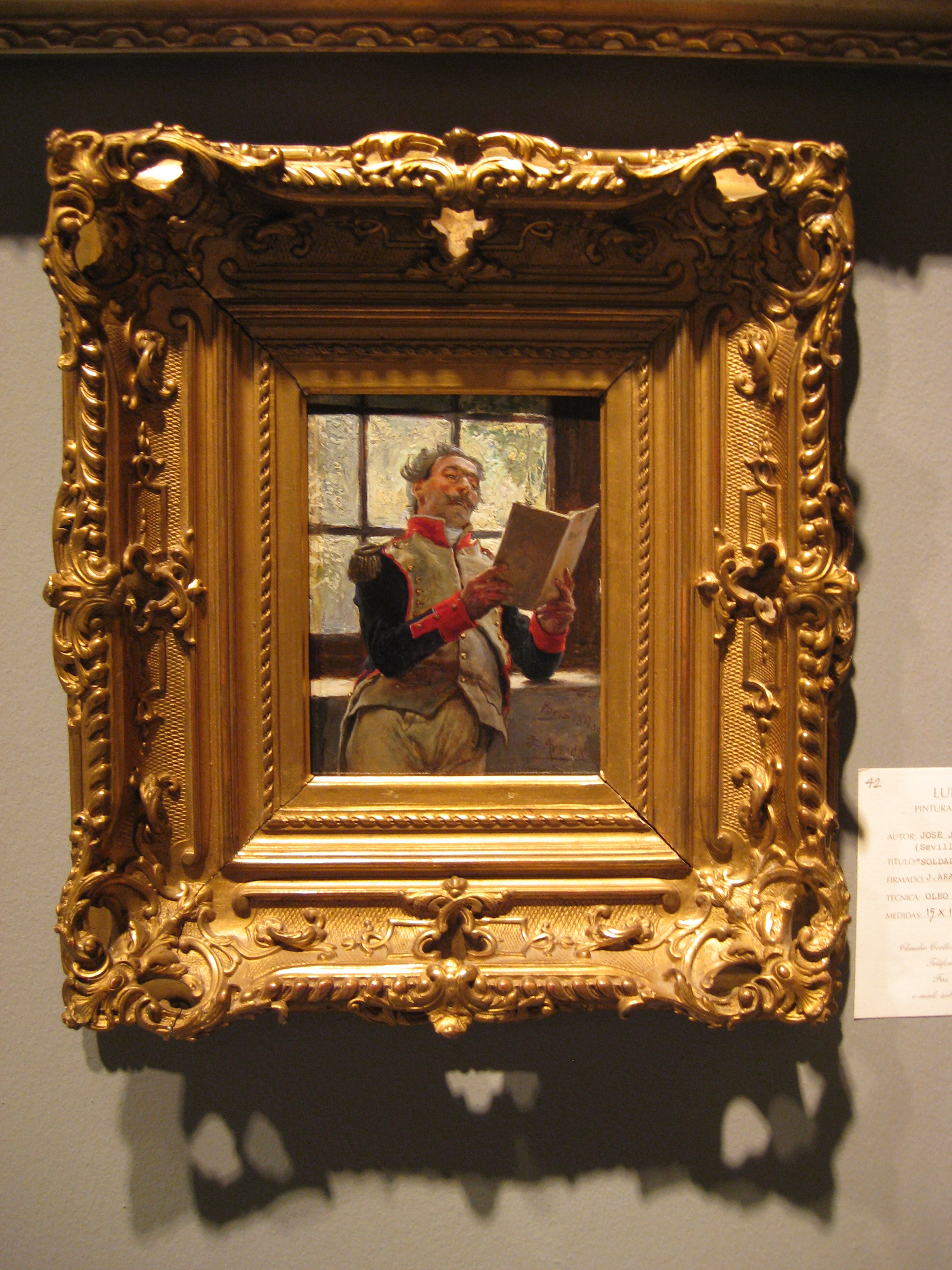
José Jiménez y Aranda (Spanish, 1845-1928) Legendary Soldier (Paris, 1890) Oil on canvas. 15 BY 12CM. Dealer: Luis Carvajal, Madrid.
Jiménez was a Spanish painter who had moved to Paris, where he regularly participated in the annual Salons–one of the few Spanish painters to do so. His work careful attention to detail and tendency to paint figures in period costume are reminiscent of the French painter Meissonier, who was popular in Paris at the time.
Though this is a small work, it shows off Jiménez’s arsenal of skils and powers of observation. The figure seems to be well relaxed and effortlessly painted, but close inpection reveals countless tiny strokes. The light coming through the window casts a series of complicated shadows. I found myself wondering how much easier it would have been to have the light coming from a different direction or having the window at his front rather than his back.

Ivory tankard (German, a. 1675) Ivory with silver fixtures. Dealer: FERMA, Madrid
By far, my favorite piece from the Fair was this German tankard, which stands nearly 25 centimeters in height. Made of several ivory sections seemlessly pieced together, it is a wonder of craftsmanship and artistry. Rather than discuss it at length, I believe a lengthy look at it provides a kind of refinement and appreciation beyond words. (Each image can be clicked for a much higher resolution image.)
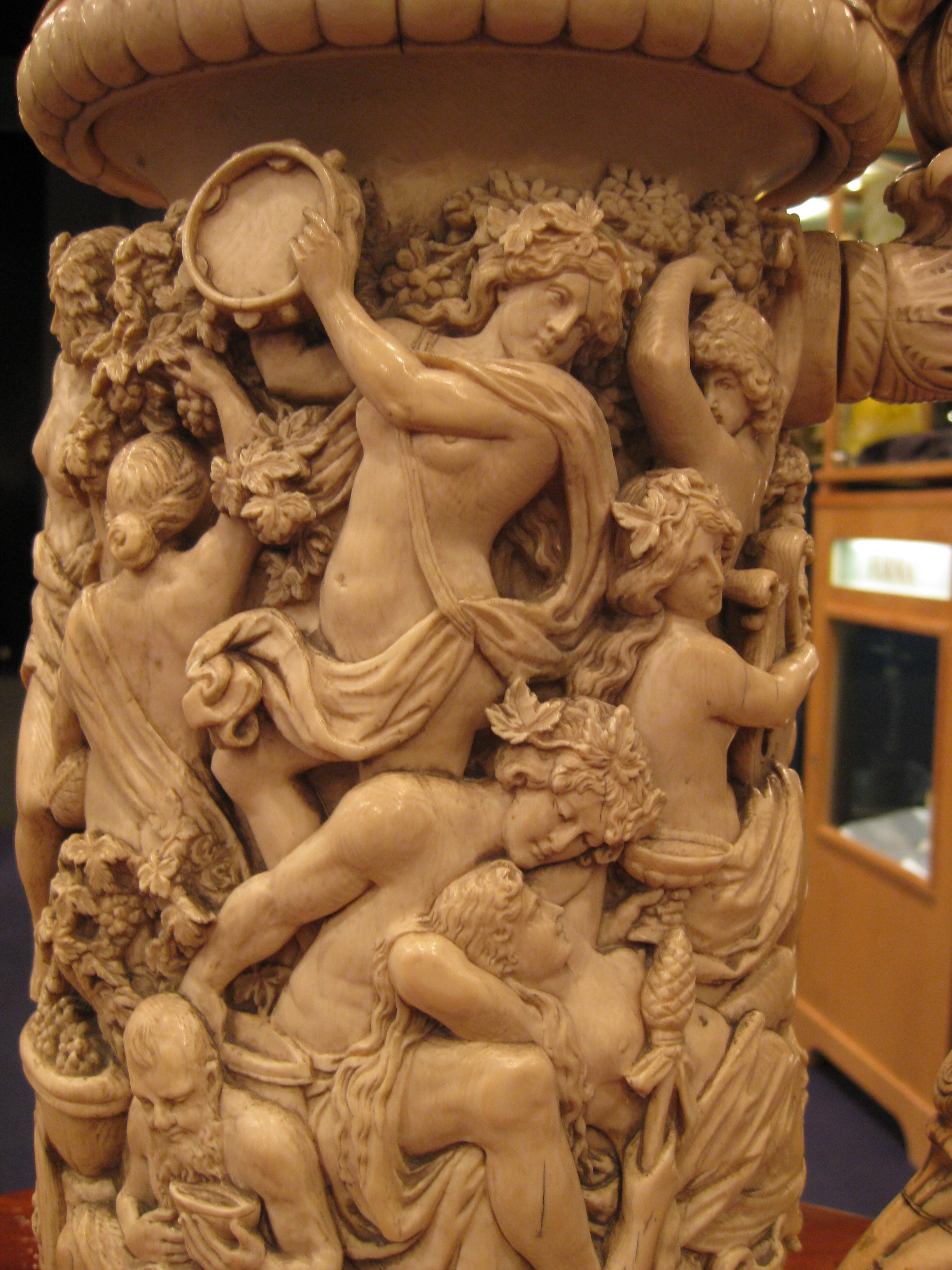
Ivory tankard (German, a. 1675) Ivory with silver fixtures. Dealer: FERMA, Madrid. DETAIL.

Ivory tankard (German, a. 1675) Ivory with silver fixtures. Dealer: FERMA, Madrid. DETAIL.
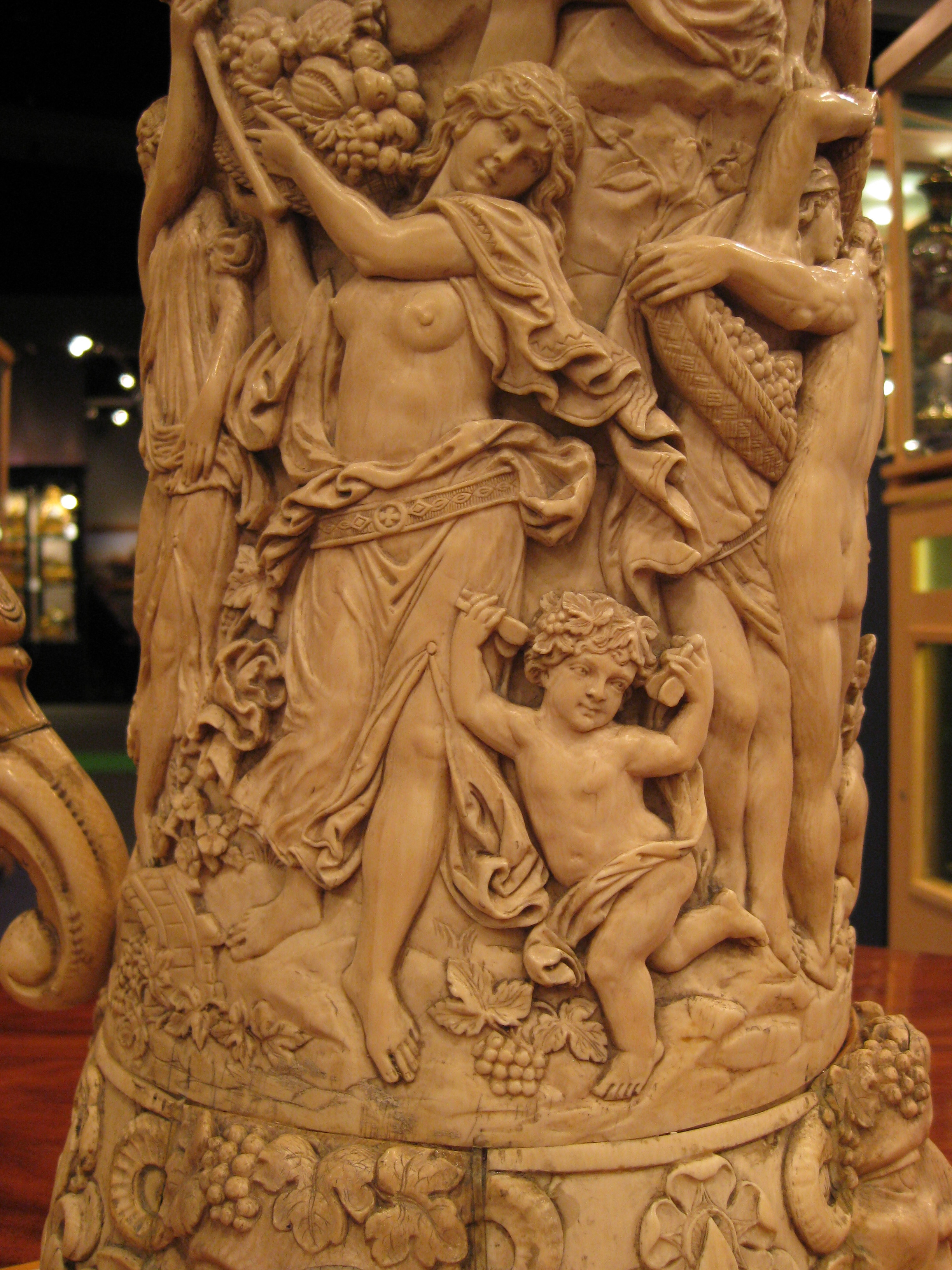
Ivory tankard (German, a. 1675) Ivory with silver fixtures. Dealer: FERMA, Madrid. DETAIL.
For more pictures of the tankard, and a number of other pieces that I saw at Feriarte, visit my Flickr page.
Bearded Roman in Madrid
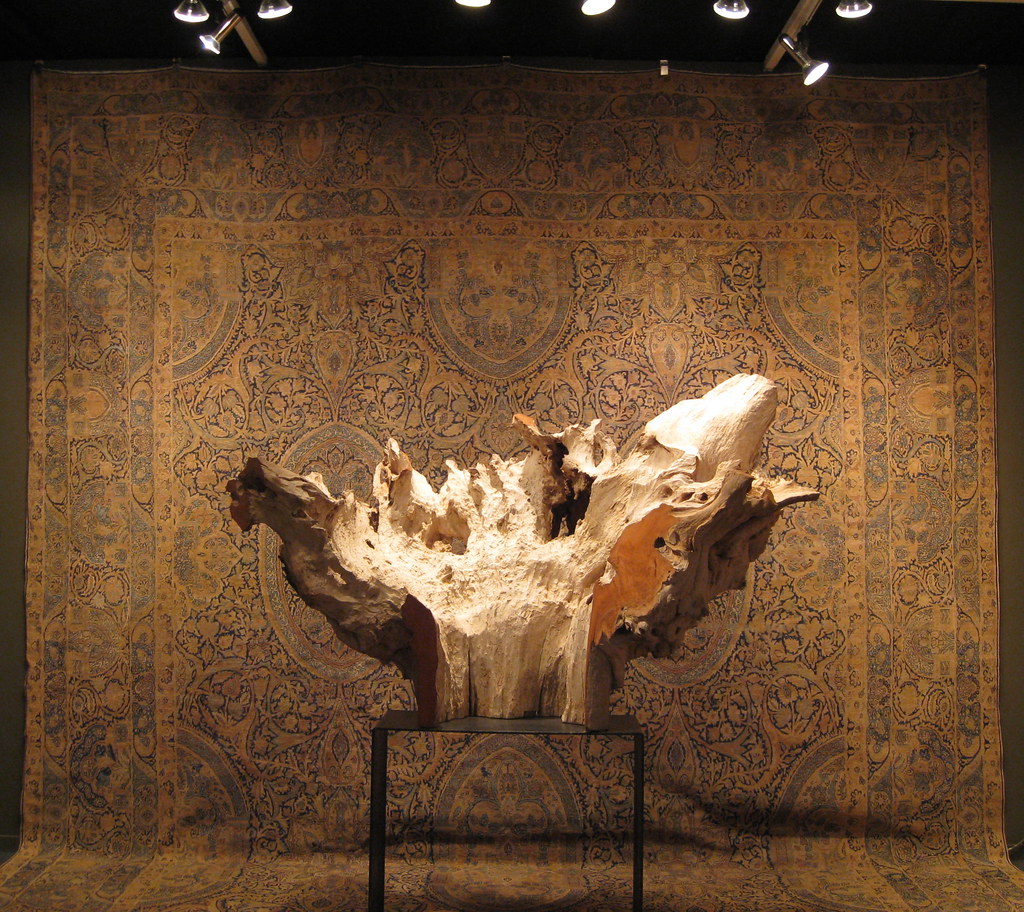
Photo of upturned tree trunk placed with 18th-century Persian rug. Seen at Feriarte Madrid
This week and next, I’m in Madrid, where a number of impressive exhibitions and fairs are taking place, including:
- The 32nd Annual Feriarte: One of Europe’s largest Fine & Decorative Art Fairs.
- Rembrandt, History Painter: An exhibition of painter’s narrative works the Prado Museum.
- Between Gods & Men: A rare look at two major ancient sculpture collections, from Dresden and Madrid, on show at the Prado Museum.
- Sorolla Museum in Madrid: My report on a visit to the home and private studio of the Valencian painter who befriended Zorn and Sargent.
- El Escorial: The country palace of Spain’s Hapsburg Royalty, which contains major works from their collection
All this coming over the next week in a series of posts.
Beauty Holding Back Time by Donato Barcaglia
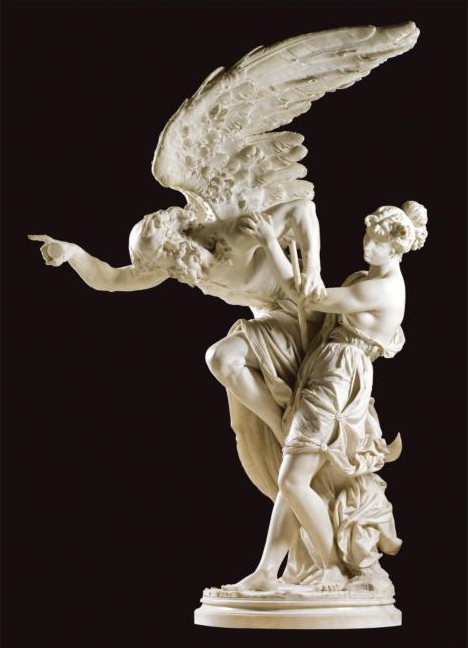
Donato Barcaglia (Italian, 1849-1930) La Giovanezza che Tenta di Arrestare il Tempo, or Beauty Holding Back Time. White marble. 89 BY 59IN.
Yesterday, I visited Sotheby’s in London to preview its nineteenth-century painting auction. Before I could get to the paintings, I was stopped and dumbstruck by La Giovanezza che Tenta di Arrestare il Tempo, or Beauty Holding Back Time, by Donato Barcaglia (Italian 1849-1930).
Barcaglia created the work when he was only 27. It was his “coming out” or graduate work, made at the end of his studies and, therefore, meant to showcase the accumulated skills of his years in the Roman Academy. An instant popular and critical success, Beauty Holding Back Time travelled to Florence, Philadelphia, and Milan before being collected by Michael Alexander Wilsone Swinfen Broun (1858-1948), a Colonel in the British Army, and taken to England.
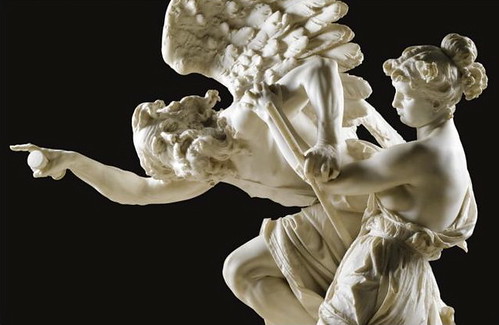
The breadth and depth of Barcaglia’s artistic arsenal, especially at such a young age, is impressive. He exhibits command the material by conveying a large variety of textures (e.g. young skin, old skin, clothing, feathers, hair, wood, metal) and making it appear to defy gravity. As was common for Academic painters and sculptors from the period, Barcaglia mixes his understanding of the ideal, or antique, human form in his depiction of Youth, with Naturalism, as seen in the wings of Father Time.
According to a sculpture dealer in London I know, Beauty Holding Back Time is the most important nineteenth-century statue to reach the market in nearly 25 years. It is estimated at only £150,000 to £200,000. I write “only” because, if it were a painting of similar importance by Gerome or Bouguereau from the same period, it would be estimated at well over £1 million.