Posts By Micah Christensen
The Paris Salon or “Exhibition of Living Artists”

Francois Joseph Heim (French, 1787-1865) Charles X Distributing Awards to Artists Exhibiting at the Salon of 1824 at the Louvre (1827) MuseÌe du Louvre, Paris
In his book, The Judgment of Paris, Ross King compares Salon attendance to today’s most visited museum exhibitions:
[The Salon was] one of the greatest spectacles in Europe, it was an even more popular attraction, in terms of the crowds it drew, than public executions. Opening to the public in the first week of May and running for some six weeks, it featured thousands of works of art specially—and sometimes controversially—chosen by a Selection Committee. Admission on most afternoons was only a franc, which placed it within easy reach of virtually every Parisian, considering the wage of the lowest-paid workers, such as milliners and washerwomen, averaged three to four francs a day. Those unwilling or unable to pay could visit on Sundays, when admission was free and the Palais des Chaps-Élysées thronged with as many as 50,000 visitors—five times the number that had gathered in 1857 to watch the blade of guillotine descend on the neck of a priest names Verger who had murdered the Archbishop of Paris. In some years, as Many as a million people visited the Salon during its six-week run, meaning crowds averaged more than 23,000 people a day*
*To put these figures into context, the most well-attended art exhibition in the year 2003 was Leonardo da Vinci: Master Draftsman, at the Metropolitan Museum of Art in New York. Over the course of a nine-week run, the show drew and average of 6,863 visitors each day, with an overall total of 401,004. El Greco, likewise at the Metropolitan Museum of Art, averaged 6,807 per day during its three-month run in 2003-4, ultimately attracting 574,381 visitors. The top-ranked schibition of 2002, Van Gogh and Gaugin, at the Van Gogh Museum in Amsterdam, drew 6,719 perday for four months, with a final attendance of 739,117.
(Ross King. The Judgment of Paris. New York: Walker and Company, 2006. p. 17)
Comparing the Paris Salon to modern-day museum exhibitions is probably unfair. In the nineteenth century–before the advent of photography, radio, and movie theaters–painting was truly the most public art form. A more appropriate comparison would mostly likely be comparing Salon attendance to movie ticket sales. (How about comparing Ernest Meissonier’s painting Friedeland, the painting sold for the highest price in the nineteenth century and a Salon blockbuster, with Batman Begins?)

Ernest Meissonier (French, 1815-1891) 1807, Friedland (c. 1861-1875), Metropolitan Museum of Art, New York
If that is true, it would also be appropriate to consider the Paris Salons as some of the most culturally significant and telling events of the nineteenth century. Recently, while undertaking a research question, I was surprised to learn that there is little published about the Salon as an intitution previous to or after the Salon de Refusées in 1863.
The Rubens That Loved Me: My James Bond Adventure with an Old Masters Painting
Note: To protect privacy, the names used in this story have been changed.
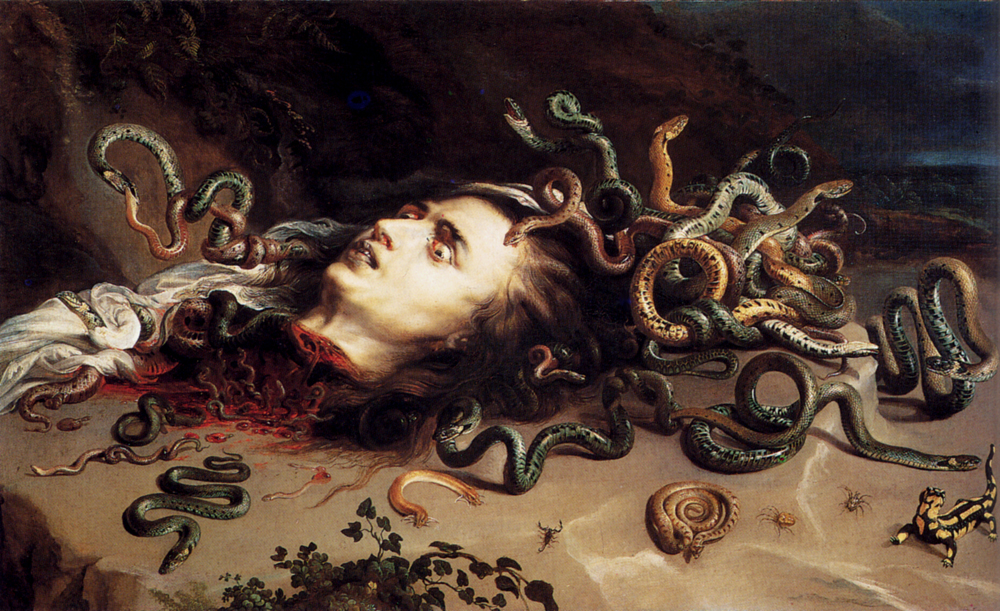
Peter Paul Rubens (Flemish, 1577-1640). Head of Medusa (c. 1617) Oil on canvas.
What started as a simple trip to Madrid to do research became a story worthy of Ian Flemming. Ferraris, international real-estate deals, London, Madrid, and world-renown Old Masters art dealers combined in a week-long painting adventure.
Recently, I flew to Spain on a research project. Getting off the plane at the Madrid, Bajaras airport, I was approached by a distinguished Englishman, John Jacobs. He was on his way to a business meeting near the Prado Museum and had overheard me talking to someone in Spanish–Jacobs didn’t speak the language.
“Would I mind sharing a taxi?” he asked, “I could use the help and it would save us both money.” My hotel was near the Prado. So, Jacobs and I got in the cab and got to know one another.
The ride was about thirty minutes. I learned that Jacobs was a consultant for a large British real-estate company working on a multi-billion-dollar deal that involved a group of Spanish investors. We didn’t go into much detail about either of our careers. Stepping out the cab, he asked for my card, and I went on to my hotel without much thought about it; that is, until I got a call from Jacobs the next day.
“I met today with a very wealthy Spanish businessman. When I told him that I shared a taxi with an art historian, he wanted your number. Apparently, he has a Rubens painting and wants you to sell it,” was Jacob’s message.
A businessman from Madrid with a Rubens? I’m curious.
(As an art historian, I am approached regularly about paintings inherited from grandparents and found a yard sales. It is highly unlikely that any of these turn out to be masterworks or, even, a minor work of any worthwhile value. But, the possibility, no matter how minute, that someone in Arkansas has purchased a Titian from a Church charity sale makes every art dealer and historian want to at least take a look.)
On day three in Madrid, I get a call from Marcelo, the businessman with the Rubens. He asks to meet me at the Ritz Hotel in a few hours, where I could see an image and documentation of the Rubens painting. Rather than making me less suspicious, the idea of meeting at the Ritz seemed like an attempt to impress beyond a more disappointing reality. At least, that is what I thought before Marcelo stepped out of his Ferrari to shake my hand. (The likelihood that he rented a Ferrari in the few hours between the call and the Ritz, in an effort to impress me, was slim.) Having a Rubens now seemed credible.

Peter Paul Rubens (Flemish, 1577-1640). The Holy Family with Saint Anne (c. 1628) Oil on canvas. (This is not the painting I was shown. For legal reasons, I am unable to show an image of the piece discussed in this post.)
He showed me the image of a Rubens modello (i.e. preparatory oil sketch) for an important altarpiece located in Northern Italy, along with a certificate of authentication from an art historian in Beverly Hills, California. “The painting is not actually mine,” Marcelo explained, “I have a client that is doing a major real estate deal. He needs more cash and would like to sell the painting. He is not a painting expert, and neither am I.”
In other words, there are several degrees of separation and supposed ignorance that made the situation seem simultaneously less credible and more credible. (Almost all Old Master paintings have a long history, but beware of complicated histories of ownership that include anyone that is cash poor, let alone a businessman from Texas.)
Peter Paul Rubens was one of the most prolific of the Old Master painters. Born in Antwerp, his formative training took place in Italy, where for several years he copied Renaissance painting and ancient statuary. Before returning to Antwerp, Rubens painted a number of altarpieces and other religious works. His working method included submitting a small sketch (modello, which literally means “model”) of the intended painting to a patron for approval. Having received approval, he would use the modello as a map for the much larger, final work.
Marcelo’s client wanted the modello sold in London to a dealer, but not an auction house–more alarm bells. And, Marcello planned to be in town to see Wimbeldon. “Could we meet with some dealers before or after one of the matches?” he asked.
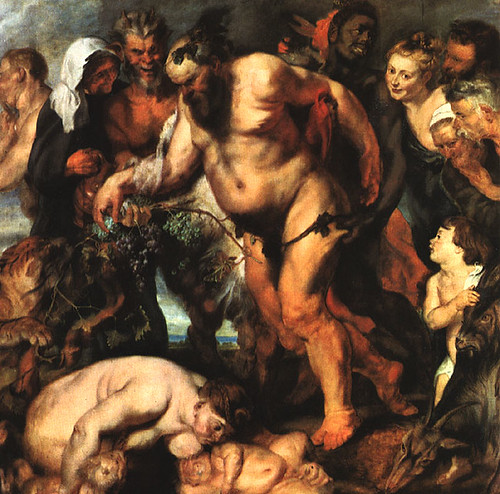
Peter Paul Rubens (Flemish, 1577-1640). Drunken Silenus (1618) Oil on canvas.
Arriving in London a few days before Marcelo, I took a photograph of the painting, along with certifying documents and met with two of the worlds foremost dealers in Old Masters paintings. (Though I will not mention their names, each has a gallery in St. James’s Place in Westminster.)
These dealers are Olympians of the art world, with the ability to look at a painting and, within moments, place it in time and space together with its likelihood of authenticity. The first dealer looked at the photo for about 30 seconds, looked up at me and said: “Rubens didn’t paint hands like that,” and “the cherubs surrounding the Virgin look too thin to be by Rubens.” His final judgments was it was authentically from the period, but more likely from a follower of Rubens.
The second dealer had sold a similar Rubens painting a few days earlier to the Getty Museum in California. He remarked on the hands of the modello too and said the overall composition “lacked a cohesive Rubens approach” with the figures being too separated in action from one another.
I called my Ferrari-driving friend from Spain telling him the news: It’s not a paintings by Rubens. He brushed off the bad news and invited me to Wimbledon.
—
In sharing my experience with a long-time art dealer from the United States, he said that my story was familiar. Apparently, there has been a long practice of trying to sell supposed Old Master paintings to less-than-public buyers who are more likely to be ignorant of dubious works.
In my case, I was able to avoid being caught up in the a potentially huge mistake by taking the painting to two experts. It was a good lesson that, thank heavens, did not come with a price.
The best advice I got came from the second of the two dealers: “Don’t trust certified documents from art historian in Beverly Hills.”
Manet versus Bouguereau: The 100 Year Prediction
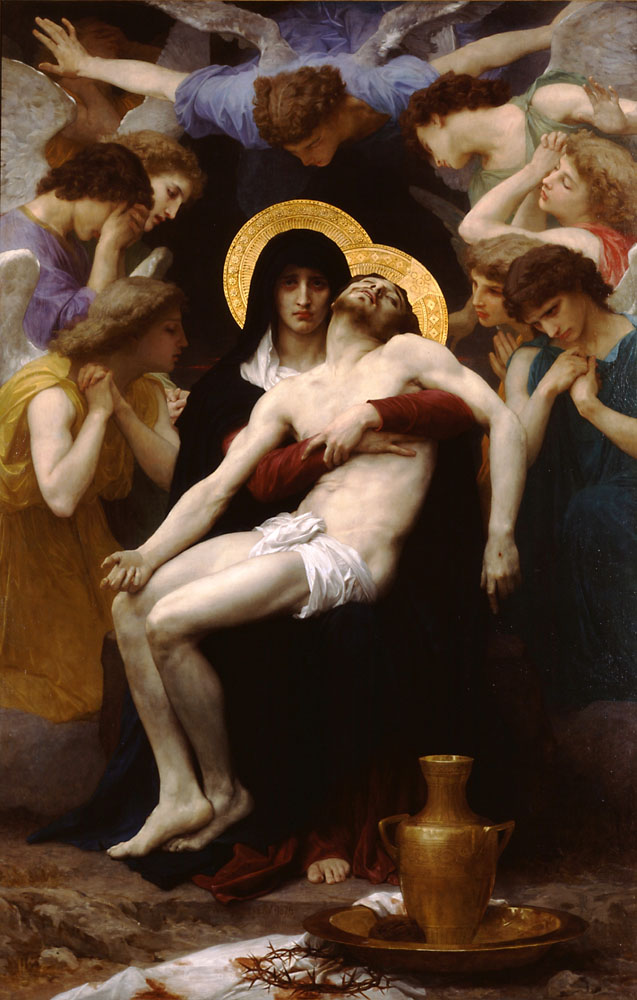
William Adolph Bouguereau. Pieta (1876) Oil on canvas. 230 BY 148CM. Dallas Museum of Fine Arts, Dallas, Texas
At the 1878 Universal Exposition in Paris, Edouard Manet was asked which of all the painters then living would be best remembered in 100 years. His answer: William Adolph Bouguereau.
Manet (1832-1883) and Bougeureau (1825-1905) represented two polar movements in painting. Manet, regularly controversial in his work, had been the leader of the Impressionist movement and Bougeureau was the darling of the Academic tradition supported by the Ecole des Beaux-Arts in Paris.
Thanks to Google Trends and Amazon.com, it is possible to get some indication of whether or not Manet’s prediction, at least in comparison to his own work, has come true.
Over the past few years, Google has been tracking the number of searches done specific keywords. Because Manet and Bouguereau have unique names, it is fairly easy to narrow down searches relating to them as opposed to other painters (e.g. Ingres is the names of the painter and a Fortune 500 company.)
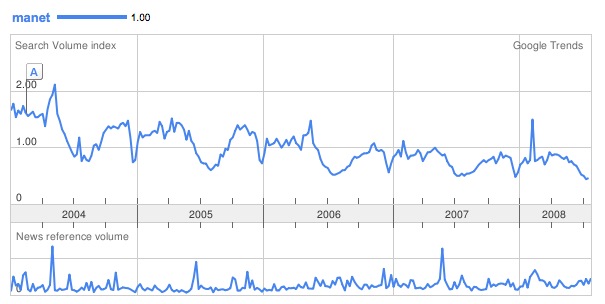
Google Trends of Manet searches from 2004 to 2008.
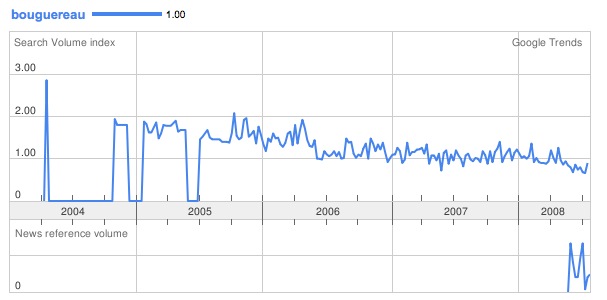
Google Trends of Bouguereau searches from 2004 to 2008.
At the time of this post, a standard search on Google.com produces 4,870,000 results for Manet and 1,140,000 for Bouguereau. An Amazon.com search produces 12,721 books for Manet and 1,071 for Bouguereau.
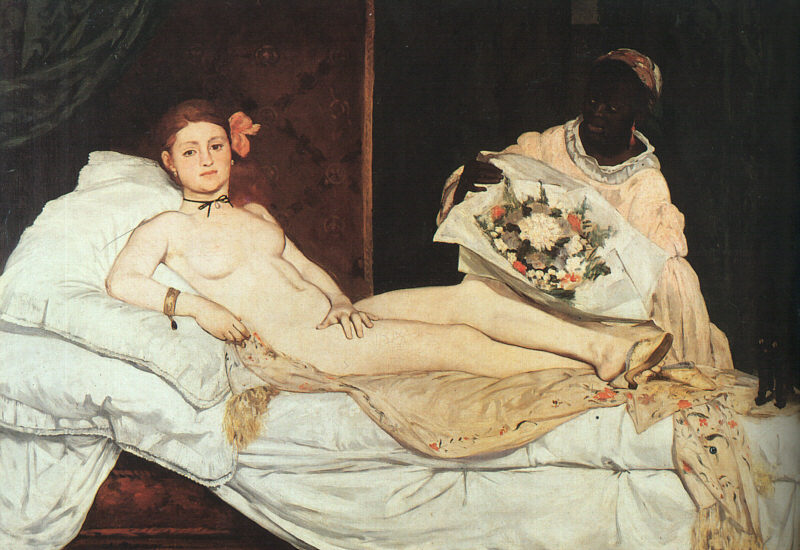
The comparison of these two artists and their popularity through these methods is hardly comprehensive. But, it is one indication that Manet is more popular than he is prophetic.
Maybe he was misquoted and meant 200 years. I’ll follow up with another post then.
“Warsaw Street Types” by Józef Rapacki (1871-1929)
Via BibliOdyssey is a series of drawings by the Polish painter and illustrator Józef Rapacki.
Józef Rapacki (Polish, 1871-1929). From the book:Z dawnej i niedawnej Warszawy. Lithograph
Rapacki was born in Warsaw, Poland and trained in Munich, Germany. In the late-nineteenth century, many Eastern European painters, including Muckansy and Mucha, used academic schooling in Germany as a gateway to the rest of Europe.
Józef Rapacki (Polish, 1871-1929). From the book:Z dawnej i niedawnej Warszawy. Lithograph
In addition to Germany, Rapacki traveled through Italy. Very little is printed in English or Polish about his life and work, though his paintings and drawings occasionally surface at international auction houses.
Though little is known, it is obvious that Rapacki has a solid grasp on anatomy and proportion. He has moved beyond the basic studies of academic training and is combining classical understanding of form with direct observation from nature.
Józef Rapacki (Polish, 1871-1929). From the book:Z dawnej i niedawnej Warszawy. Lithograph
This series of lithographs depicts street figures observed by Rapacki in Warsaw. These and more works by him are published online at the Polish National Library’s website.
Overheard in London: The Three Pillars of English (and Painting)
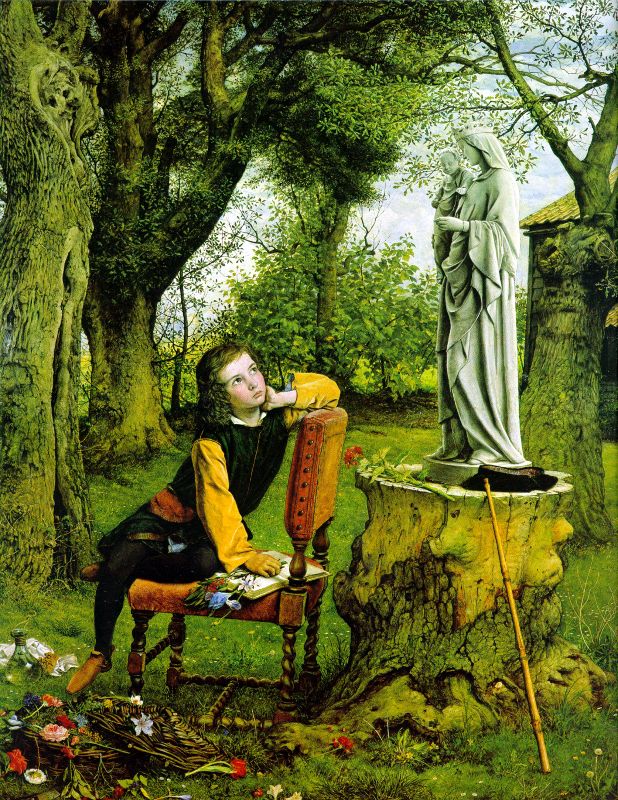
Eating in a London café can put you shoulder to shoulder with fascinating strangers. A few weeks ago, I was eating at an Italian restaurant in South Kensington, around the corner from the Victorian & Albert Museum. I overheard a conversation between a museum curator and a Russian journalist about the English language. The ideas they shared could have application for those who are interested in maintaining a classical painting tradition.
The curator must have been in his early sixties and had the kind of impeccable British accent that indicates a certain education. He was being interviewed by a journalist with a thick Russian accent, who was doing a feature on the Victoria & Albert Museum. Throughout their conversation, it was obvious that the journalist’s–a twenty-something woman–grasp of English left her struggling with many of the difficult words he was using. (They would have been difficult for many native English speakers.) Her frequent pauses for clarification took them from the topic of the interview to a discussion on the English language. The curator launched into what sounded like a well-rehearsed and delightful lecture on the “three pillars of English.”
“Words,” he said, “should be treated like endangered species.” He continued:
Whenever I find a word that has fallen out of favor, I write it down and make a conscious effort to use it and, then, reintroduce it as best I can. Such efforts, though minimal, are not insignificant. They breathe life into a dying language
“Dying language?” the journalist asked, “Isn’t English more dominant than ever?
This is when his thoughts lifted off the ground. He explained his theory:
English is based on three pillars:
- The Classics in Greek and Latin;
- The Annotated Version of the Bible [King James Version] ;
- And, Shakespeare
Once we loose an understanding of these three things, the language founded on them will die.
He went on to explain that no one learns Greek and Latin anymore, let alone the English translations of the books they once read in Greek in Latin, except for cursory school assignments at a young age. He lamented the loss of religion, and said that it seems that only a small number of enthusiasts are interested in Shakespeare today.
It was a cynical view of English and, after having talked with a linguist friend of mine, a view of language that is not widely shared by linguists. However, I don’t think it can be dismissed, and it seems to have application for a more than just language.
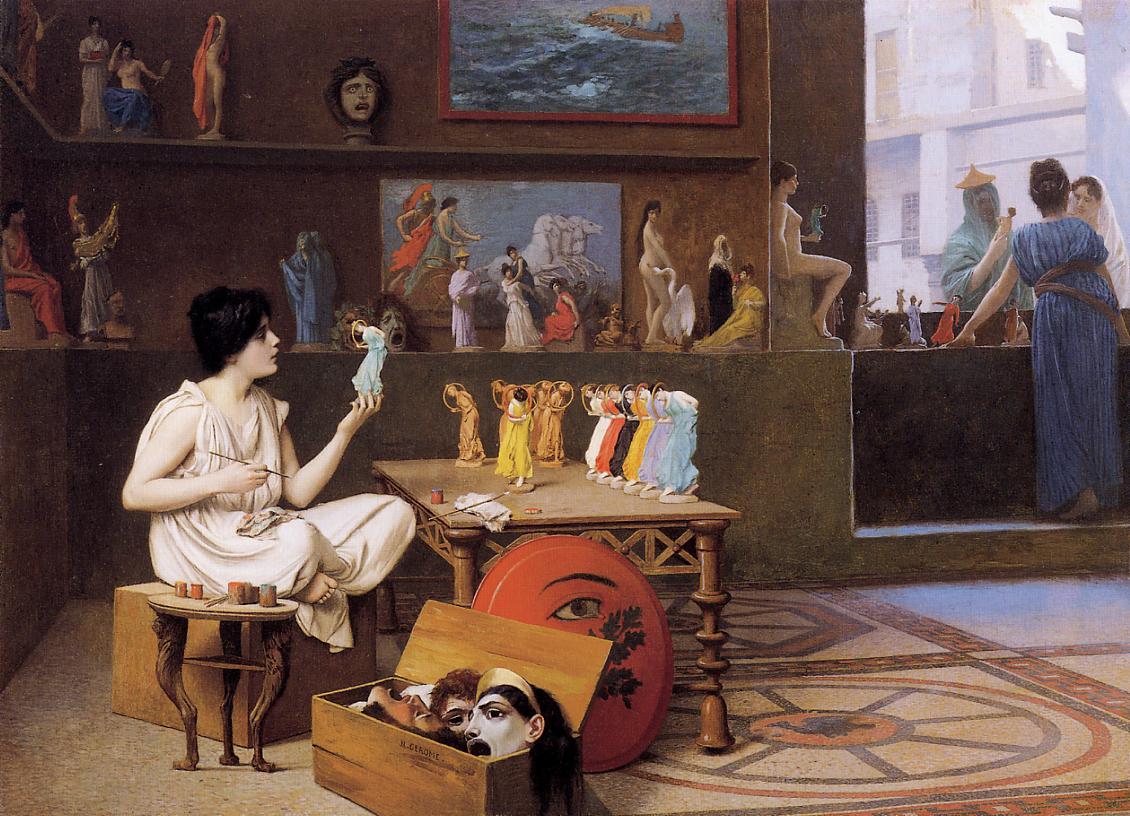
There is a rising generation of artists who are attempting to reinstate Academic painting, last practiced in earnest in the nineteenth century and most notably taught in the French Ecole des Beaux-Arts, the English Royal Academy, and the Spanish Escuela de Bellas Artes de San Fernando. These schools, for the most part, followed the same model which was based on similar pillars as mentioned by the curator.
I am in the process of researching the Spanish Academy in Rome, where the best-of-the-best of the rising generation of Spanish artists were sent for their final training between 1873 and 1913. Artists were sent to Rome by the government for three years. During the first year, they were required to copy an Old Master painting or Greek or Roman sculpture. For the second year, they studied the human figure. The third and final year was meant to combine all their skills in the production of a large history painting with its narrative drawn from religious or classical texts. The paintings would be sent to international competitions and, eventually, purchased by the State for the beautifying of public spaces.
These values in their education have a great deal in common with the curator’s three pillars and can be summarized as:
- Understanding of the Classics in the form of Greek and Roman statuary and architecture, based on ideal proportions, combined with studying Old Master paintings (e.g. Raphael, Titian)
- Narratives, provided by the Bible or classical texts, which provided widely shared, commonly understood and richly interpreted views of human nature.
- Observation of Nature
All three of these have been present in painting since the Renaissance. Should anyone continue to reinstate the technique of artists in the tradition, in my opinion they must also have a grasp of these foundational pillars; or, at least, a strong substitute.
Forgotten Master: Francisco Pradilla y Ortiz (1848-1921)
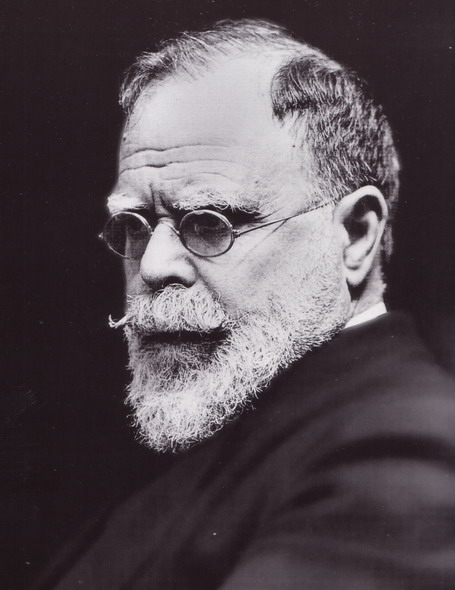
Francisco Pradilla y Ortiz. Photograph of the Painter (a. 1910)
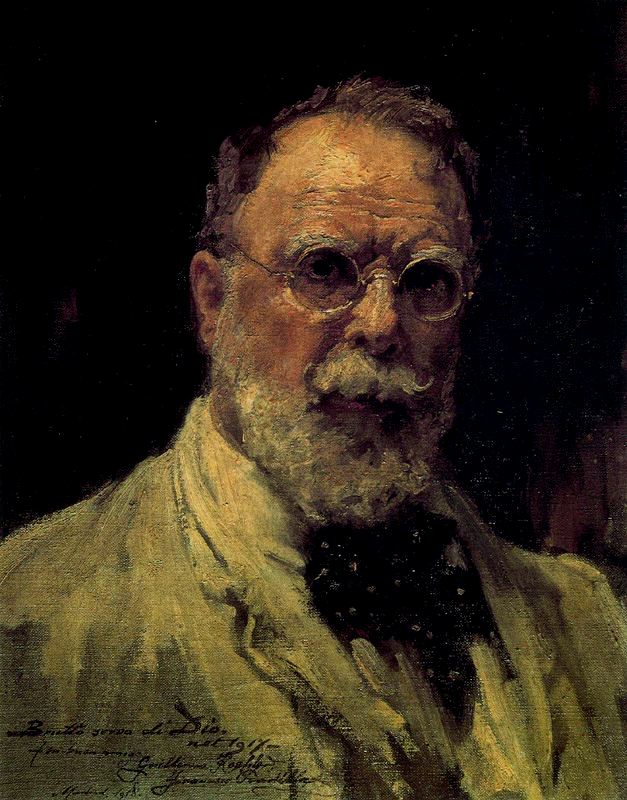
Francisco Pradilla y Ortiz. Self-Portrait (1917). Oil on canvas. 4.5 BY 35.5CM. Madrid, Prado Museum.
Pradilla was heavily influenced by Velázquez, Titian, El Greco and Ribera, all of whom are well represented in the Prado Collection. Even late in life, he regularly copied Old Master paintings in order to improve his own. This was accompanied by his lifelong dedication to the study of Greek and Roman texts, along with Spanish historical documents which inspired many of his paintings. He was well noted by friends for a large library of rare books and an ability to speak several languages.
Early Life and Training
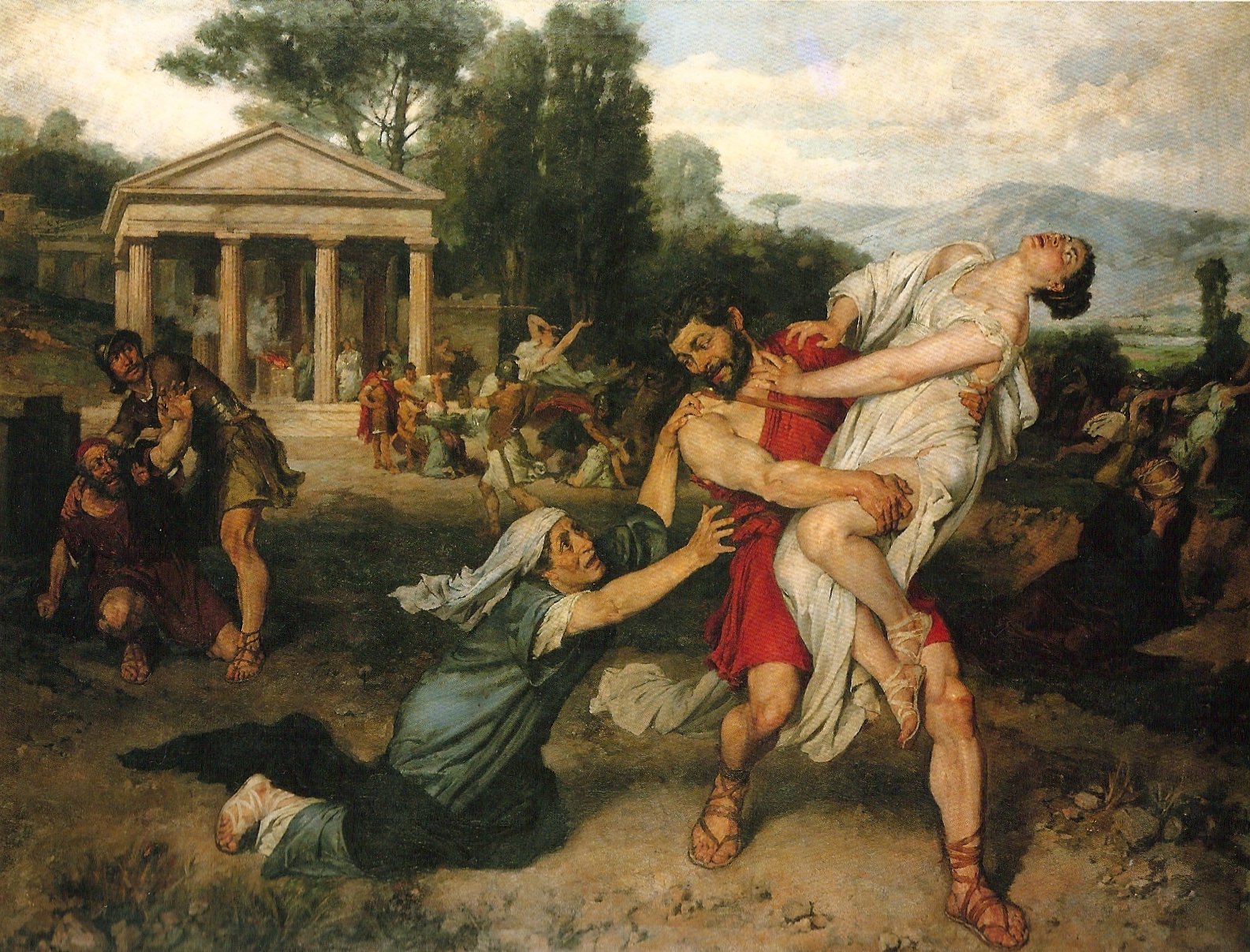
Francisco Pradilla y Ortiz was born to a poor family in Zaragoza, Spain. He was accepted to the local Institute of Zaragoza. But, due to a lack of money, he was unable to pay for his own supplies and tuition and had to end his studies there.
Thereafter, Pradilla joined the workshop of the stage scenery painter Mariano Pescador. The work gave him needed money which he used to attend the Fine Arts School in the Academy of San Luis in Zaragoza and, eventually, move to Madrid.
In Madrid, he continued to make a living painting scenery for theaters. His ambition and talent eventually won him a place in the School of Painting and Sculpture at the Academy of Fine Arts of San Fernando in Madrid. In addition to his classwork, the records of the Prado show that, beginning in 1869, he regularly visited the Collection in order to copy Old Master paintings.
Rome
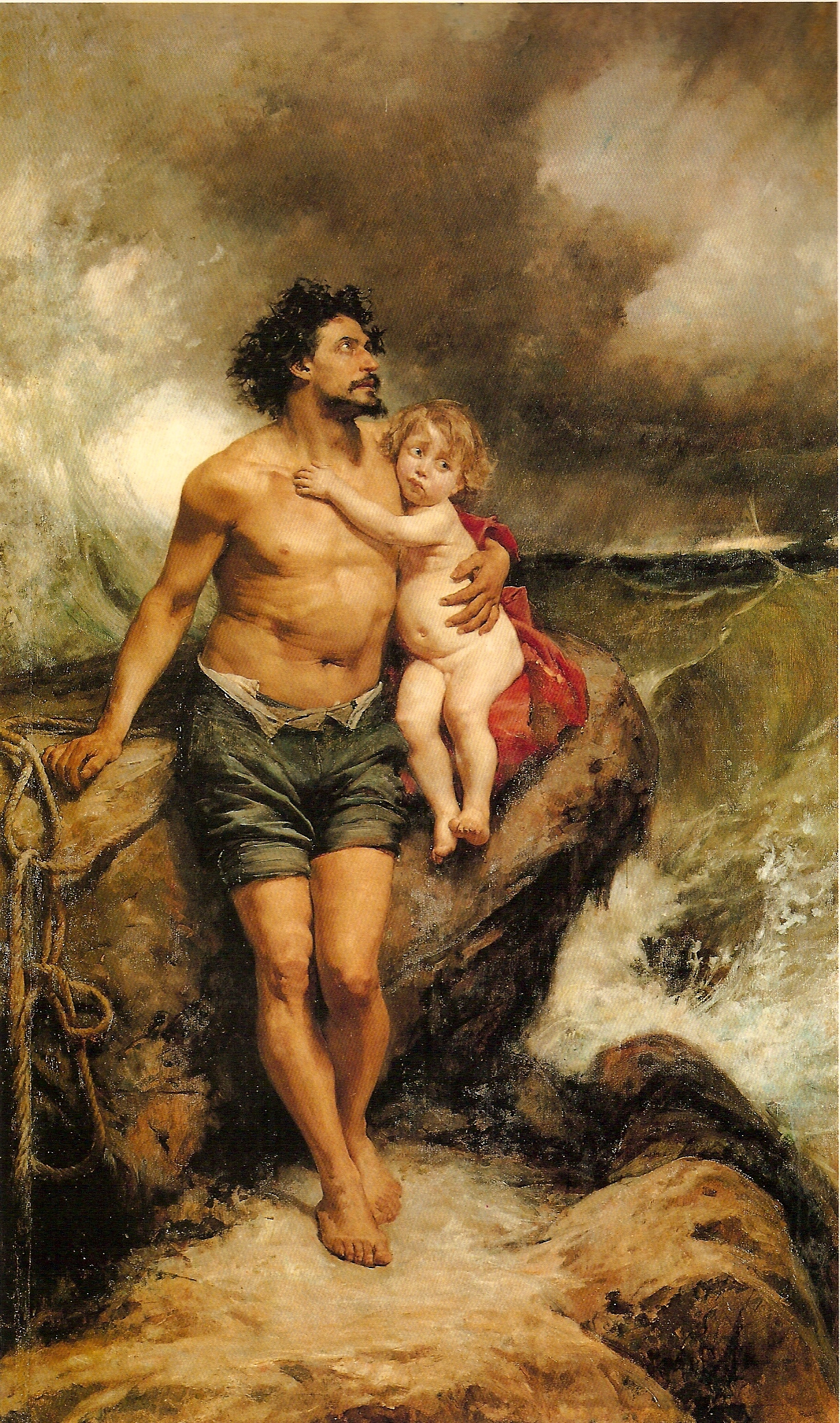
Francisco Pradilla y Ortiz. Náufragos or “Survivors of the Shipwreck” (1876). Oil on canvas. Madrid, Ayuntamiento.
Pradilla was among the first group of students given government scholarships to study at the new Spanish Academy in Rome, founded in 1873, but opened to students in 1874. The Spanish School in Rome would become the most important center for artistic training in Spain and Pradilla would become one of its most influential students (1874-1877) and teachers (1877-1896).
During three years, students were required to produce copies of Old Master paintings and Greek and Roman statuary, in addition to regular travel in order to encourage a broader perspective. While a student, Pradilla traveled extensively, visiting Venice, Florence, Milan, Piza, Paris, and six cities in Germany.
The culmination of each student’s study in at the Spanish Academy in Rome was a large, multi-figural history painting. In Pradilla’s case his final painting for the Academy would be an internationally-praised work.
DoJuana la Loca (Joanna the Mad Queen)
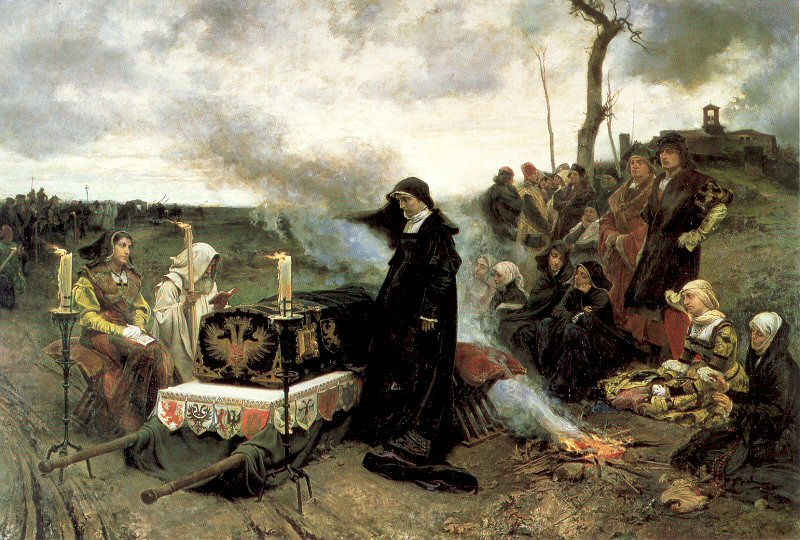
The painting depicts a scene from the life of the Spanish Royal Joanna (1479-1555), the second daughter of King Ferdinand II and Queen Isabella of Spain.
After the death of her husband, Joanna accompanied the body to its place of burial. Refusing to sleep or leave the casket, she kept vigil over the casket in torrential rain and winds. This, combined with other behaviors deemed as eccentric, estranged her from other royals. She spent the last years of her live in a convent.
Pradilla’s portrayal is notable for its underlying classical composition combined with Realism. In addition to his strong figural work, the painting reflects Pradilla’s understanding of landscape. He was a member of the Spanish Watercolorist Society, which specialized in disseminating landscape skills, and a student of the famous Spanish landscape painter Carlos de Haes. Several sketches for the landscape of Juana la Loca reveal the enormous amount of work he did to effectively portray the atmosphere, clouds, and ground convincingly.
End of Life
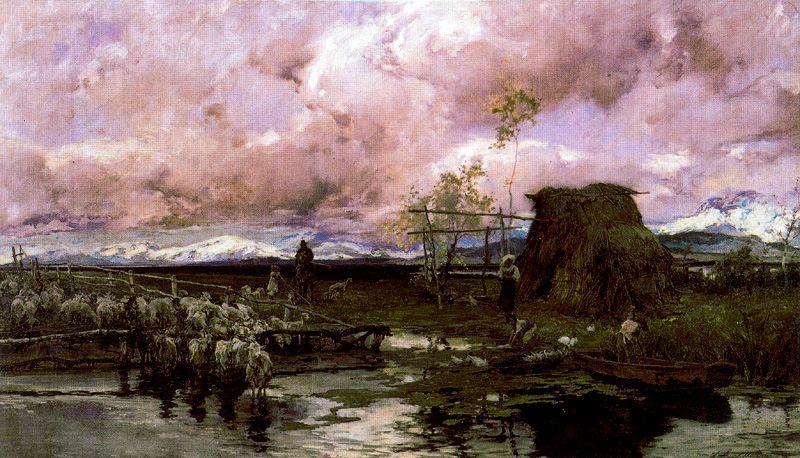
Francisco Pradilla y Ortiz. Landscape (a. 1900)
During the last years of his life, both the national government and the government of his birth, Zaragoza, would commission several works. But, he never repeated the success of Doña Juana la Loca, although he continued to paint in the same style.
Retrospectives of his life and works were held in Madrid (1948 and 1985) and Zaragoza (1985). Three of his major works are now held in the Prado, but the majority are held in private hands or regional museums and government buildings, especially in his native Zaragoza.
Forgotten Masters: Resurrecting an Appreciation for Artists Worth Remembering
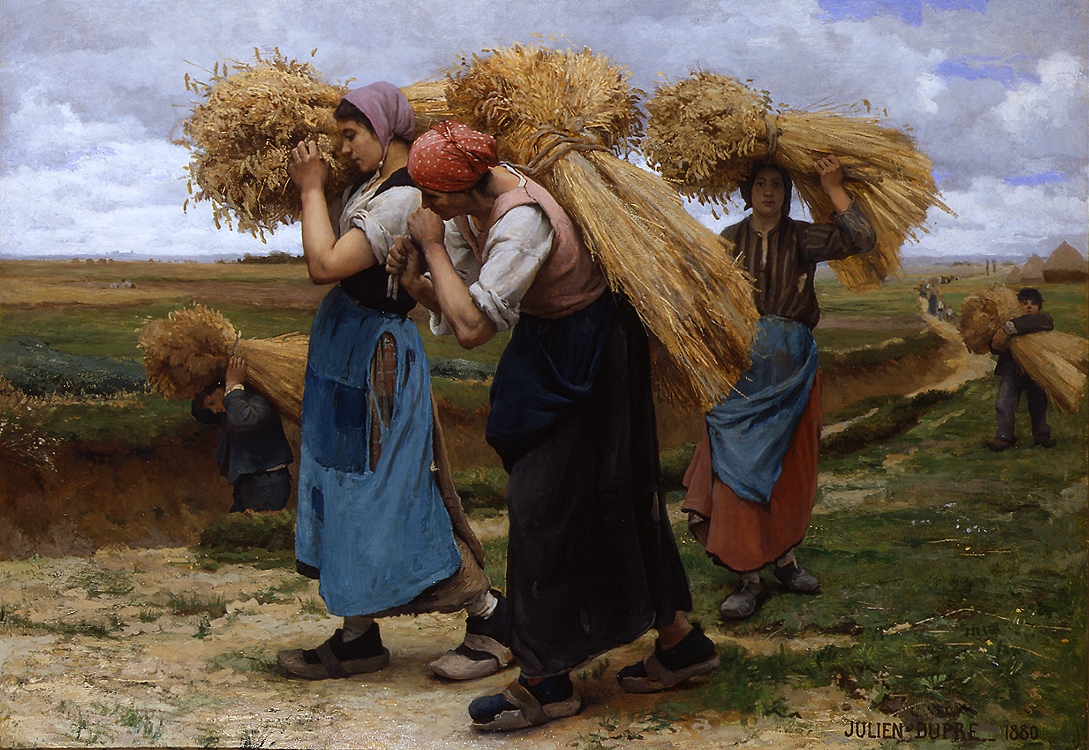
Julien Dupre, French, 1851-1910. The Gleaners (1880). Private Collection. Dupre is one of many artists that should be better remembered.
With the intent of helping to resurrect appreciation for some of the great and less-remembered artists of the past, I plan on regularly writing about what I will call “Forgotten Masters.”
Many nineteenth-century artists still sit in obscurity, not for lack of brilliance, but due to the shifting winds of culture at the end of the nineteenth and beginning of the twentieth centuries. The meteoric rise of Impressionism and other artistic movements left many academic artists, still at the peak of their talents, in the dust.
As we have distanced ourselves from changing fashions of those times, painters like Ingres, Gerome, Bouguereau, Eakins, Leighton, and Alma-Tadema have become more well known and received the recognition their works deserve through major exhibitions, scholarly books, and, finally, coffee-table books (the ultimate evidence that an artist has “made it”).
Yet we have only scratched the surface of nineteenth-century painting. According to a friend of mine, Dr. Vern Swanson, there were over 300,000 painters working in France in the nineteenth century.
300,000!
(For that number to sink in, here is an exercise: name as many French-Impressionist painters as you can. I come up with about 12 off the top of my head.)
Two websites, in particular, have been key in offering information and images of these artists:
- The Art Renewal Center: www.artrenwal.org
- Nineteenth Century Art Worldwide: www.19thc-artworldwide.org
If you have any nineteenth-century artists that you feel have been neglected and would like to see me post on them, please feel free to write me: mjc “at” beardedroman.com. Because my research is currently focused on Spain, many of the artists I will begin with in the series will be Spanish.
Starting tomorrow, look for posts tagged and titled “Forgotten Master.”
Neuroesthetics: The Science of Art and the Brain

Nicolas Poussin (1594-1665) The Triumph of David. Oil on canvas. 118.4 BY 148.3CM. Dulwich Gallery, Dulwich, UK. Poussin is remembered for his highly structured paintings that influenced generations of artists looking for a more scientific approach to their painting. Three geometric analysis of this work are included in this article.
Over the past decade a new field of neurology has emerged, Neuroesthetics, with the intent of mapping the brain’s reaction to the fine arts.
The term “neuroesthetics” and the field was pioneered by Dr. Semir Zeki, who is the first Professor of Neuroesthetics at University College London, founder of the Wellcome Department of Cognitive Neuroscience at University College London and the Minerva Foundation at UC Berkley, where he is an adjunct professor. The website of the Institute defines its work as seeking “to establish the biological and neurobiological foundations of aesthetic experience.”
The notion of scientifically quantifying art might seem opposed a central purpose of art, which is subject to individual experience with an original work of art. In his long essay, What is Art?, Leo Tolstoy said it another way:
The activity of art is based on the fact that a man, receiving through his sense of hearing or sight another man’s expression of feeling, is capable of experiencing the emotion which moved the man who expressed it. To take the simplest example: one man laughs, and another, who hears, becomes merry; or a man weeps, and another, who hears, feels sorrow . . . And it is on this capacity of man to receive another man’s expression of feeling, and experience those feelings himself that the activity of art is based.
(Leo Tolstoy. Aylmer Maude, trans. What Is Art? Bridgewater: Baker & Taylor, 2000. p. 48)
Tolstoy’s way of describing art seems like a set up for a scientific experiment.
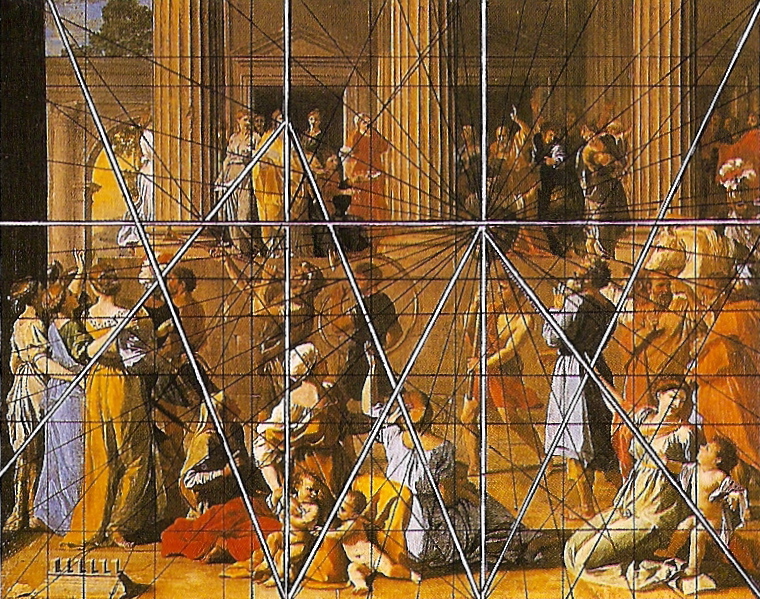
A scientific approach to art is not new. Many artists, most notably those of the Renaissance, approached art with a rigorous scientific mindset. The fifteenth- and sixteenth-century Italian schools of painting, especially in Florence and Rome, were concerned with geometry and the Golden Mean and were epitomized by the works of Leonardo Da Vinci and Raphael. European artistic training and up until the end of the nineteenth century, included classes in geometry and scientific theory. Impressionist and Divisionist artists, though rejecting traditional art, embraced new discoveries in color theory. In the twentieth century, the Futurist art movement applied current scientific understanding to effectively portray speed and movement on a canvas. Rothko was intensely concerned about the affect of color on the brain and was concerned about where his paintings would hang in case they would have an adverse results on the viewer (e.g. he believed that red was good for dining areas). I could think of a number of other examples.
The point is: science and art have been bedfellows for some time. So, it follows, why don’t we use science to futher improve our understanding of art?
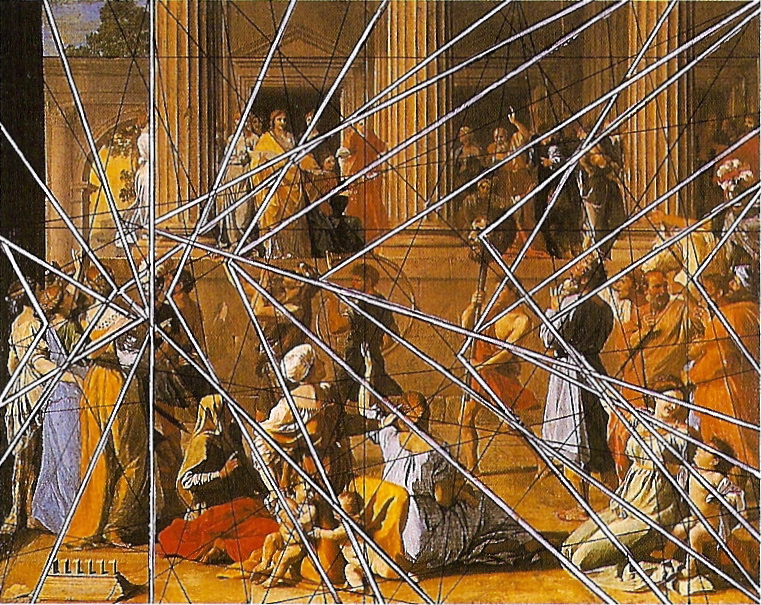
In 2004, Dr. Zeki and his colleague Dr. Hideaki Kawabata published a study titled Neural Correlates of Beauty in the April 2004 J Neurophysiol journal of the The American Physiological Society. The study reports on an experiment where ten woman, with at least one college degree, were asked to rate paintings on a scale from 1 to 10, 10 being beautiful and 1 being ugly. (Note that the test controlled for a subjective experience with each painting, allowing personal preference and not scientific judgment to intervene.)
Each woman was placed in an MRI scan and, then, shown the paintings they rated in random order. The brain patterns of the women were mapped to determine whether or not the brain has has beauty or ugliness centers.
The conclusion of the study states:
The results show that the perception of different categories of paintings are associated with distinct and specialized visual areas of the brain, that the orbito-frontal cortex is differently engaged during the perception of beautiful and ugly stimuli, regardless of the category of painting, and that the perception of stimuli as beautiful or ugly mobilizes the motor cortext differentially.
(A PDF of the the full, published study, along with other studies by Dr. Zeki, can be found on the Wellcome Institute’s website: neuroesthetics.org/research.php.)
In other words, setting aside a personal interpretation of beauty, the brain has established neuro-pathways that are triggered when looking at a beautiful or ugly work of art.
As the field of Neuroesthetics expands it may eventually influence the art world. As an art historian, I am curious about what makes a work of art or an artist have a lasting impact. To find out art theorist often uses a highly subjective and, therefore, uneasy mix of soft science. Having a more scientific approach to what makes a painting work, would be a welcome tool in my belt.

The effect of this kind of research on working artists could be useful or damaging, depending on the intent of the artist. If an artist wants to learn what affects her work is having on her viewers– and, therefore, understand how to better hone those intended results–it seems very useful to use the ideas supported by neuroethetics. On the other hand, the last thing I would want to purchase it market-tested works of art. Thankfully, this doesn’t seem to be the intent of Dr. Zeki’s work.
Dr. Zeki has a blog, which he regularly updates: profzeki.blogspot.com. As the founder and leaders of the field of Neuroethetics, it is a good place to learn about his latest thinking.
Finally, A High-end Website for Classical Music Lovers
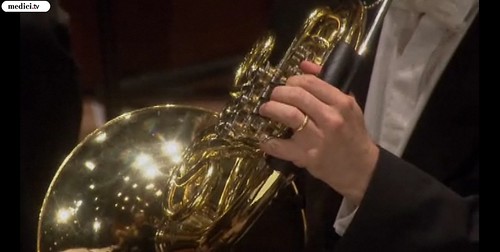
This isn’t your grandparents’ classical music . . . wait, it is. But, now it is accessible in a highly visually and professional format: Medici.tv.
Online broadcasts of classical music and opera are not new. The Metropolitan Opera and websites like ClassicalTV have been podcasting productions for some time. These services have often been limited in scope, focusing on performances from a specific venue, record label, or genre.
In addition these online services are often fee-based and require viewers to be on limited schedules. (For example, wanting to see a production at the Metropolitan Opera in New York featuring José Cura, I had to stay up late in London to watch the online broadcast.)
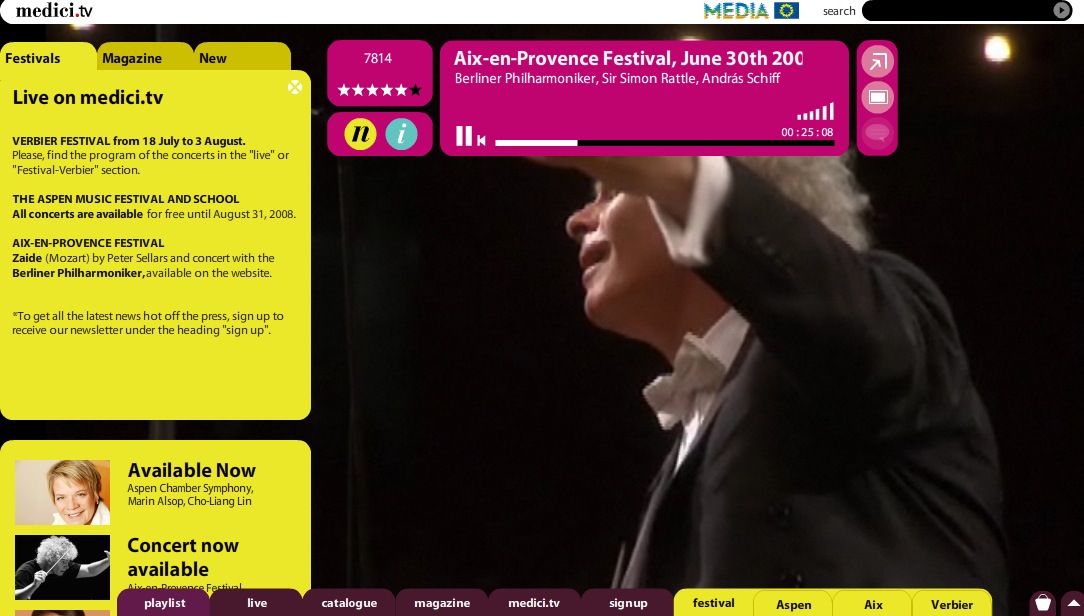
Medici.tv seems to correct many of these issues with a beautifully designed website. Though a subscription to its website gives users access to archives, anyone can go to the Medici.tv’s website and immediately view high-definition, multi-camera-shot footage of world-class performances free of charge.
Over the past three days, I have watched live performances from Music Festivals in Aix-en-Provence, France and Aspen, Colorado, in addition to two operas. (Having two computers will allow you to work on one while streaming performances on the other.)
I’m hooked.
Happy Fourth: The Declaration of Independence by John Trumbull
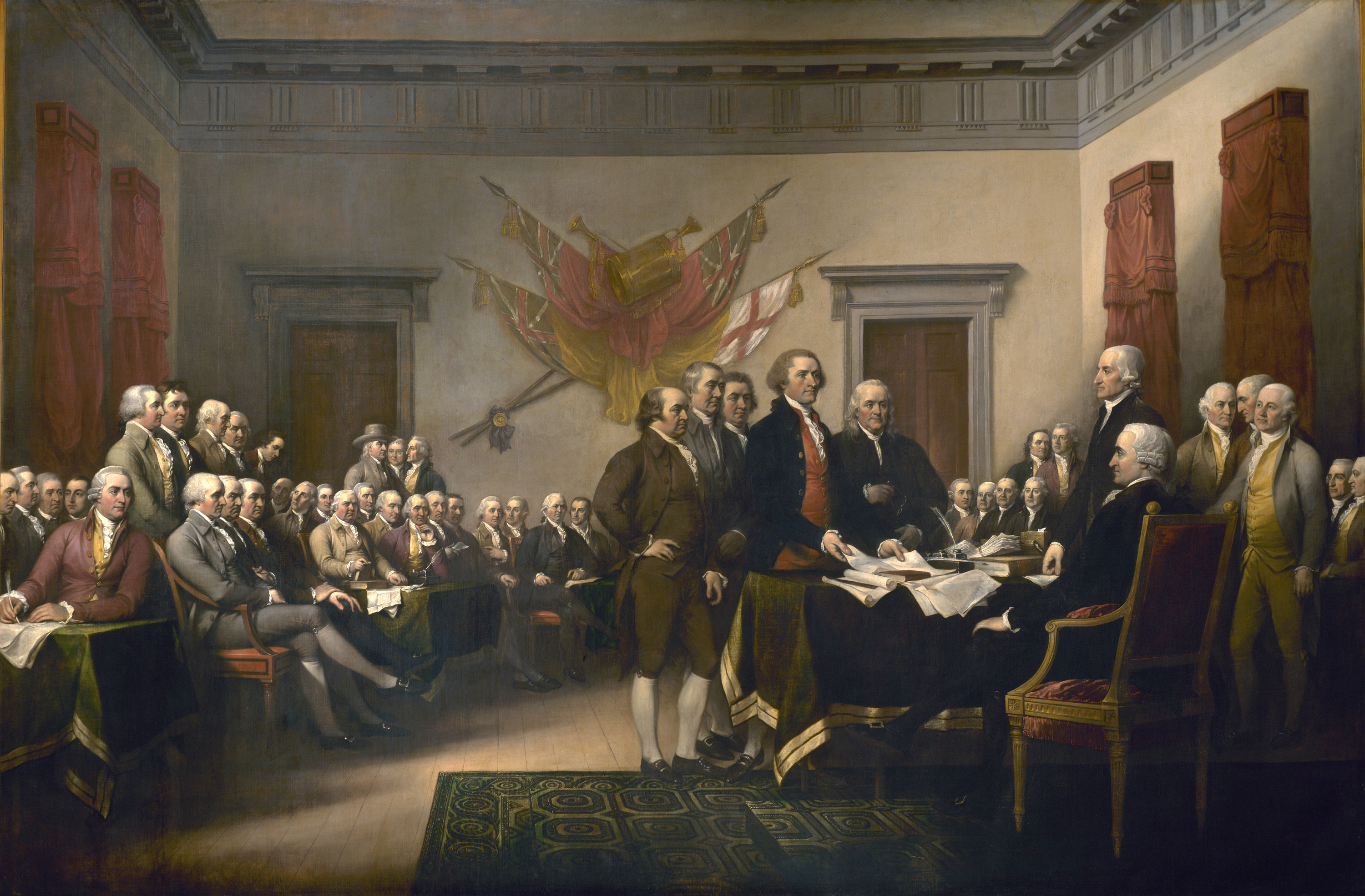
John Trumbull. The Declaration of Independence. (c. 1817-1819) 144 BY 216 IN. United States Capitol Building Rotunda. (Click on the image for a high resolution version.)
John Trumbull (1756-1843) was born in the Colony of Connecticut, where his father was the Crown-appointed Governor and the only Royal Governor to support Independence for the Colonies.
Using his family’s close ties to England, Trumbull studied and worked in the London studio of the British portraitist Benjamin West. While in Europe he painted the portraits of John Adams, serving as the Ambassador to England at the time, and Benjamin Franklin and Thomas Jefferson, who were both Ambassadors to the French Court. These portraits would later be incorporated into The Declaration of Independence.
The scale and multi-figural nature of the painting are ambitious. There are 47 portraits, all done from life. The painting itself was made over a period of three years. However, Trumbull, in his career as a portraitist in the Colonies, had gathered many of the portraits over f decades and brought together his sketches for this piece.

A key to the painting with the name of each figure.
The painting was later used as the back of the two-dollar bill.
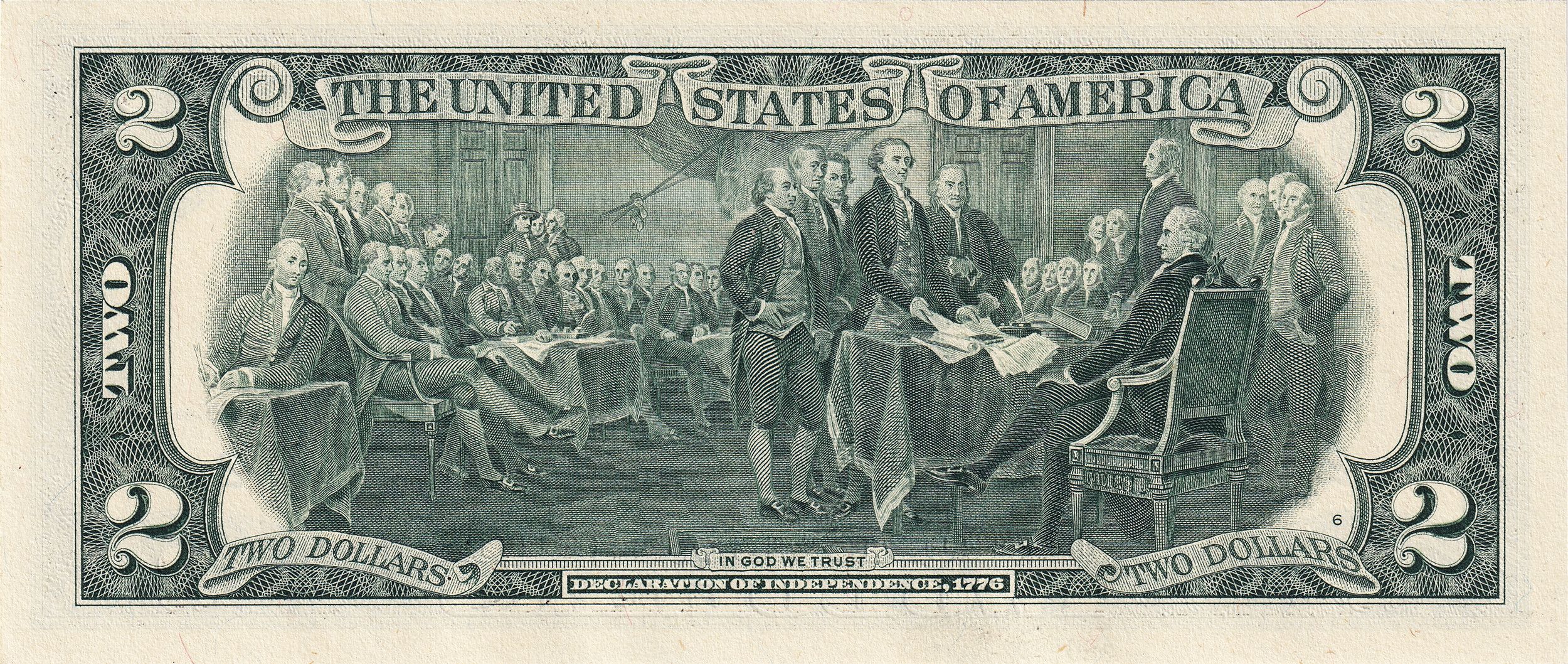
The Declaration of Independence was commissioned by the United States Congress to be hung in the Capitol Building. It is one of eight paintings of the same scale that Turnbull painted for the Rotunda:
- Surrender of General Burgoyne
- Surrender of Lord Cornwallis
- General George Washington Resigning his Commission
- Death of General Warren
- Death of General Montgomery
- George Washington before the Battle of Trenton
- Battle of Princeton
But, because Congress had only commissioned four paintings, the last four were sent or sold to other institutions.